 Himal Press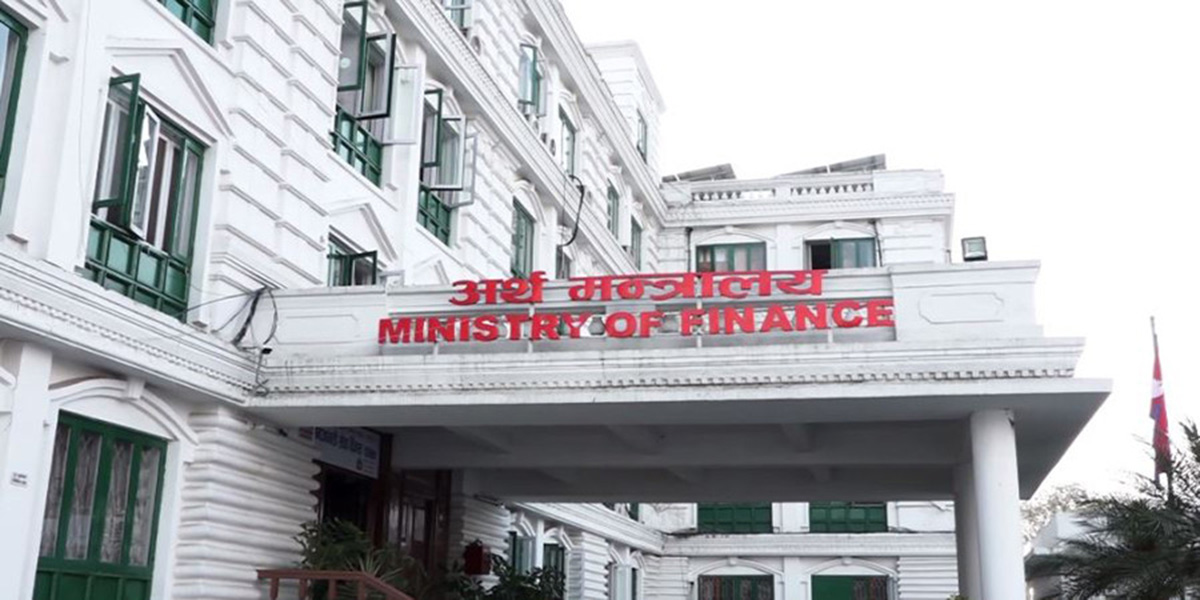
KATHMANDU: The Ministry of Finance has said that mounting unpaid liabilities, weak budget discipline, and structural inefficiencies are major risks to Nepal’s fiscal stability.
In a white paper issued on Monday, the ministry highlighted a mismatch between ambitious budget allocations and weak resource mobilization. “Over the past decade, the federal budget has averaged 33.7% of GDP, while actual expenditure stood at only 26.8%. The budget-to-GDP ratio peaked at 39.4% in 2019/20 before declining to 30.5% in 2024/25,” it said. “While the budget grew at an average annual rate of 12.3% over the period, growth slowed to 4.1 percent in the five years following the COVID-19 pandemic.”
Spending efficiency has also fluctuated over the years, with expenditure falling to 81.3% in 2024/25 from 86% in 2015/16.
The ministry also said the government has accumulated significant outstanding payment obligations from multi-year contracts. “Of the Rs 1,030 billion in approved multi-year contract commitments, contracts worth Rs 806 billion have been signed. By the end of fiscal year 2024/25, around Rs 3.94 billion had been paid, leaving Rs 402 billion in liabilities carried into the current fiscal year,” the ministry said in the white paper. “However, only Rs 128 billion has been allocated in the current budget to meet these obligations, leaving a funding gap of Rs 2.90 trillion, equivalent to 14.7 percent of the current fiscal year’s total budget, that will need to be addressed in future budgets.”
In addition, the government has pending liabilities of around Rs 4 billion in interest subsidies on concessional loans and Rs 16.87 billion in unpaid claims under the health insurance programme.
The white paper also flags broader fiscal concerns, including unrealistic budget size, low capital expenditure, and the rising share of recurrent spending in the fiscal budget. “Over the past decade, recurrent expenditure has accounted for 66.8% of total spending, while capital expenditure and financial management have remained 19% and 14.2%, respectively,” it said. “Therefore, there is a need to contain recurrent expenditure through clear work division between the three tiers of government, and reducing unnecessary employees in federal offices.”
Likewise, the white paper states that persistent budget deficits, which average around 7% of GDP, have increased reliance on public debt, raising risks to fiscal sustainability. “Total public debt, which stood at Rs 544 billion, or 22.5% of GDP, by the end of 2024/24, reached Rs 2,7674 billion, or 43.8% of GDP, in 2024/25,” the minister said in the white paper. “While this is manageable given international benchmarks, public debt management will be difficult if the raised funds are not used to increase productivity.”
The ministry has warned that rising debt-servicing costs risk resulting in low budget allocation for capital spending amid tightening fiscal resources.
Additionally, the government’s consolidated fund remains in deficit, while outstanding audit irregularities have surged to over Rs 733 billion, reflecting weak financial discipline and oversight.
The Finance Ministry has stressed the need for better resource management, improved budget realism, and stronger execution capacity to address growing fiscal pressures.