 Himal Press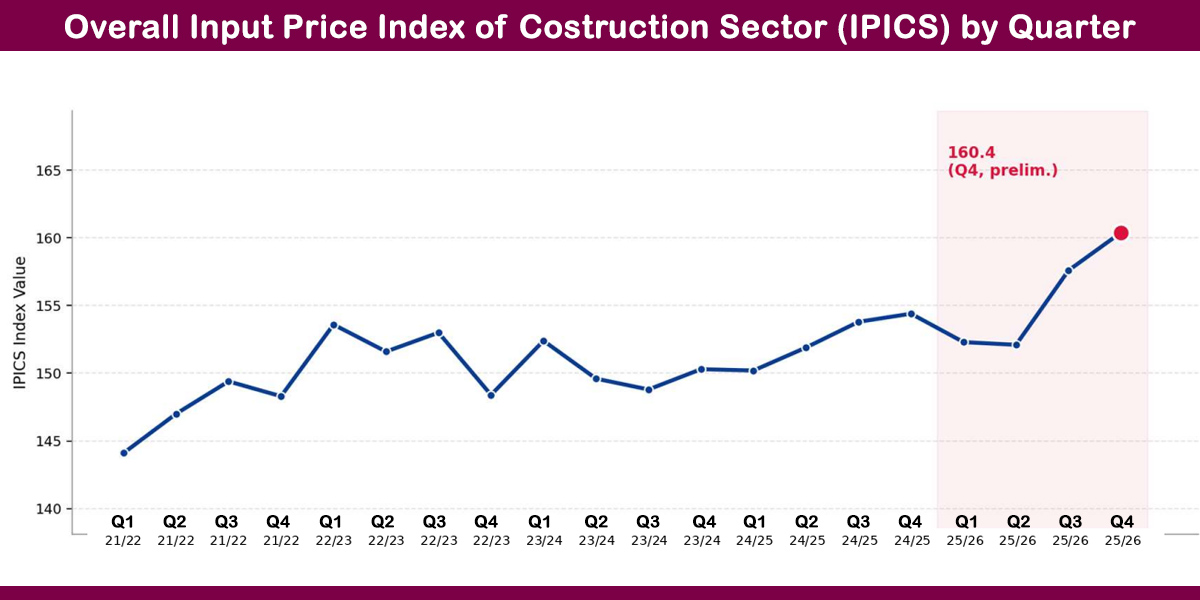
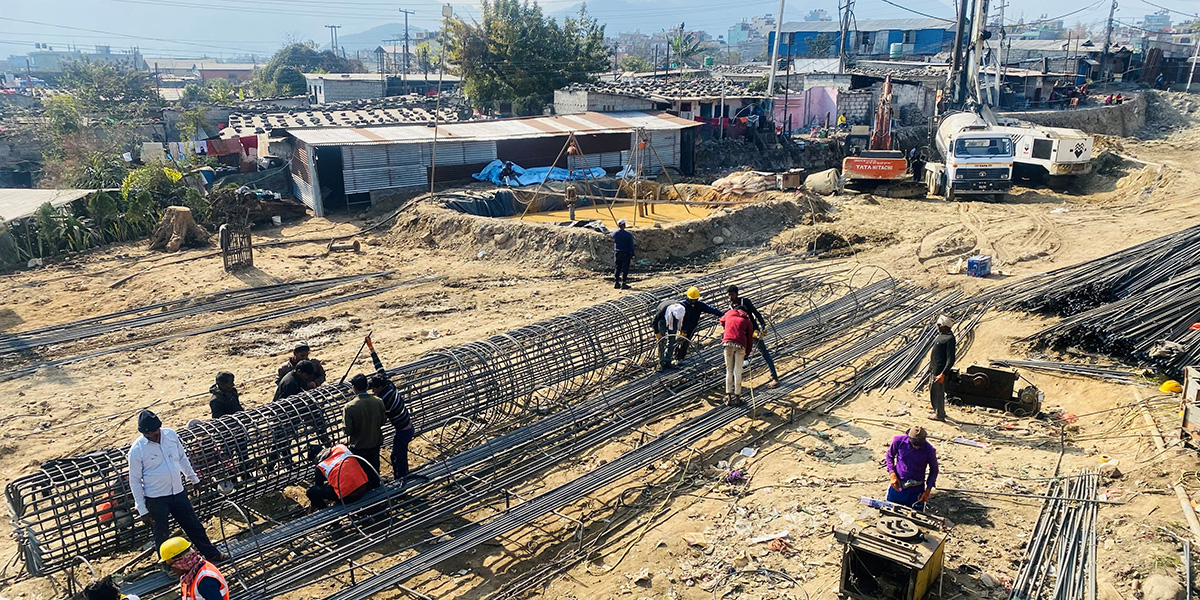
KATHMANDU: Prices of construction materials increased sharply in the final quarter (mid-April to mid-July) of 2025/26, reaching their highest level in five years, a latest study by the National Statistics Office (NSO) shows.
According to provisional data for the fourth quarter released by the NSO, the Input Price Index of the Construction Sector (IPICS) rose to 160.4 in mid-July of 2026. The late-fiscal-year surge was primarily due to a drastic price spike in bricks and copper-dependent electrical wiring. The IPICS increased significantly even though prices of essential structural inputs like cement and steel remained largely subdued during the quarter.
The IPICS tracks two major components: construction materials and labor/human resources. Construction materials account for 70.5% of the total index weight, while labor/human resources carry the remaining 29.5%. For the full fiscal year 2025/26, overall inflation grew at a moderate annual average of 1.94%, with wage growth (+2.92%) outpacing material price increases (+1.34%). However, the fourth quarter saw a direct structural reversal.
Prices of construction materials surged faster than labor costs on both a quarter-on-quarter and year-on-year basis, driven by sudden price increases in key sub-groups. The price of cement, which accounts for the largest weight among materials (19.31%), fell slightly by 0.43% year-on-year in the final quarter. Similarly, prices of iron rod and steel billets dropped 2.19%. However, brick prices jumped 17.94% year-on-year. Electrical wires, which hold a small 3.21% index weight, also saw a 34.36% year-on-year cost spike. Likewise, steady, incremental wage gains (3–5% across trades) also raised overall construction costs.
The rise in construction input prices was largely due to a hike in international commodity prices, higher import costs and domestic supply pressures.
Global copper prices rose sharply in the first half of 2026 amid supply disruptions and strong demand from data centres, power-grid projects and electric vehicles. A weaker Nepali rupee also raised the cost of imported and import-linked inputs. Record domestic fuel prices increased transport costs for bulky materials such as bricks, sand, aggregate and iron. Similarly, higher coal costs and the seasonal winding down of kiln operations ahead of the monsoon contributed to a rise in brick prices.