 Himal Press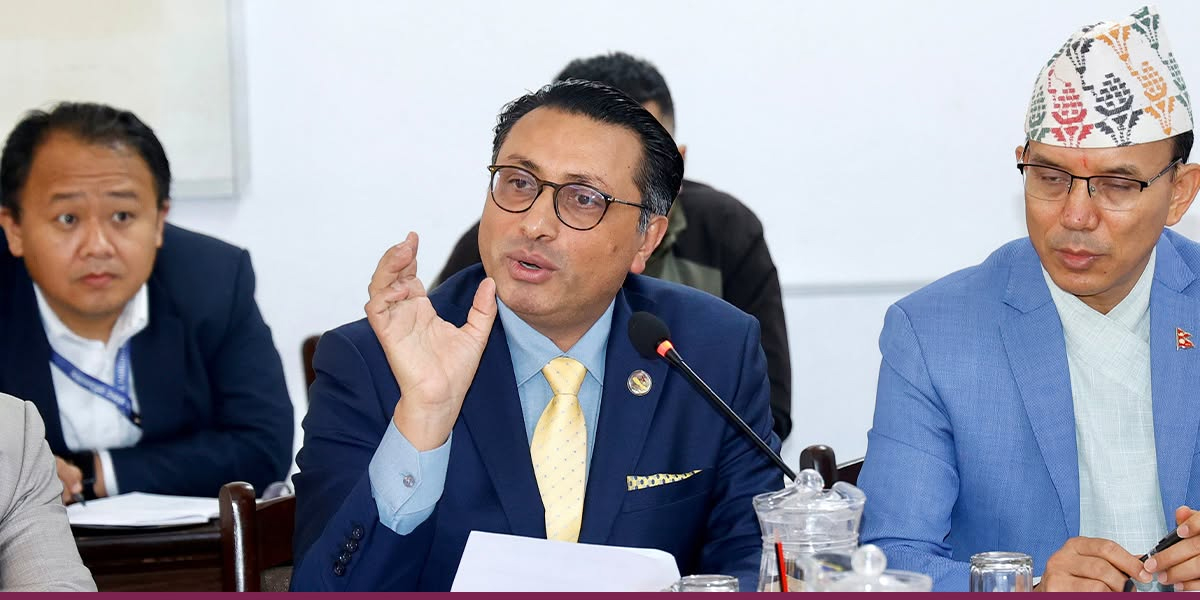
KATHMANDU: Minister for Finance Dr Swarnim Wagle has said that the amendments made to tax rates and other provisions in the Economic Bill were intended solely to correct technical errors, not driven by any ulterior motive.
Speaking at a meeting of the Finance Committee under the House of Representatives on Wednesday, Wagle said the finance ministry sent a five-point letter on May 31 to the Federal Parliament Secretariat for corrections after some linguistic and technical errors were identified in the Economic Bill tabled in Parliament on May 29.
“Carrier bags used for transporting vaccines and blood had been placed in the same category as suitcases and plastic boxes and were therefore subject to a 30%. While reducing the customs duty on such medical items to 15%, a technical error inadvertently lowered the duty on suitcases as well. The rate for suitcases was later restored to 30% percent,” he said.
Wagle also said that a provision relating to the road construction levy on electric vehicles, which was missing from the Bill, had been incorporated through the amendment to ensure that the prices of EVs valued below Rs 5 million would not increase. “Similarly, the amendments clarified that value-added tax (VAT) on electricity tariff would apply only to the final consumer. Amendments also included provisions allowing tax deductions on expenses incurred for children’s education and income tax exemptions for cinemas and theatres operating outside metropolitan and sub-metropolitan cities,” he added.
Rejecting allegations that some pages of the Economic Bill had been removed or that customs rates had changed without authorization, Wagle insisted that no changes had been made to the substantive content of the bill.
However, questions remain over the legal and procedural basis for the amendments. As per the House of Representatives Rules, the process for registering amendment proposals to a bill begins only after the completion of the general discussion. At the time the correction letter was sent, the bill had not yet reached the stage at which lawmakers could formally register amendments.