 Himal Press
 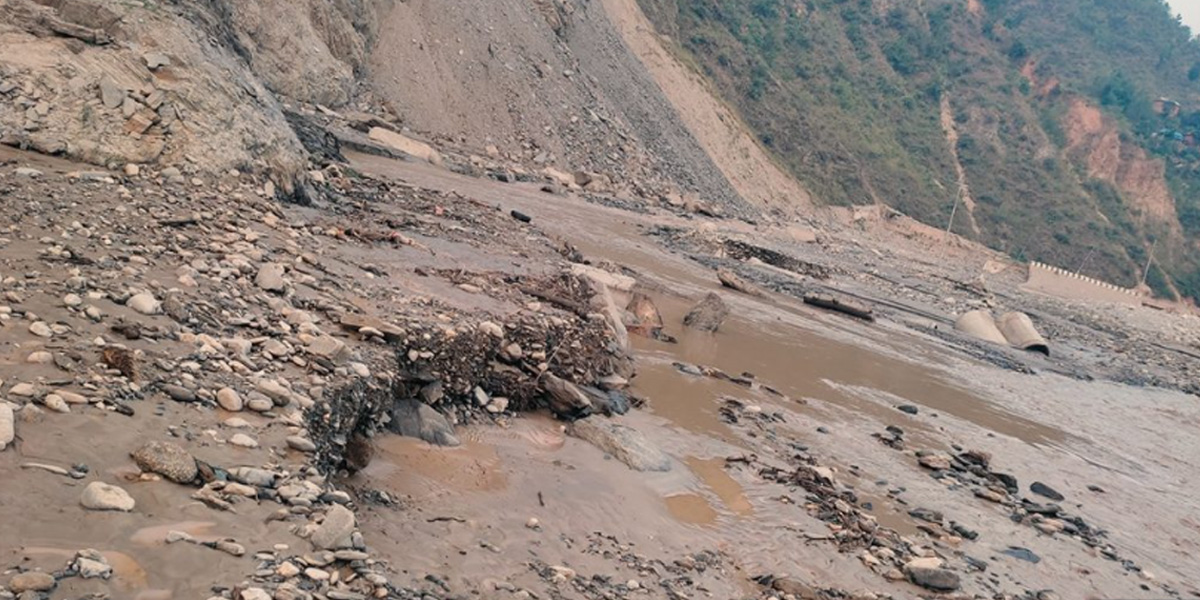 File photo of a section of BP Highway ravaged by Roshi floods. (Photo: RSS)
KATHMANDU: Four of the eight countries in the Hindu Kush Himalaya (HKH) region, including Nepal, experienced more than 10 major disasters in 2025, according to the International Center for Integrated Mountain Development (ICIMOD).
According to a statement issued by the ICIMOD, intense monsoon rainfall triggered repeated flooding and landslides across several HKH countries, including Bangladesh, India, Nepal, and Pakistan. About 1.2 million people were displaced or directly affected by disasters during the year, it added.
Countries in the HKH region experienced economic losses of more than $6 billion in 2024 alone from disaster incidents. Most of damages were caused by water-related hazards such as floods, landslides, and storms.
Globally, disaster-related economic losses in 2025 were estimated at more than $169 billion. In
Researchers have linked the increasing impact of disasters in the HKH to the growing prevalence of multi-hazard events. “Multi-hazards occur when more than one type of hazard, such as floods, landslides, or droughts, happen at the same time or when one hazard triggers another,” it said. “Past examples in the region include the Kedarnath floods in Uttarakhand in 2013, and the South Lhonak glacial lake outburst flood in Sikkim in 2023, India, as well as the Melamchi flood in Nepal in 2021.”
Pema Gyamtsho, director general of ICIMOD, said recent years show how floods, landslides, and other hazards are increasingly overlapping in mountain regions, amplifying damage to homes, infrastructure, and essential services.
Data covering the period from 1975 to 2024 shows a decline in death rates and the number of people affected by disasters in the HKH after 2013. Analysts say improvements in preparedness and early warning systems have contributed to this decline to some extent. “The numbers are still worrying, but the post-2013 trend suggests fewer lives are being affected year on year, which may reflect better climate services and preparedness in parts of the region,” said Manish Shrestha, a hydrologist at ICIMOD.
Early warning systems have been credited with reducing losses in some flood-prone areas. In eastern Nepal, alerts issued from a flood early warning system along the Khando River in 2024 helped inform and evacuate around 60,000 people living downstream.