 Himal Press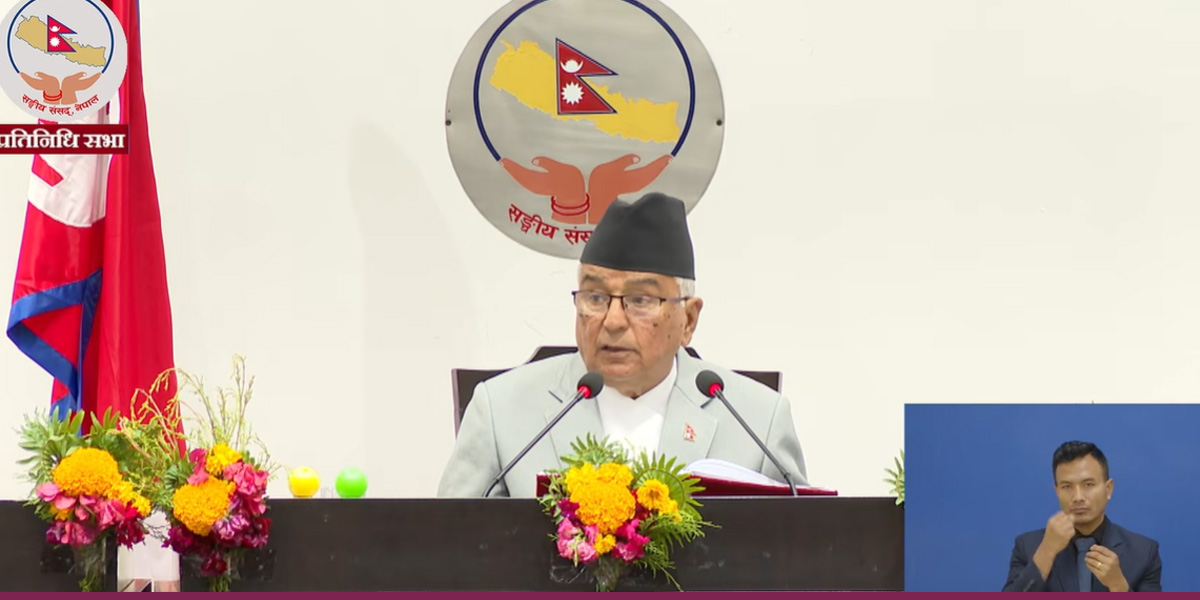
KATHMANDU: The government on Monday unveiled its policy and program for the fiscal year 2026/27, pledging tax cuts, capital market reforms, and incentives to attract both domestic and foreign investment.
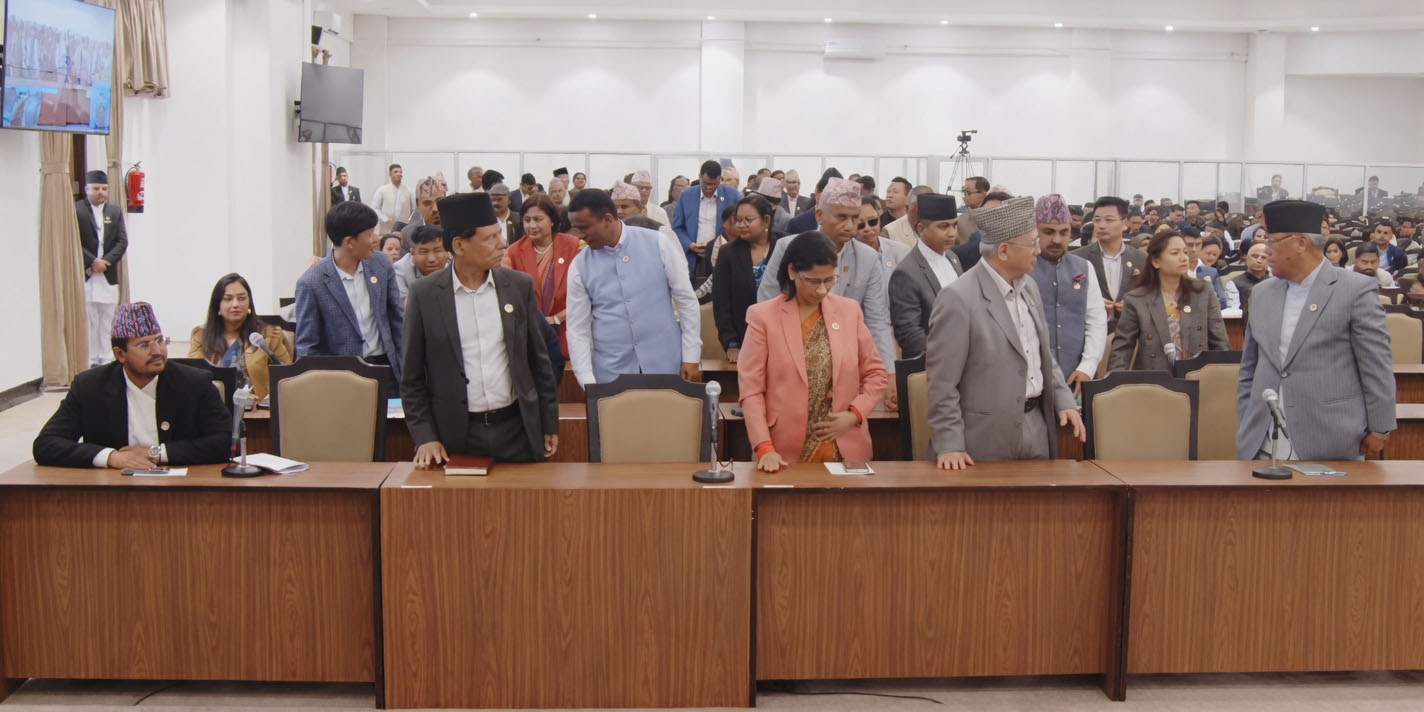
Presenting the annual policy and programme in the joint session of the federal parliament, President Ramchandra Paudel said the government would reduce the tax burden on businesses and the middle class by revising the tax structure in the upcoming budget.
The government has indicated that income tax rates and other taxes would be reviewed and rationalized to make the revenue system more business-friendly. The government has also pledged to introduce a technology-friendly revenue administration system and a faster tax dispute settlement mechanism.
The policy document said the government would strengthen anti-money laundering regulations and develop the capital market in line with international practices. It also announced plans to restructure securities-related institutions, including Nepal Stock Exchange (Nepse) and CDS and Clearing Ltd, while expanding the participation of institutional investors, pension funds, insurance companies, mutual funds, and non-resident Nepalis (NRNs) in the stock market.
To mobilize long-term capital, the government has said that it would promote the loan market, bond market, infrastructure bonds, and risk management instruments. The government has also pledged to make the debt and bond markets more effective to support capital market expansion.
The government has also announced a new financing model that would mobilize alternative development finance, diaspora capital, and private sector investment. Foreign aid, loans, and private investment would be channelled toward high-return and transformative projects with clear targets, fixed budgets, and strict deadlines.
Similarly, the government has said that project chiefs would sign performance agreements to ensure the timely completion of projects and that key personnel would not be transferred until projects are completed. A digital progress tracking system would also be introduced, while land acquisition and forest-related hurdles would be addressed on a priority basis.
The government has also said that it would launch the “Investment Express Policy” under which processes from business registration to construction permits would be completed within 30 days. Similarly, foreign investors meeting the prescribed investment threshold would be offered a Nepal Investment Visa.
Likewise, the government has pledged to amend foreign investment laws to expand the automatic approval route and provide tax incentives to the information technology sector as part of its plan to position Nepal as a regional tech hub.
In the cooperative sector, it has announced that an integrated depositor protection fund would be set up to return savings to depositors affected by troubled cooperatives through loan recovery measures. It also said the capacity of the National Cooperative Regulatory Authority would be strengthened to tighten oversight of cooperatives.
Likewise, the government vowed to end the practice of under-invoicing at customs points and gradually integrate scattered pollution and infrastructure-related charges into a unified green tax system. VAT and other tax refund systems would be made automated and time-bound, according to the policy document.
Similarly, the government has said that it would pursue structural reforms at the Civil Aviation Authority of Nepal (CAAN) by unbundling its service-provider and regulatory functions in the next fiscal year.