
POKHARA: The Rastriya Swatantra Party (RSP) had claimed before the House of Representatives elections that it could win up to 10 seats in Gandaki Province. Leaders and cadres of major parties dismissed the claim as unrealistic. Some felt the new party might secure four or five seats.
However, the final results of the House of Representatives elections held on March 5 took everyone by surprise. The RSP won 15 seats in Gandaki, exceeding expectations of even its own election mobilization committee and party leaders. Independent candidate Mahabir Pun, who won in Myagdi, was also backed by the party.
Except for the trans-Himalayan districts of Manang and Mustang, the party swept all other districts in Gandaki.
With this victory, the RSP dismantled what were once considered strongholds of traditional parties such as the Nepali Congress (NC), CPN-UML, Maoists, and the Rastriya Janamorcha (RJM).
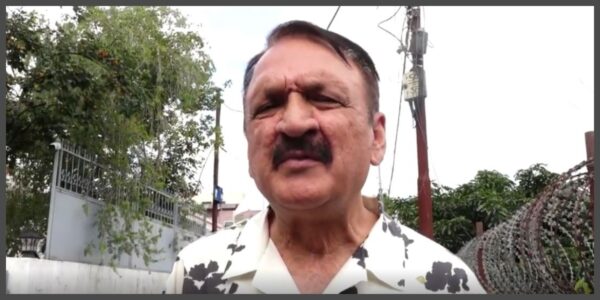
Yograj Paudel, founding vice president of the RSP’s Gandaki Province Committee, said the party had secured more seats than anticipated.
“We expected to win around 10 seats, but the result exceeded our expectations,” he said.
Paudel said voters gave the party overwhelming support because traditional parties had repeatedly failed to deliver on their promises.
“The new government must ensure good governance and serve the people effectively. People will certainly feel a difference once this government is formed,” he said.
In the 2022 election, Paudel himself had contested from Kaski-3. Rajan Gautam (39), who was enrolled into the party fold by Paudel, won the election from Nawalpur by a large margin.
Before the election, the RSP had claimed it would win all three constituencies in Kaski, both constituencies in Tanahun and Gorkha, as well as Syangja-1, Tanahun-1, and Nawalpur-1. It also predicted victories in Syangja-2, Nawalpur-2, and Baglung.
The final results largely matched those claims. The RSP won all three seats in Kaski and both constituencies in Gorkha, Tanahun, Nawalpur, Baglung, and Syangja. It also secured victories in Parbat and Lamjung, while independent candidate Mahabir Pun won in Myagdi with RSP support.
In Kaski-2, a constituency dominated by the UML since 2008, RSP candidate Uttam Prasad Paudel defeated UML’s Rashmi Acharya by nearly 25,000 votes.
Bina Gurung, the RSP’s only female candidate in Gandaki, won from Kaski-3. She defeated NC’s Manoj Gurung by nearly 25,000 votes. In Kaski-1, Khadkaraj Paudel (Ganesh) defeated NC candidate Tilak Bahadur Ranabhat by a margin of 28,669 votes. UML had won all three seats in the past two successive elections.
Similarly, Dr Dhananjaya Regmi and Jhabilal Dumre, both from RSP, were elected from Syangja-2. In Parbat, RSP’s Sagar Bhushal secured victory in a close contest between UML and NC candidates.
In Baglung, Sushil Khadka won from Baglung-1 and Som Sharma from Baglung-2. Sudhan Gurung, a campaigner of the Gen Z movement, was elected from Gorkha-1 by nearly 15,000 votes, while the party’s General Secretary Kabindra Burlakoti won from Gorkha-2. Dharmaraj KC was elected from Lamjung.
In Tanahun-1, RSP vice-chair Dr Swarnim Wagle was re-elected after previously winning the 2023 by-election. Shriram Neupane won from Tanahun-2. Rajan Gautam was elected from Nawalpur-1 and Manish Khanal from Nawalpur-2.
Meanwhile, NC candidates Tek Bahadur Gurung and Yogesh Gauchan were elected from Manang and Mustang, respectively.
In the 2022 elections, the NC won the highest number of seats in Gandaki. The party had won 10 seats, followed by the UML with five, then-CPN (Maoist Center) with two, and the RJM with one. The RSP later won Tanahun-1 in a by-election after NC’s Ram Chandra Paudel was elected President.
Previously, the Maoists had won Gorkha-2 (Pushpa Kamal Dahal) and Baglung-2 (Devendra Paudel), while the UML had secured all three seats in Kaski as well as Parbat and Lamjung. RJM had won Baglung-1, while the remaining constituencies went to the NC.
This time, however, the results have changed dramatically. While the NC retained the trans-Himalayan districts, the UML, the Maoists (now Nepali Communist Party), and RJM failed to win any seats in the province.
A total of seven MPs elected from Gandaki are under 40. No candidate from the Dalit cluster was elected through the first-past-the-post (FPTP) system in Gandaki, while four MPs from indigenous nationalities were elected.
A total of 234 candidates, including 30 independents, had contested in 18 constituencies of the province. Twenty-nine of the were women.
Out of 1.87 million registered voters in the province, around 60% cast their ballots in the election.