 Himal Press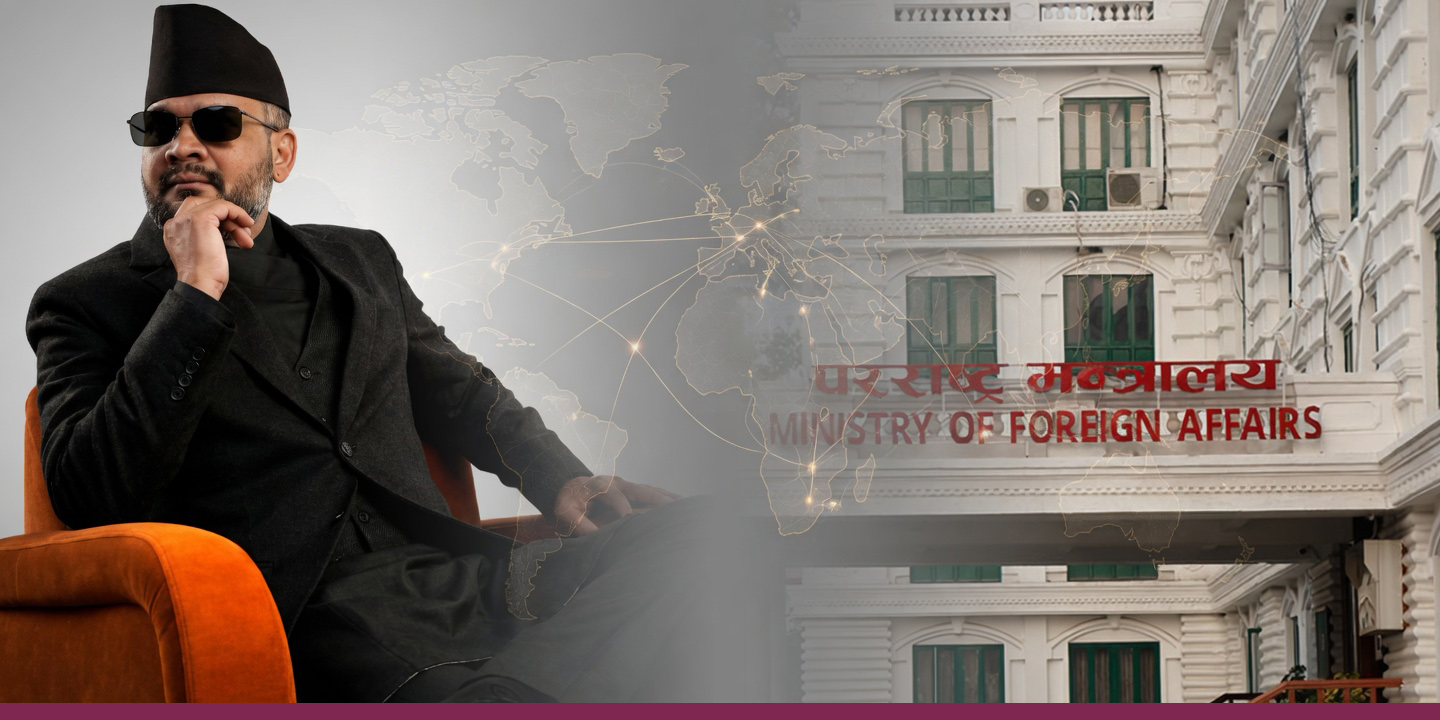
KATHMANDU: The government has launched a systemic overhaul of its diplomatic conduct to restore institutional discipline and dignity in line with international standards.
The initiative, led by Prime Minister Balendra (Balen) Shah, is being described by officials as a profound shift rather than just a superficial tightening of rules. The Prime Minister Shah has clearly stated that all diplomatic meetings and correspondence must be routed through the Ministry of Foreign Affairs. Furthermore, he has established a new precedent by declining to meet foreign dignitaries below the ministerial level.
This stance was recently tested when US Special Envoy Sergio Gor requested a meeting with the Prime Minister last week. Foreign ministry sources say the Prime Minister Shah remained firm on the new protocol, stating that he was busy with work related to improving governance. This follows a similar refusal to meet another US official, who visited Kathmandu about a fortnight ago. Prime Minister Shah has made it clear that he will not hold one-on-one sessions with foreign officials who do not hold a rank equivalent to his own.
Diplomatic experts have welcomed these measures as a strategic move toward a more mature, balanced, and credible foreign policy focused on national interest. For years, our diplomacy had grown inconsistent and become dependent on personal access and informal backchannels that bypassed official institutions. This lack of discipline risked compromising national interests and tarnishing the country’s international image.
To address these weaknesses, the government is intensifying its campaign to reorganize diplomatic etiquette. This marks a departure from the past when former prime ministers and foreign ministers were often seen lining up at hotels to meet high-ranking officials from neighboring or global powers.
While Nepal’s diplomatic history was rooted in balance, dignity, and institutional discipline, the past two and a half decades saw a steady erosion of these values. Diplomatic engagements in this period were often driven by partisan and personal interests rather than national ones. So much so, foreign diplomats have even documented in their memoirs exactly what specific favors Nepali leaders have requested for their own personal gain.
During the Rana era, foreign relations were the private domain of the royal family and the ruling elites. There was a lack of transparency and institutional oversight. During the Panchayat era, the monarchy had direct control over diplomacy. Following the restoration of democracy in 1990, political leaders began prioritizing personal meetings with foreign envoys. The trend accelerated after the transition to a republic.
While a Diplomatic Code of Conduct based on the Vienna Convention was introduced in 2011 and expanded in subsequent years to include top political leaders, it remained largely ignored for the past 15 years. Successive governments failed to implement it due to political instability and personal interests. This created a culture where foreign representatives enjoyed direct, informal access to the Prime Ministers and high-ranking officials immediately after the formation of a new government.
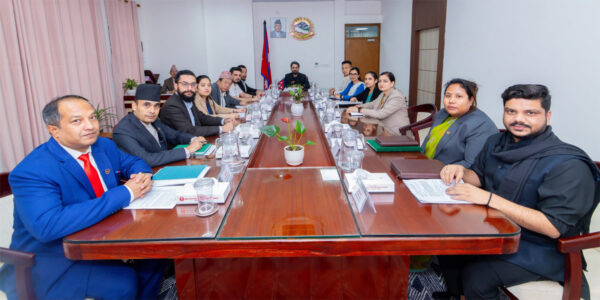
The current government effectively ended this tradition in late March. In a landmark move, Prime Minister Shah held a collective meeting with 17 ambassadors and other diplomats at Singha Durbar. During the session, he briefed the diplomatic community on the government’s priorities and policy direction. He emphasized a relationship based on mutual trust, respect, and shared prosperity.
Although ambassadors from several influential nations had requested private audiences with the Prime Minister, they ultimately participated in the collective meeting after the government made its new stance clear.
Since then, the Prime Minister has refrained from all private diplomatic meetings. He has strictly prohibited his aides, advisors, and staff from engaging in any informal diplomatic contact. This centralization of diplomatic contact ensures that foreign policy is conducted exclusively through the Ministry of Foreign Affairs. The ministry recently conducted specialized training for all cabinet ministers on diplomatic protocols and foreign interests in Nepal. During the training, Foreign Secretary Amrit Bahadur Rai provided detailed guidance on the technical aspects of protocol, the “dos and don’ts” of dealing with foreign nations, and the management of official correspondence and international travel.
The government plans to extend this orientation to lower-level staff as well as provincial and local governments. To facilitate this, joint secretaries in each ministry have been designated to oversee foreign relations, and representatives from the Ministry of Foreign Affairs have been stationed at the offices of the Province Chiefs.
Foreign Minister Shishir Khanal has described these efforts as a systemic push to ensure that all public officials adhere to uniform diplomatic standards. Ministry officials also believe that the current environment is finally conducive to enforcing the code of conduct that was so long ignored.
If this initiative receives support from other political parties and is implemented with integrity, it could mark a new chapter in Nepal’s foreign relations. This would enable the country to engage with global powers on equal footing and move toward its goal of becoming a regional connecting hub under a “Nepal First” policy.