 Himal Press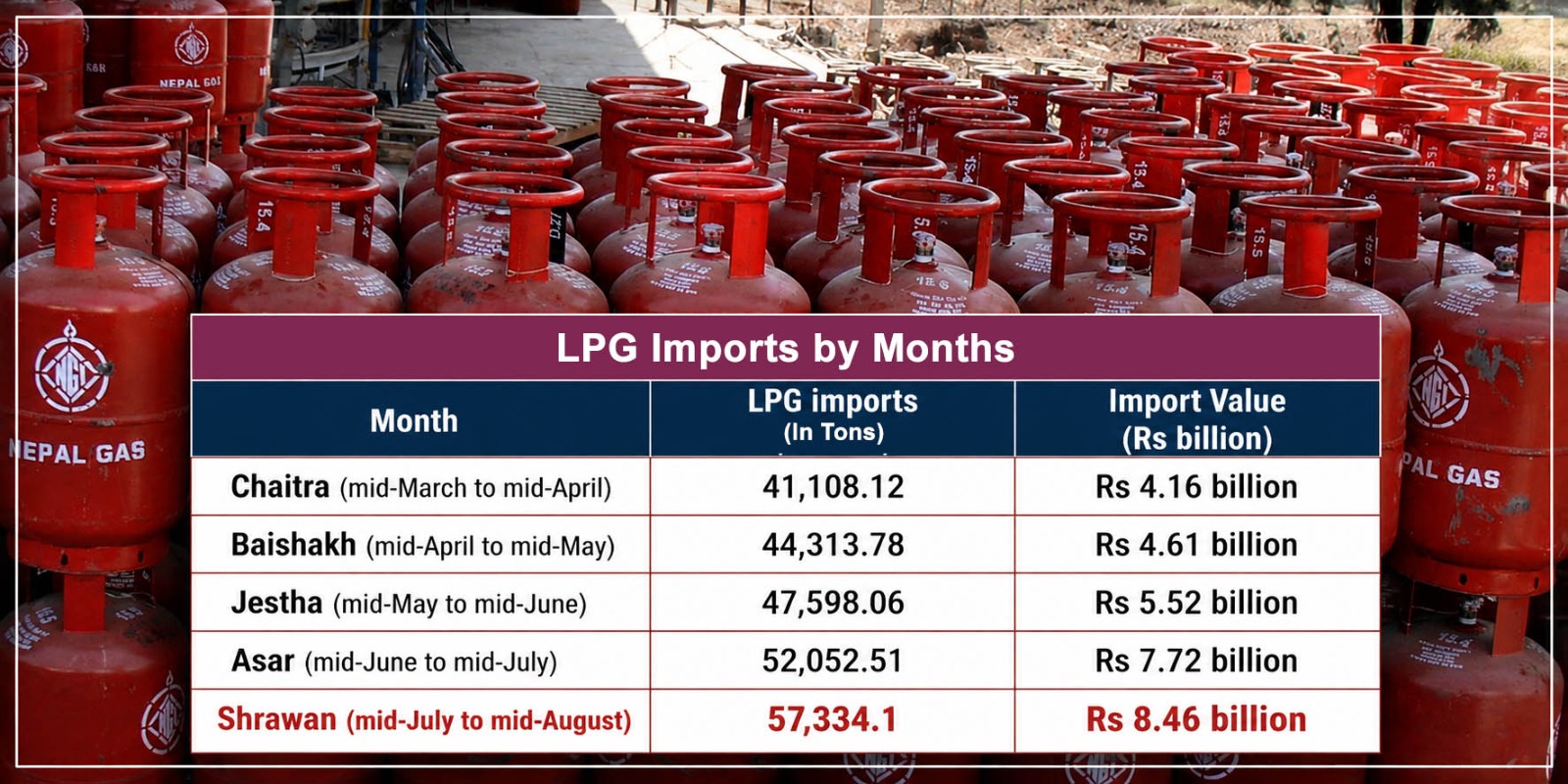
KATHMANDU: Liquefied petroleum gas (LPG) is still in short supply in the market despite the Nepal Oil Corporation (NOC) significantly increasing imports and supply of the popular cooking fuel in recent months.
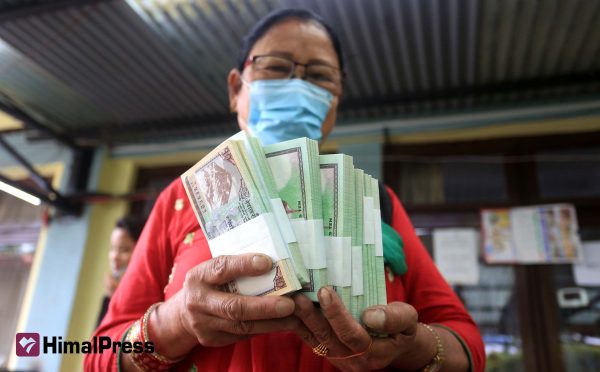
According to the Department of Customs, Nepal imported a record 57,334.1 tons of LPG worth Rs 8.46 billion in Shrawan (mid-July to mid-August). This is the highest monthly volume of LPG imported by the country so far.
The volume was 29.37% higher than the 44,318.89 tons imported during the same month of the previous fiscal year, when Nepal spent Rs 4.66 billion on LPG imports.
Average monthly demand is around 45,000 to 50,000 tons, officials say.
Data show that LPG imports have increased steadily in recent months.
The NOC imported 52,052.51 tons worth Rs 7.72 billion in Asar (mid-June to mid-July), up from 47,598.06 tons worth Rs 5.52 billion in Jestha (mid-May to mid-June).
Imports stood at 44,313.78 tons, worth Rs 4.61 billion, in Baishakh (mid-April to mid-May), and at 41,108.12 tons, worth Rs 4.16 billion, in Chaitra (mid-March to mid-April).
Despite the record imports, consumers in several parts of the country continue to report difficulties obtaining LPG cylinders.
LPG was the second-largest import commodity in the first month of fiscal year 2026/27 after crude soybean oil and diesel.
The sharp increase in imports comes amid a prolonged disruption in LPG supplies that has affected the domestic market for months.
The problems in LPG supply began intensifying following the Israel-Iran conflict and the subsequent closure of the Strait of Hormuz by Iran, a key global energy transit route. The disruption affected the movement of petroleum products, including LPG, to markets across Asia and created uncertainty in Nepal’s supply chain.
Nepal meets all its petroelum imports demand, including that of LPG, from India. The Indian government undertaking, the Indian Oil Corporation (IOC), is the sole supplier of petroleum products to Nepal.
Amid the supply constraints, the government in March instructed LPG bottlers to circulate half-filled cylinders in the market to ensure that consumers could obtain the fuel despite difficulties in maintaining normal supplies. The measure was intended as a temporary mechanism to prevent the shortage from worsening.
The government rolled back the half-filled cylinder policy in mid-July, when supply conditions started to improve. However, demand started increasing once full cylinders became available in the market, leading to a severe shortage of the widely used cooking fuel.
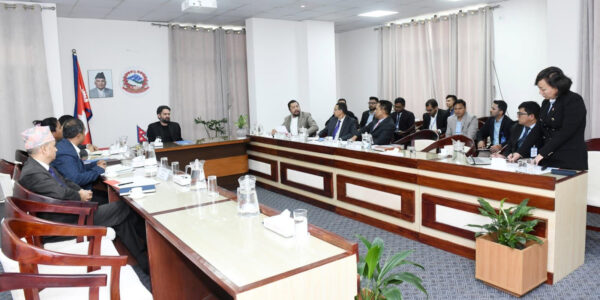
The worsening shortage subsequently prompted the government to intervene directly by distributing LPG through its own mechanism for some days. But even this has failed to ease the situation.
“People still need to wait for days to get cooking gas. At my shop, I can only provide gas to all the customers who have registered their names after two batches of cylinders arrive,” said Chiaranjivi Adhikari, who runs Adhikari Stores in Thali, Kathmandu. “More consumers will have registered their names by then. Hopefully, the situation will ease in some time.”