 Himal Press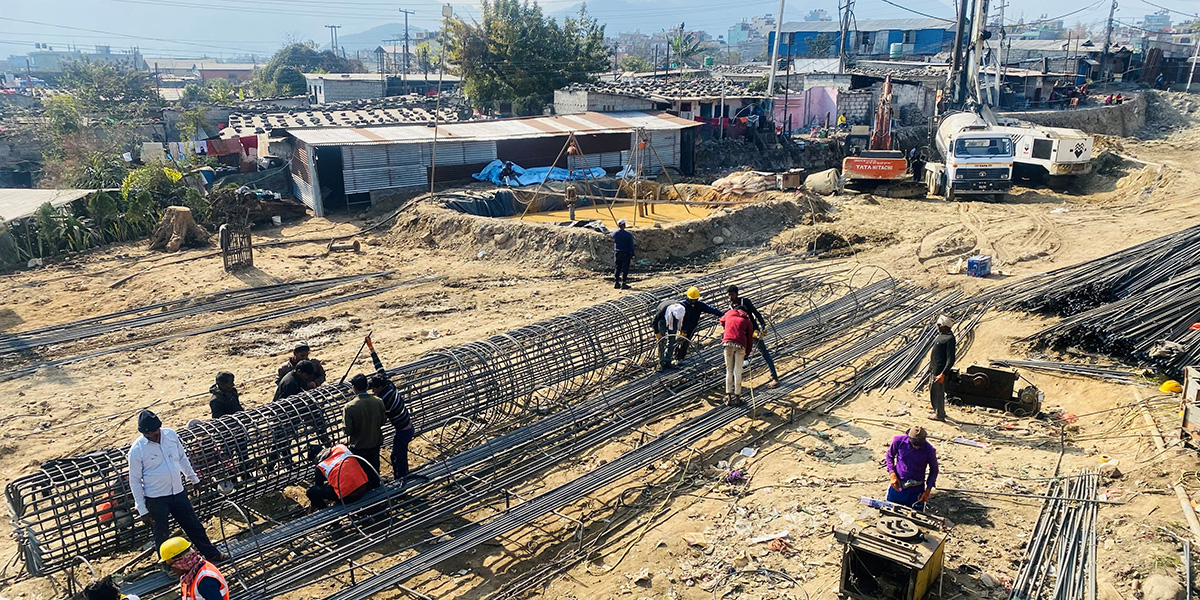
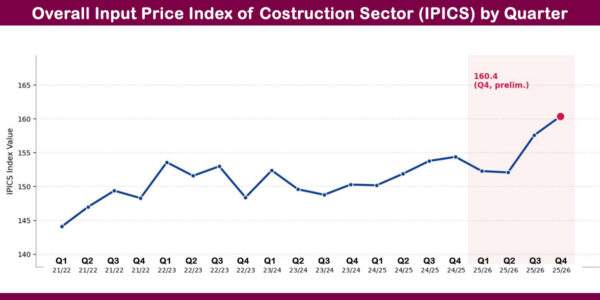
KATHMANDU: Prices of major construction materials have risen sharply in the third quarter of the fiscal year 2025/26, with bricks, cement and steel products driving a significant increase in overall construction costs, according to the National Statistics Office’s (NSO) latest Input Price Index of Construction Sector (IPICS) report.
The report shows remarkable volatility across major inputs due to both domestic supply constraints and global price pressures.
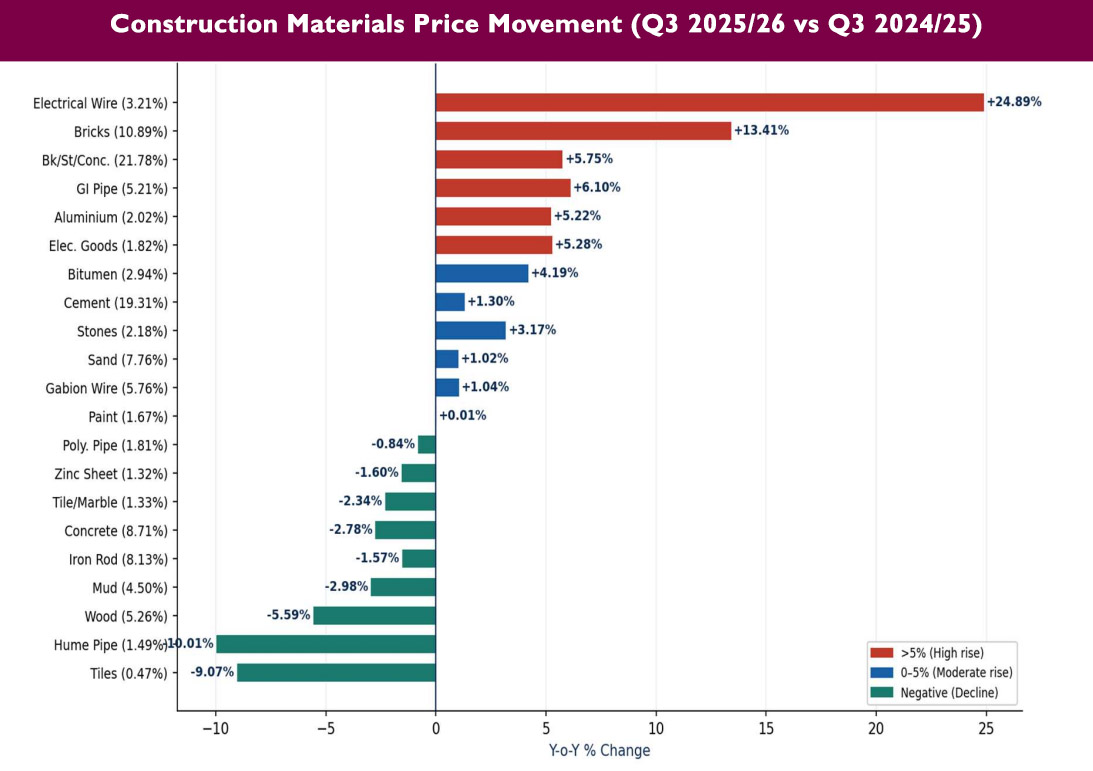
Bricks recorded the highest price rise in the review period—13.41% year-on-year and 9.33% quarter-on-quarter. The brick index reached 147.2—the highest level in the past five years—due to supply shortages in the kiln sector and strong seasonal demand during the peak construction period from Magh to Chaitra (mid-January to mid-March).
Cement prices also rose 5.04 percent quarter-on-quarter to reach an index level of 105.5, the highest in three years. The rebound follows a prolonged slump in the previous two fiscal years and is attributed to increased construction activity and tighter clinker supply, according to the report
Iron rods and billets recorded a sharp quarterly rebound of 7.79%, with its index climbing to 125.8 from a multi-year low in the previous quarter. However, on a year-on-year basis, prices were down by 1.83 percent. According to the NSO report, this indicates recovery from earlier depressed levels rather than a full price surge.
Electrical wire prices posted the most significant year-on-year increase during the review quarter, jumping 24.89% to an index level of 170.2. The NSO attributed this surge to rising global copper prices due to growing demand linked to energy transmission projects and supply chain disruptions.
Similarly, gabion wire prices increased by 8.94% quarter-on-quarter, reaching 150.0 in index level due to sharp demand for road and slope protection works.
In contrast, prices of some construction materials fell during the review quarter. Wood prices fell by 5.59% year-on-year, with the index dropping to 86.2, reflecting improved timber supply through community forestry programs and weak demand from the real estate sector following earlier credit tightening.
Similarly, hume pipes recorded the steepest annual decline of 10.01%. Although the category carries a relatively small weight in the index, the decline shows reduced activity in drainage and culvert construction works compared to the previous year.
The rising input prices, particularly for high-weight materials such as cement, bricks and steel, are likely to increase project costs and put pressure on both public infrastructure spending and private construction, the NSO said in its report.