 Himal Press
 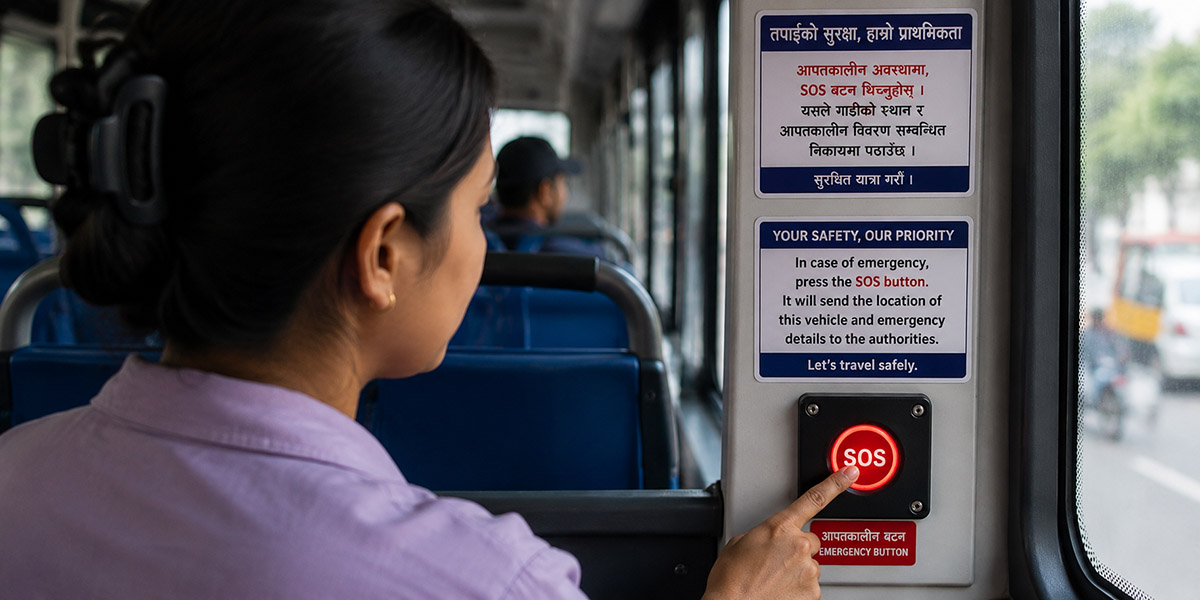 Representative image generated by using AI tools.
KATHMANDU: The government has introduced a series of safety and technology-focused measures for public transport through Safe and Technology-friendly Transport Operations Standards 2026.
The new standards, introduced by the Ministry of Infrastructure Development, aim to make public transport safer, more organized and reliable, while also reducing road accidents through real-time tracking and improved accountability.
Under the new rules, all public vehicles must be equipped with cabin cameras and SOS buttons. Operators are required to clearly display information in both Nepali and English about these systems in visible locations inside vehicles. The notice must inform passengers that pressing the SOS button will transmit the vehicle’s location and emergency details to the concerned authorities.
All passenger, cargo and tourist vehicles are also required to install Vehicle Location Tracking Devices (VLTDs), a GPS system that enables real-time monitoring of a vehicle’s location, speed and emergency alerts. These devices must include battery backup, tamper detection logs, and store-and-forward capabilities to ensure uninterrupted data capture. In case of network disruption, the system must automatically transmit stored data once connectivity is restored.
The standards require continuous data transmission to a centralized digital documentation system. The data must include vehicle ID, route ID, coordinates, speed, direction, vehicle movement status, device health, and alerts such as tampering or SOS activation.
After installation of these devices, vehicle operators must obtain certification from the Department of Transport Management, which will be integrated with existing vehicle records.
The government has also specified requirements for different categories of vehicles. As per the standards, taxis must install front and rear dashcams, along with SOS buttons accessible to both drivers and passengers. Similarly, small passenger vehicles such as jeeps, vans, microbuses and pickups are required to have front and rear dashcams, driver monitoring systems (DMS) to detect fatigue and drowsiness, and SOS buttons. Buses must include front and rear dashcams, cabin camera systems, driver monitoring systems, and multiple SOS buttons placed near entry doors and throughout the cabin based on passenger capacity.
Likewise, cargo vehicles are required to have a central head unit for data integration, front dashcams, driver-assist cameras, driver monitoring systems, axle load sensors, and SOS buttons.
All public vehicles, except taxis and electric three-wheelers (safa tempos), must carry firefighting equipment and first aid kits.
Authorities have warned that vehicles failing to comply within the stipulated timeframe will be barred from operation and traffic police will also have the authority to penalize non-compliant vehicles.