 Himal Press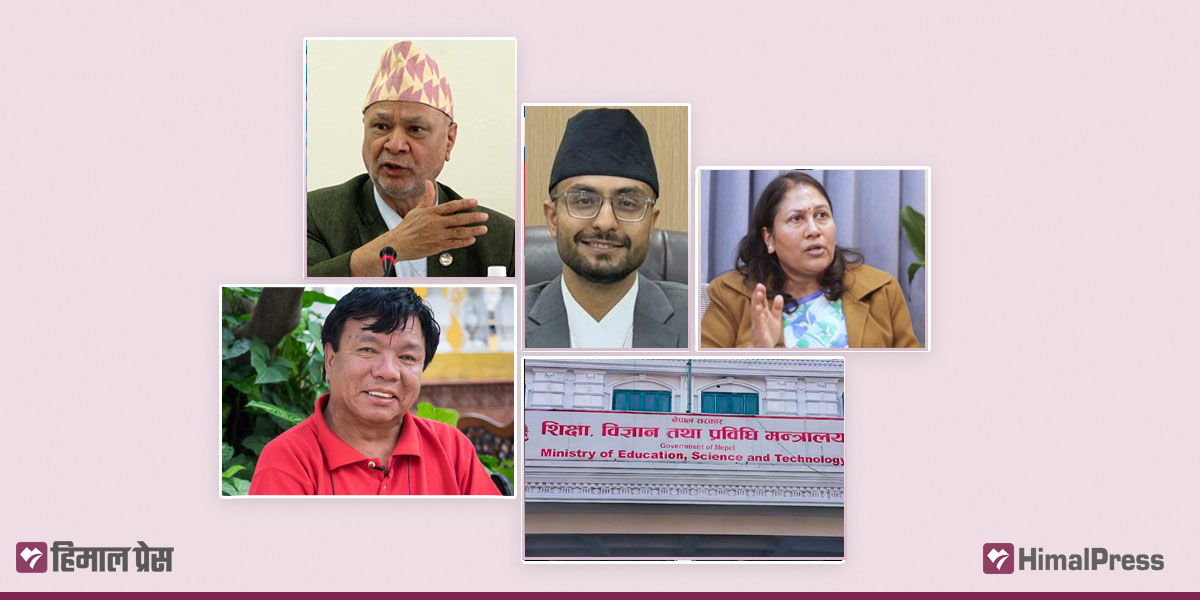
KATHMANDU: The year 2082, as per the Bikram Sambat calendar, which ended on Monday, proved to be one of upheaval, hope, and uncertainty for Nepal’s education sector.
Despite policy debates, reform efforts, and initiatives for structural change throughout the year, the expected outcomes could not be achieved due to weak implementation. One of the reasons behind this is the unstable leadership.
One of the most significant events of the year was the 89-day protest of school teachers at the call of the Confederation of Nepali Teachers (CNT). Although a nine-point agreement between the CNT and the government ended the protest in the last week of April last year, it has remained unimplemented even after a year.
After the dissolution of the House of Representatives following last September’s deadly protest, a bill aimed at amending and consolidating school education laws became inactive. The bill, which had reached the final stage for promulgation, came to an abrupt halt. As a result, the preparation to enact the new Education Act, which was seen as a major education reform in 54 years, could not materialize.
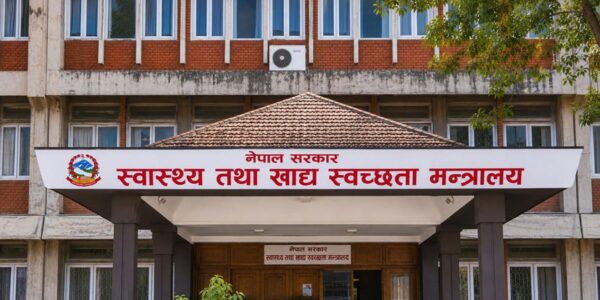
The year saw four education ministers: Bidya Bhattarai and Raghuji Panta of CPN-UML, Mahabir Pun of the interim government, and Sashmit Pokhrel of the Rastriya Swatantra Party (RSP). It has only been around three weeks since Pokharel assumed office at the education ministry.
During his brief tenure, Pun introduced several ambitious reform proposals, including ending politicization in education, improving university governance, forming an integrated service commission, and establishing a science and technology research fund. However, these proposals made by a caretaker government could not be finalized.
Despite leadership changes, the fundamental problems in the education sector remain the same. Although draft laws on school education, higher education, and technical education were prepared during the year, none were enacted.
Despite this, some positive initiatives were observed during the year. Efforts to publish Secondary Education Examination (SEE) results more quickly, the decision to abolish internal exams up to Grade 5, and the implementation of a continuous assessment system made by the new Education Minister, Shasmit Pokharel, are commendable.
Challenges persisted in higher education as well. Universities continued to struggle with irregular academic calendars, political interference, and low investment in research. As a result, more students are being drawn to private colleges and foreign study destinations. Australia, Canada, and Japan have become major destinations for Nepali students.
Although the government prioritized technical and vocational education, expected results could not be achieved due to a lack of infrastructure, a shortage of skilled manpower, and weak coordination with industries.
There were signs of progress in digital education. The use of online classes, smart classrooms, and digital materials increased in urban areas. However, in rural regions, the lack of internet access, devices, and trained teachers has further deepened the digital divide.
According to Educationist Bidyanath Koirala, the tendency to reach agreements and formulate policies without effective implementation has left the education sector without meaningful achievements.
Looking ahead, there is hope that 2083 BS will become a historic year with the promulgation of a progressive Education Act.