 Himal Press
 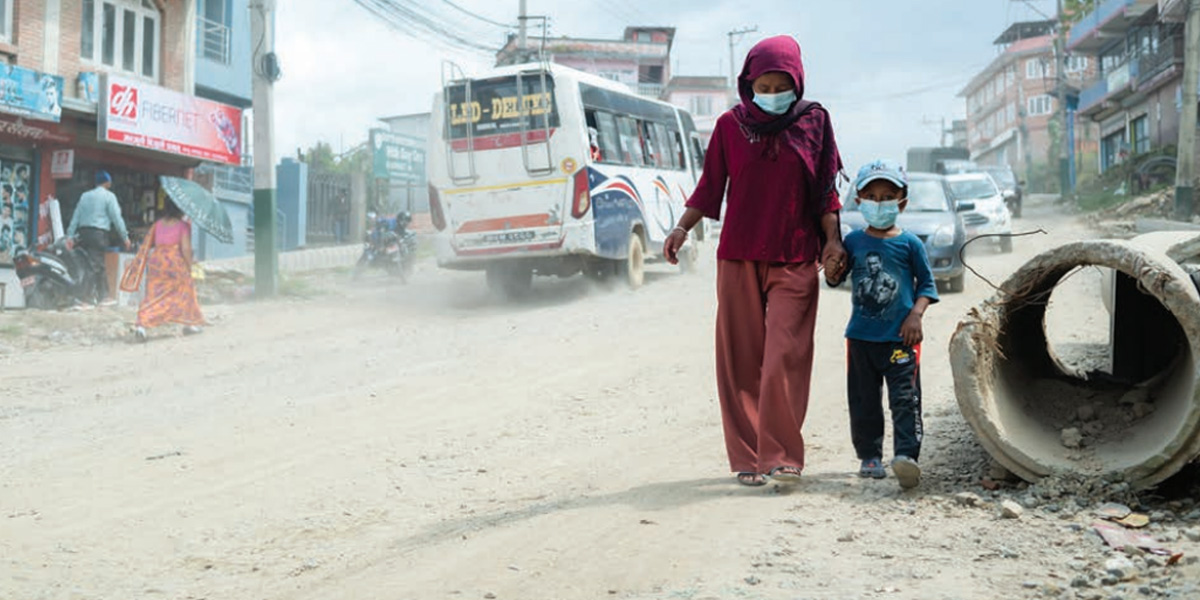 Photo Courtesy: World Bank
KATHMANDU: Air pollution is the number one risk factor for death and disability in Nepal, according to a recent study conducted by the World Bank.
The report titled ‘Towards Clean Air in Nepal: Benefits, Pollution Sources, and Solutions’ states that single-sector solutions are not sufficient to meet any clean air target. “Public policy and investment need to optimize air quality actions across sectors by prioritizing those with the most cost-effective solutions,” the report added.
According to the World Bank, the report serves as a foundational assessment of air pollution in the country and the airshed of the Indo-Gangetic Plain and Himalayan Foothills.
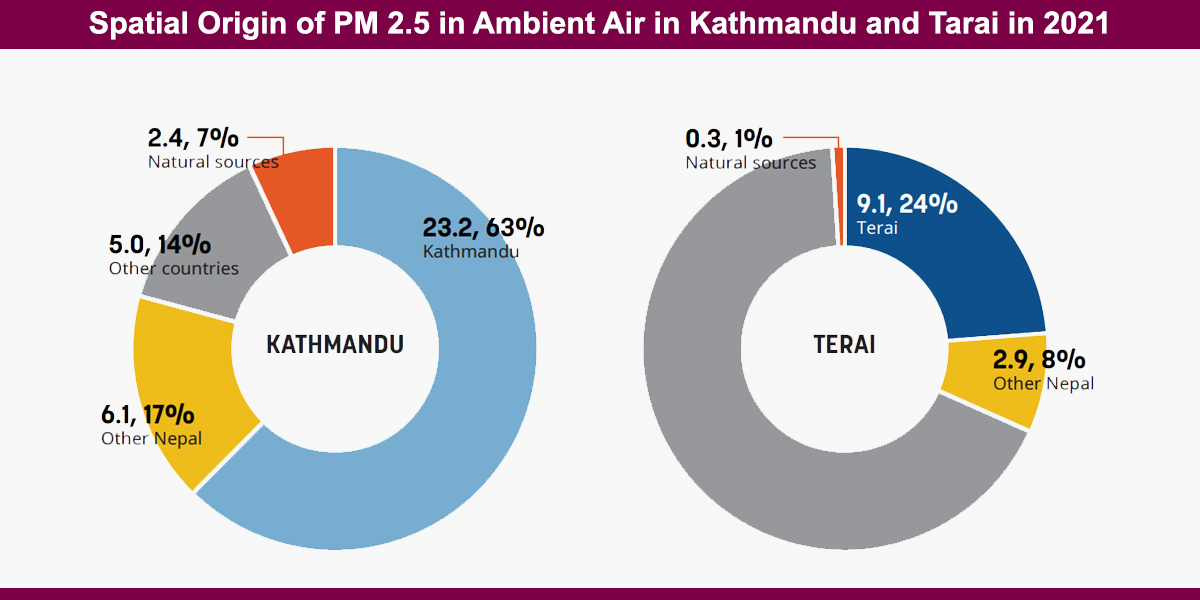
The report states that there has been no significant improvement in pollution levels in Kathmandu Valley and Tarai, which are Nepal’s main air pollution hotspots, according to the report. “Air pollution reduces life expectancy by 3.4 years for the average Nepali and causes approximately 26,000 premature deaths annually,” the report said. “In addition to health, air pollution impacts labor productivity, tourism, and the aviation sector. The economic cost of poor air quality is equivalent to more than 6% of Nepal’s Gross Domestic Product (GDP) each year.”
Commenting on the report, Minister for Forests and Environment, Ain Bahadur Shahi Thakuri, said the cost of inaction on pollution is far greater than the cost of taking bold steps today. “From setting stricter industrial emission standards to promoting electric transport, the government is committed to cleaning Nepal’s air,” Thakuri added.
Expanding electrification of vehicle fleets, supporting cleaner technologies and fuels for industrial units, promoting electric cookstoves at households, enhancing awareness programs and putting in place effective fire response systems to control forest fires, and partnering effetively with neighboring countries to address cross-border pollutant flows are some of the measures recommended in the report to reduce air pollution.
David Sislen, the World Bank Country Division Director for Maldives, Nepal, and Sri Lanka, said the World Bank is committed to supporting Nepal’s air quality improvement through financial, technical and capacity-building assistance. “Drawing on global expertise, we aim to ensure sustainable and impactful solutions for cleaner air in Nepal,” he added.