 Himal Press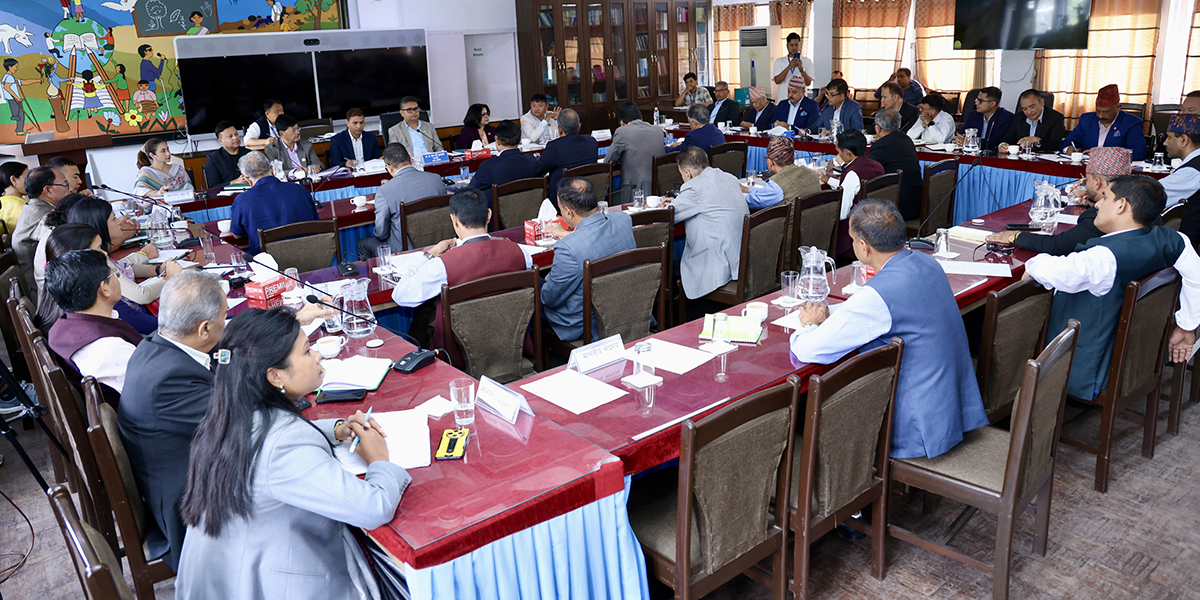
KATHMANDU: Experts have suggested that the upcoming monetary policy should be made more relevant and incorporate several issues not addressed in the budget.
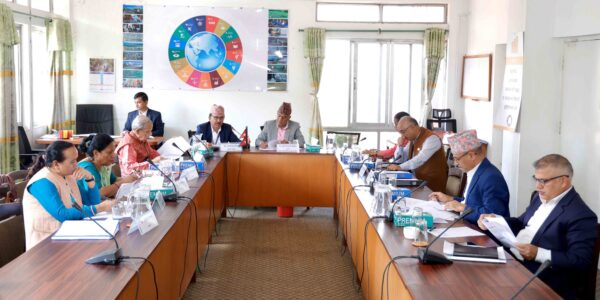
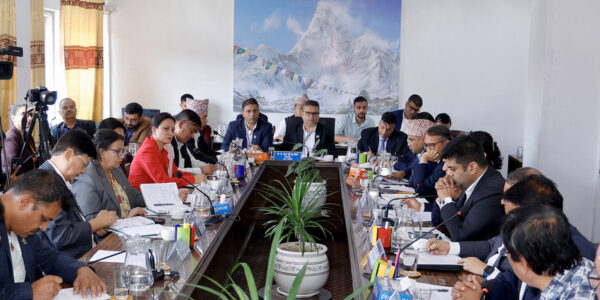
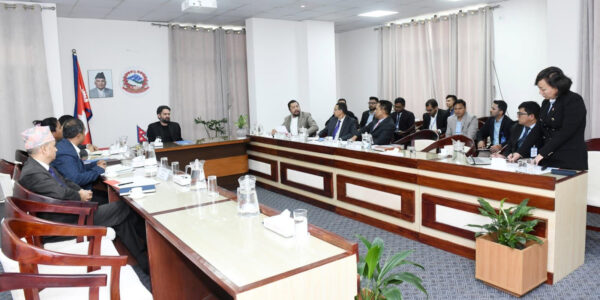
Speaking at a meeting of the Finance Committee of the House of Representatives on Sunday, former governors, representatives of banks and financial institutions, and leaders of the private sector said the monetary policy must address the needs of economic recovery.
Former Governor Dipendra Bahadur Kshetri said the monetary policy should stabilize the country’s weakening economy. “There should be proper coordination between fiscal and monetary policy,” Kshetri said. He also underlined the need to preserve the central bank’s autonomy.
Another Former Governor Maha Prasad Adhikari said the direction of the monetary policy is determined by domestic economic conditions and the external sector. “Given the current situation, there is no basis for the central bank to further tighten the bank rate, policy rate or interest rate corridor,” Adhikari said. “Since prices are stable and the external sector is in a satisfactory position, there is no need to tighten interest rates or other monetary tools further.”
Adhikari also argued that policies implemented in the past to boost domestic production and improve the economy should not be rolled back in the name of flexibility.
Likewise, another former Governor Dr Chiranjibi Nepal underscored the need to uphold the central bank’s autonomy and international practices. “The primary objective of monetary policy is to control inflation while supporting the government’s economic growth targets. It should fulfill its responsibilities accordingly,” he said.
Nepal also suggested establishing an Asset Management Company to address the rising non-performing loan (NPL) levels in the banking sector.
Also speaking on the occasion, Federation of Nepalese Chambers of Commerce and Industry (FNCCI) Anjan Shrestha said that while the budget has addressed some issues, the remaining demands of the private sector should be resolved through monetary policy. “Policy reforms through monetary measures would make it easier to revive the economy,” Shrestha said. “Increasing production is essential for job creation. For that, the private sector needs support and cooperation.”
Manoj Gyawali, CEO of Nabil Bank, said monetary policy should be framed with the understanding that problems in banks and financial institutions ultimately reflect broader problems in the country. “We need to distinguish between borrowers who are unable to repay loans due to circumstances and those who deliberately default,” he said, pointing out the need for legal reforms to simplify banking processes.
Santosh Koirala, president of the Nepal Bankers’ Association, said the monetary policy should take account of the ongoing economic slowdown. “Some revisions are needed in provisions related to loan loss classification,” he added.
Similarly, Prachanda Shrestha, president of the Confederation of Banks and Financial Institutions Nepal, said the central bank should play a stronger supportive role given that the banking sector is currently under stress. “Even slight flexibility in micro-supervision and non-performing loan classification could send positive signals to the market,” he added.
Bhim Prasad Ghimire, vice president of the Confederation of Nepalese Industries, and economist Nar Bahadur Thapa, among others, also emphasized the need for a timely and responsive monetary policy.