SURKHET: The HIV infection rate in Karnali Province appears to be declining. According to the Karnali Directorate of Health Services, while 80 individuals tested positive for the virus five years ago in the fiscal year 2021/22, only 31 infections have been confirmed until mid-May of the current fiscal year 2025/26.
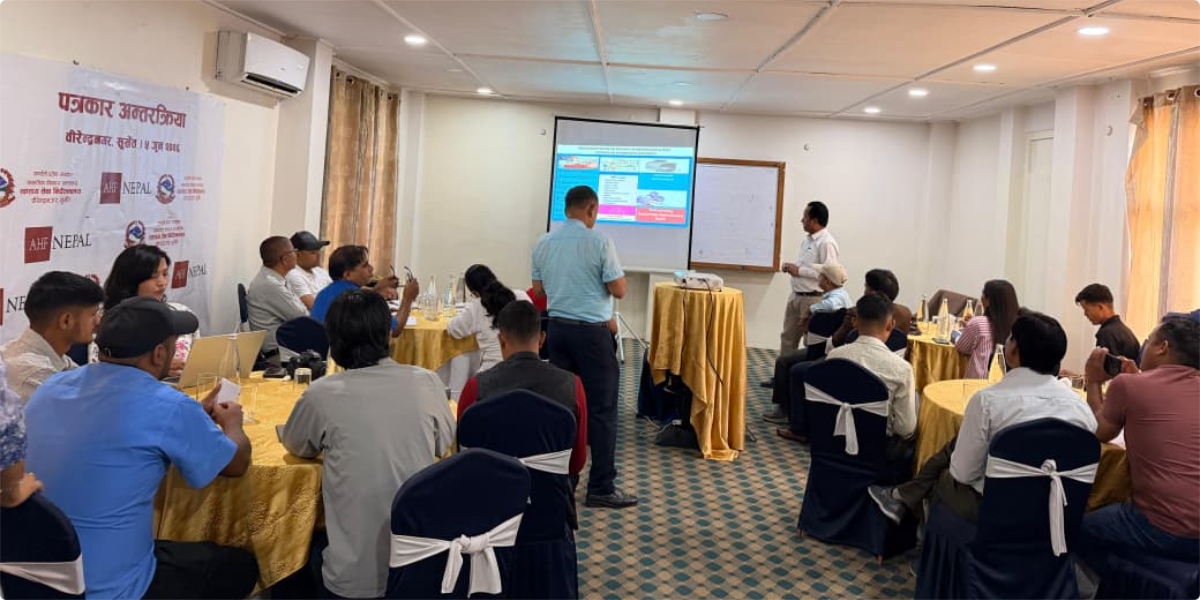
Padam Bahadur KC, the HIV Focal Person for the Karnali Directorate of Health Services, shared during a national program on AIDS and disease control held in Birendranagar that 39 infections were detected out of 9,279 tests conducted in the fiscal year 2024/25. He added that 57 cases were recorded in 2022/23 and 38 in 2023/24.
Currently, 770 HIV-infected individuals are receiving regular treatment across various Antiretroviral Therapy (ART) centers in the province.
According to the directorate, treatment services for HIV patients are being provided at Provincial Hospital Surkhet, Dailekh Hospital, Salyan Hospital, Kalikot Hospital, Rukum West Hospital, Rakam Karnali Basic Hospital, Salkot Primary Health Centre, Mehalkuna Hospital and Dullu Hospital. Among these health facilities, the Provincial Hospital Surkhet treats the highest number of patients. At present, 290 individuals are undergoing treatment at the hospital.
According to KC, under the Prevention of Mother-to-Child Transmission (PMTCT) program, 33,740 pregnant women have been tested for HIV in the current fiscal year so far. “This represents approximately 79% of the targeted pregnant population. Out of those tested, two cases were confirmed positive,” KC said. “Timely testing, treatment and counseling services have been prioritized to minimize the risk of transmission from infected mothers to their infants.”
Data show HIV-related deaths in Karnali Province totaled 12 in 2022/23, 11 in 2023/24, nine in 2024/25 and six so far in the current fiscal year.
AIDS Healthcare Foundation (AHF) Nepal has also been collaborating on HIV control and treatment services in Karnali. Sanjay Kumar Poudel, the program coordinator for AHF Nepal, said that the organization has been partnering with the ART clinic at the Provincial Hospital Surkhet since 2018.
Data show HIV-related deaths in Karnali Province totaled 12 in 2022/23, 11 in 2023/24, nine in 2024/25 and six so far in the current fiscal year.
According to KC, the organization is extending support such as patient counseling, enhancing access to and continuity of treatment, expanding testing services, and building the capacity of health workers. “AHF is working to make prevention, testing, treatment, and care services more effective,” he added.
Poudel also said AHF Nepal has been providing necessary support by organizing awareness programs in high-risk communities, distributing condoms, expanding access to testing, and linking infected individuals to consistent treatment.
An estimated 34,337 Nepalis were living with HIV in Nepal by the end of 2024. In line with the national goal to end the AIDS epidemic by 2030, a campaign is underway to achieve the 95-95-95 targets in patient identification, treatment, and viral load suppression.
The 95-95-95 HIV targets are metrics established by the UNAIDS aimed at ending the HIV/AIDS epidemic as a public health threat. The defined targets incude 95% of all people living with HIV know their HIV status, 95% of all people diagnosed with HIV infection receive sustained ART, and 95% of all people receiving ART have viral load suppression.
Challenges Persist
Stakeholders say there are still various challenges in the campaign against HIV.
Devendra Pathak, chairperson of Navakiran Plus Surkhet, said infected individuals traveling from various districts of Karnali to Surkhet for medical treatment face high transportation costs. “Financial assistance for travel expenses would greatly relieve those with weak financial backgrounds,” he added.
Pathak said local governments should allocate budgets to create income-generating opportunities for HIV-infected individuals. Since the majority of those infected come from low-income backgrounds, he said it is essential for the government to introduce income-generating programs for such people.
“Social stigma and discrimination against infected individuals persist in our society. Similarly, high-risk groups still lack full access to testing, and there is a critical need to raise awareness at the community level,” he said, adding that both the state and the community play crucial roles in creating an environment where people living with HIV can live with dignity.