 Himal Press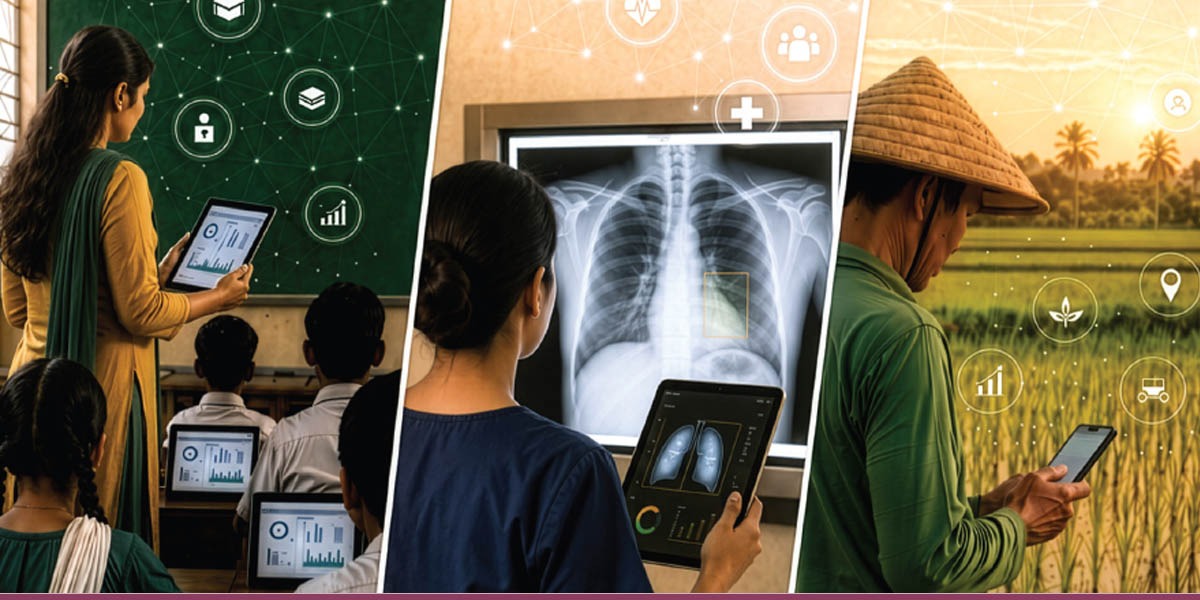
KATHMANDU: Jobs in high-income countries are more than three times as likely to be at risk of automation by generative artificial intelligence (AI) than those in low- and middle-income countries, according to a recent World Bank report.
According to the “World Development Report 2026: The Promise of Artificial Intelligence” released by the World Bank on Tuesday, 4.5% of existing jobs are at risk in developing countries, compared with 14.2% in high-income countries.
“At the same time, 16.2% of jobs in developing economies could see productivity meaningfully boosted by AI — close to the 18.7% expected in high-income countries. The greatest promise for developing countries lies not in replacing workers, but in amplifying what they can do,” the World Bank said in a statement.
The study also finds that women use artificial intelligence (AI) less than men do. “A systematic review of 76 studies from more than 100 countries finds that the adoption of generative AI tools was about 16 percent higher for men than for women in 2025. This can limit opportunities to realize AI’s benefit, for example, through AI tutors that deliver personalized instruction to girls unable to attend school regularly,” the report states.
This, according to the report, is mainly due to low access to smartphones and internet for women. “In low- and middle-income countries, women are 12 percent less likely than men to use mobile internet and 13 percent less likely to own a smartphone,” it added.
According to the report, female-dominated occupations are five times more likely to be automated by generative AI than male-dominated ones (16 percent versus 3 percent). “This disparity reflects the large numbers of women working in clerical and administrative roles, where tasks are routine and codifiable—precisely the tasks for which generative AI performs best,” it added.
According to the report, AI is already helping people, businesses, and governments solve problems, analyze information, improve forecasts and deliver services at a larger scale. “These capabilities are especially valuable in countries where trained professionals, reliable records and public capacity are often limited. AI tools can make it easier for doctors to diagnose patients, farmers to improve crop decisions, and businesses to become more productive,” it said. “Governments, too, could use AI to improve tax collection, social programs, disaster response, health care and education.”