 Himal Press
  Prime Minister Balendra Shah
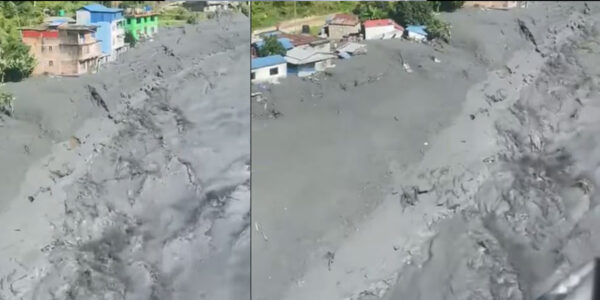
KATHMANDU: Prime Minister Balendra Shah has said that the time has come for Nepal to strongly raise with the international community the issue that disasters, such as the devastating Bhotekoshi flood, are due to climate change.
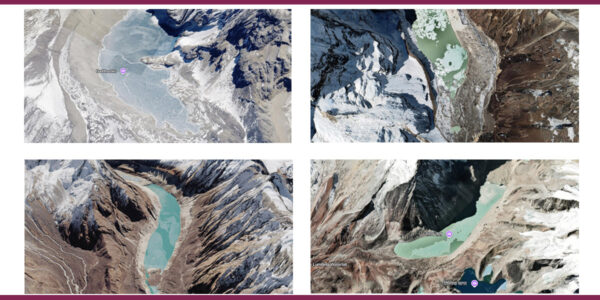
In a social media post on Monday evening, Shah said the Bhotekoshi flood was not an ordinary disaster but one of the biggest disasters in the Himalayan region triggered by a snow-and-ice avalanche. “This incident indicates that the risks we face in the Himalayan region are increasing with climate change,” he said.
Shah said the government was firmly and actively engaged in the search, rescue, treatment and relief of flood victims and in ensuring their safe relocation.
He praised security personnel, civil servants, media workers, officials of various agencies, volunteer organizations and citizens who have been working on the front lines without concern for their own safety.
“We express our heartfelt gratitude for the patience, support, cooperation and coordination you have shown during this period,” Shah said.
He also acknowledged the support provided by provincial and local governments to the federal government in disaster management.
He said Nepal’s friendly countries, domestic and international organizations, media and other stakeholders had also provided valuable support.
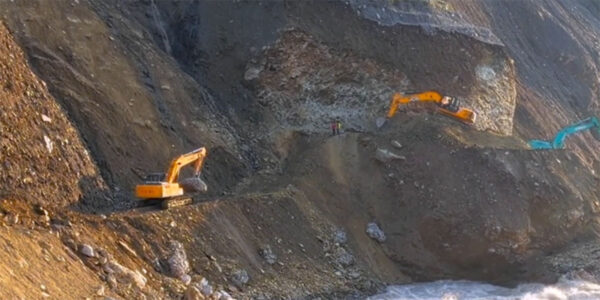
According to Shah, the government is focused on search-and-rescue operations in the affected areas while continuing to collect and distribute relief supplies.
Relief materials collected from Kathmandu and other parts of the country are being transported to affected communities, he said.
Shah said Nepal had received assistance from friendly countries including India, China, the United States, the United Arab Emirates, Qatar, Japan, Switzerland and Australia.
“Security agencies are transporting relief supplies by air and road through four collection centers in the affected districts of Rasuwa, Nuwakot and Dhading. The supplies have been distributed through 27 distribution centers in Rasuwa and Nuwakot, reaching 3,696 affected people,” he said.
Provincial and local governments are also actively coordinating with the federal government to manage shelter and relief at the distribution centers, according to Shah.
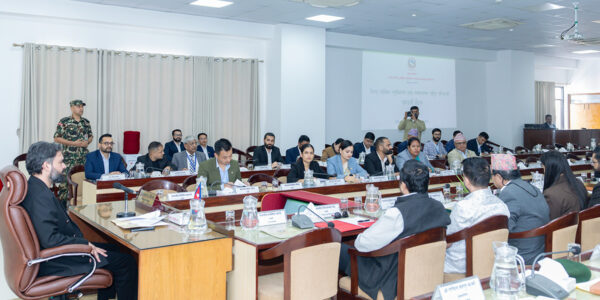
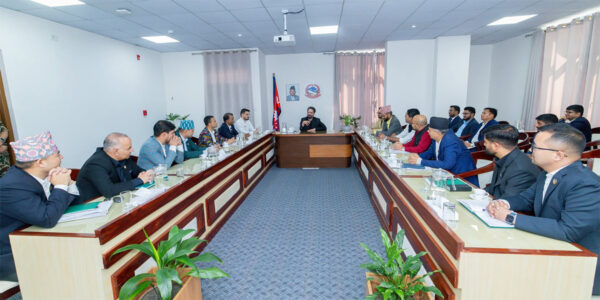
The government has also begun discussions on the rehabilitation of flood-affected people alongside search-and-rescue operations. He said authorities, in coordination with local governments, have started collecting data on the number of affected people and the extent of physical damage.
He said the government’s next priority was to help affected people return to normal life through rehabilitation, and to provide psychological and physical support.
“The government will work to rehabilitate them by making them mentally and physically stronger. Efforts to mobilize the financial resources required for rehabilitation are ongoing,” he said.