 Himal Press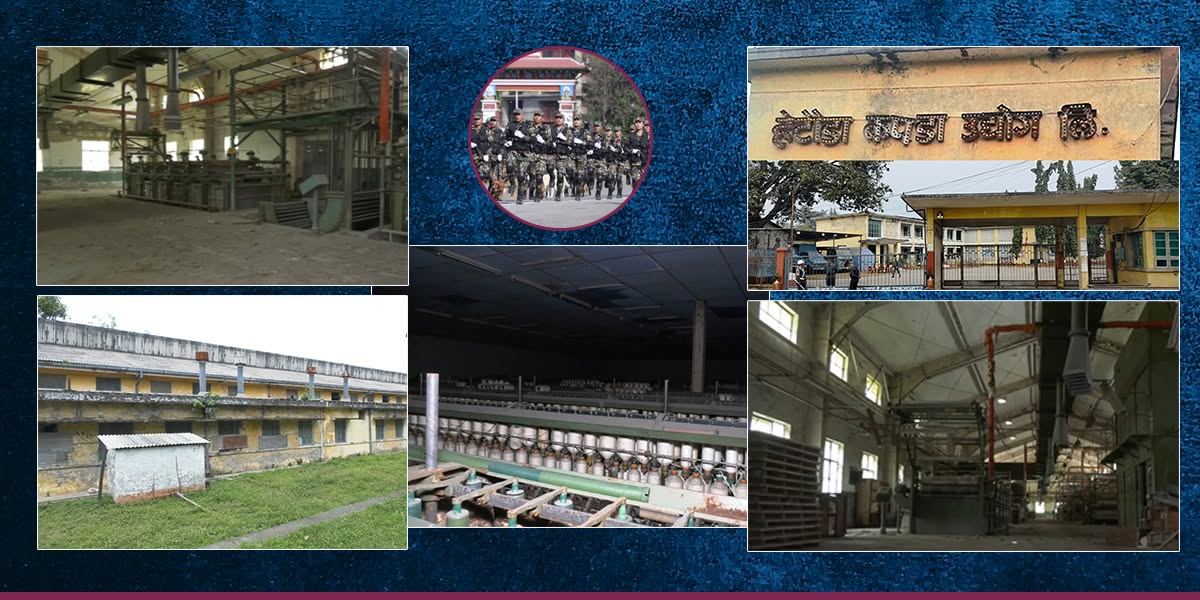
KATHMANDU: The Nepali Army has begun implementing three key responsibilities related to the revival of the long-defunct Hetauda Textile Factory.
According to Nepali Army Spokesperson Brigadier General Raja Ram Basnet, the army has begun work related to repairing machinery, carrying out trial production and preparing a technical assessment report on the factory’s overall condition.
Basnet said the work is being carried out through the Directorate of Military Materials Procurement in line with responsibilities assigned by the government.
“The Nepali Army has been entrusted with three responsibilities regarding the Hetauda Textile Mill. The first is to repair the machinery installed at the factory, the second is to undertake trial production and the third is to prepare a comprehensive technical assessment report using our technical personnel,” Basnet told Himal Press on Wednesday.
He said the assessment report would be submitted to the government at the earliest.
Basnet added that experts from relevant fields would be involved in the study if necessary.
“As the factory has remained closed for a long time, we are assessing its actual condition, the state of its machinery, its production capacity after trial production and the feasibility of resuming operations,” he said.
He said the Ministry of Industry, Commerce and Supplies has allocated the necessary budget, and all three tasks are being carried out with funds provided by the ministry.
Earlier, a task force formed by the ministry had submitted a report recommending the immediate commencement of trial production, followed by the factory’s long-term operation at full capacity.
A technical team from the Army has already been deployed to the factory premises, where it is carrying out cleaning, machinery repairs and other preparations required for trial production.
Ministry spokesperson Netra Prasad Subedi said the government has allocated Rs 3.3 million to the army for the work.
The Hetauda Textile Factory has remained closed since 2000. In 2003, the cabinet decided to liquidate the state-owned factory. Preparations were later made to revive it during Baburam Bhattarai’s tenure as finance minister. However, the plan did not materialize.
After the revival effort failed, the factory was again placed under liquidation in 2009. The government led by Prime Minister Balendra Shah is now making a fresh attempt to bring the factory back into operation.
![Ghodejatra festival observed in Kathmandu [In Pictures]](https://en.himalpress.com/wp-content/uploads/2026/03/Ghodejatra-cover.jpg)