 Himal Press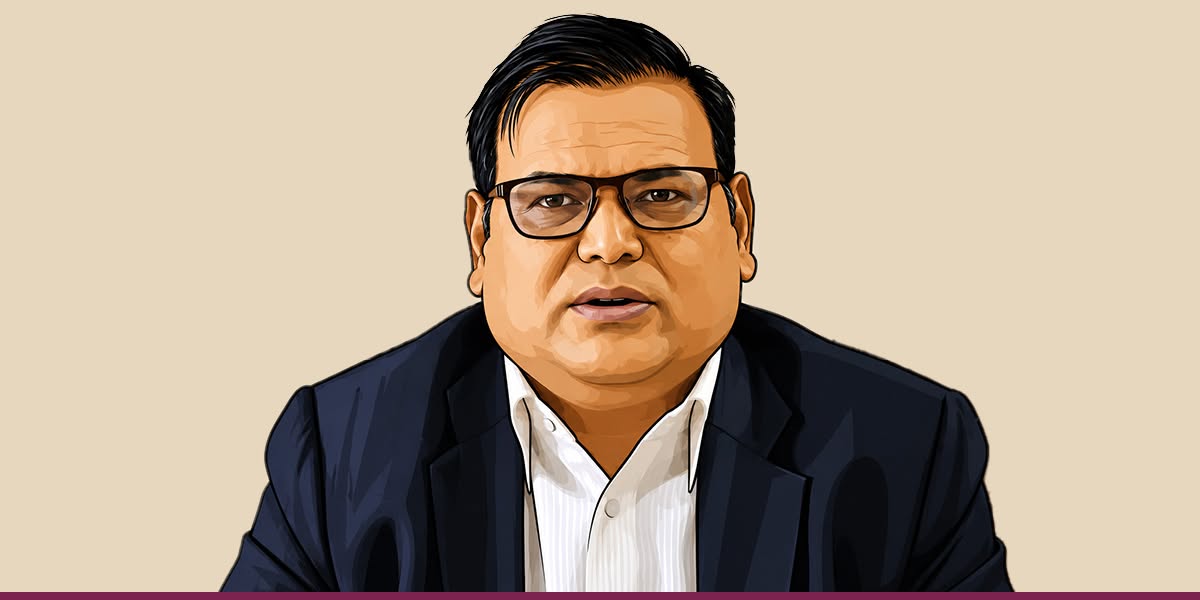
KATHMANDU: Former Speaker and senior Maoist leader Krishna Bahadur Mahara has announced his retirement from active politics after 48 years in Nepal’s communist movement.
This marks the end of a political career that took him from a classroom in Rolpa to the highest levels of government and parliament. However, a series of financial, ethical, and political controversies cast a shadow over his public image.
Once regarded as one of the most influential strategists of the Maoist movement, Mahara has now been forced to step away from active politics due to health problems. After 48 years of involvement in Nepal’s communist movement, Mahara said he would retire from active politics and remain only an ordinary party member. Mahara made the decision after he was diagnosed with atrophy, a condition that causes progressive degeneration of the nerves and muscles.
“For the past few years, I have been suffering from an atrophy-related illness. Despite undergoing regular treatment, therapy, and medication, my health has not improved as expected. As a result, it has become increasingly difficult for me to contribute to party activities and responsibilities in the active, effective, and responsible manner I once could,” Mahara said in a statement on Thursday. “Accepting this reality, I have made the difficult decision to step down from all active party responsibilities and remain an ordinary member from today onward.”
A science and mathematics teacher in Rolpa before entering full-time politics, Mahara inspired many young people to embrace leftist politics. He was first elected to Parliament in 1991 and later went underground during the Maoist armed insurgency.
After the 2008 Constituent Assembly election, Mahara went on to hold some of the country’s most powerful offices, serving as minister on six occasions, deputy prime minister several times, and Speaker of the House of Representatives. Mahara, a close confidant of Maoist supremo Pushpa Kamal Dahal, he was often criticized for securing powerful positions by sidelining other aspirants in the party.
A career dogged by controversies
Though often described as a calm and composed figure, Mahara’s career was never free from major financial and ethical controversies. The most significant setback in Mahara’s political career came during the Dashain festival of 2019, when a female employee of the Federal Parliament Secretariat accused him of misconduct and assault. The incident forced him to resign as Speaker. This was one of the most embarrassing episodes in Nepal’s parliamentary history.
Likewise, as Minister for Information and Communications after the political change of 2006, Mahara was accused of manipulating the allocation of mobile frequencies and distributing licenses at heavily discounted rates. A parliamentary subcommittee concluded that Nepal Satellite Telecom had been granted a license at a nominal fee in violation of regulations, causing substantial losses to the state.
In 2010, Mahara became embroiled in national and international controversy after an audio recording, in which he was allegedly heard asking a Chinese businessman for Rs 500 million to ‘buy’ lawmakers, surfaced. Mahara consistently maintained that the recording was fabricated.
Mahara also drew flak for a lack of transparency in the distribution of government allowances for Maoist combatants through him. The Office of the Auditor General had identified more than Rs 460 million in unsettled accounts. The amount was later written off through a political decision by the government led by party colleague Baburam Bhattarai.
Before becoming finance minister in 2016, Mahara was under investigation by the anti-graft body over allegations of illicit wealth accumulation. However, he was cleared of wrongdoing during the tenure of the body’s then chief Lokman Singh Karki. He also faced criticism for diverting more than Rs 660 million in non-budgetary funds to small-scale projects in his home district of Rolpa.
Mahara was accused of pressuring his ministry to appoint bureaucrat Chudamani Sharma, who was later implicated in a major tax settlement controversy, as acting secretary. The two allegedly maintained close ties.
His name also surfaced during investigations into the high-profile 33-kilogram gold smuggling case. Mahara also faced allegations of making suspicious visits to China, Singapore and Malaysia without informing the party.
Mahara was widely regarded as a skilled political negotiator capable of maintaining delicate balances within the party and government. However, the combination of power, controversy and scandal ultimately tarnished the later years of his political career. Now, he has brought an end to a 48-year journey in active politics due to his declining health.