 Himal Press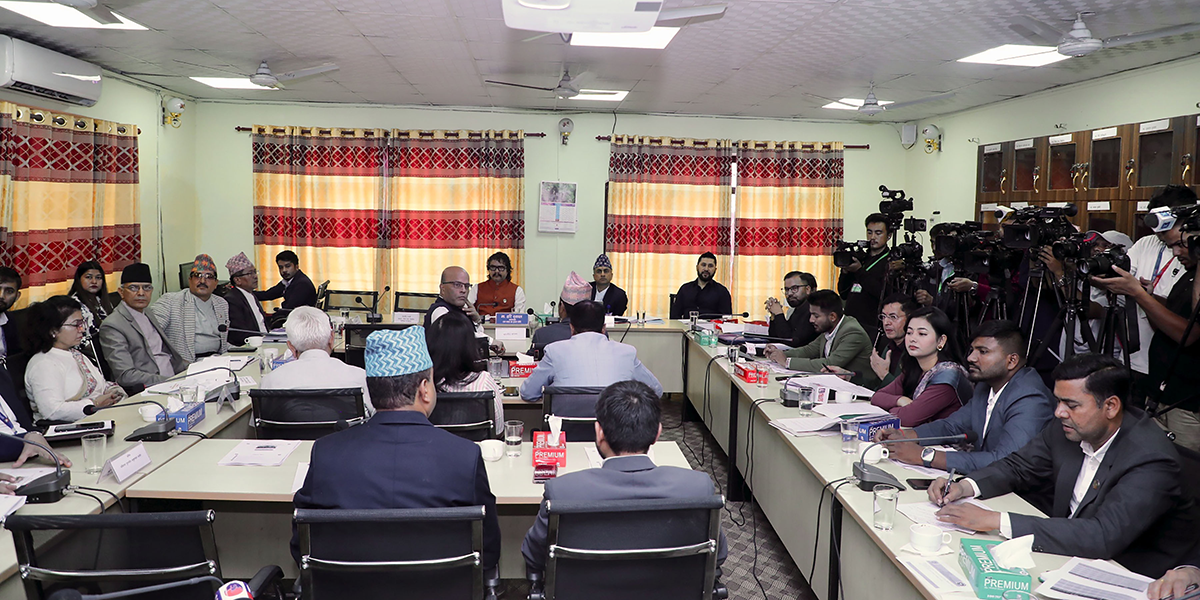
KATHMANDU: Lawmakers have warned against attempts to turn the constitutional body into a branch of the government.
Condemning the alleged summoning of the Commission for Investigation of Abuse of Authority (CIAA) officials to the Office of the Prime Minister and Council of Ministers, they said whether the executive had interfered in the everyday affairs of the constitutional body.
They were referring to the alleged summoning of the CIAA officials to the Prime Minister’s Office (PMO) in June. Multiple news media reported that officials at the PMO instructed CIAA officials to press corruption charges against officials of the Department of Passport.
Speaking at the State Affairs and Good Governance Committee of the House of Representatives on Thursday, Rastriya Swatantra Party (RSP) lawmaker Amresh Kumar Singh said the PMO cannot direct or pressure the CIAA because it is a constitutional body. “Please make it clear whether the CIAA is a constitutional body or a branch of the PMO,” Singh said. “The CIAA has the authority to investigate even the prime minister. Its officials should not go to the PMO just because they are summoned.”
Singh also questioned the CIAA’s performance. He accused middlemen of influencing the constitutional anti-graft body and said it had failed to investigate major corruption cases effectively.
“It appears the CIAA also protects middlemen. I know hundreds of them. If they sit there and collect money, the CIAA will be discredited. Other commissions were formed because the CIAA failed to fulfill its responsibility to investigate assets,” he said. “There has been corruption at Bhairahawa airport. I will put it on record. Why does it do nothing about major corruption?”
Nepali Congress (NC) lawmaker Arjun Narsingh KC expressed concern over attempts to turn the CIAA into the government’s helpless shadow.
“I have heard that the CIAA officials were confined for seven hours over a case. I am saddened by attempts to turn a constitutional institution into a helpless shadow,” he said.
KC urged the CIAA to coordinate with Nepal Rastra Bank (NRB) to investigate the outflow of illicitly earned money. “I don’t think they have the courage, but they should do it,” he said.
CPN-UML lawmaker Padma Aryal said the CIAA officials should be clear that they are not part of the executive.
“Today, the CIAA is under fear and political influence. Some also say it has become an obstacle to development projects. What is the truth?” she asked. “Complaints filed without facts and evidence simply to harass people should be dismissed at the earliest.”
Likewise, Nepali Communist Party (NCP) lawmaker Yubaraj Dulal questioned whether the CIAA is an institution that operates under the executive’s direction.
“I have heard that a case was filed against a certain individual in the passport procurement case at the direction of the PMO. Is that true or not?” he asked.
Shram Sanskriti Party (SSP) lawmaker Harka Raj Rai also wanted to know whether CIAA officials were summoned to CIAA and confined there for hours.
“I have heard that the PMO detained CIAA officials for hours. Please tell us what they were made to do there,” he said. “If it is true that the prime minister detained them for seven hours, that is an abuse of authority. Who will take action against it?”
Rai also said the CIAA has the authority to investigate abuse of authority, not just financial matters
She also asked whether the CIAA would take action against former prime ministers and ministers when they commit wrongdoing.
Gyan Bahadur Shahi of Rastriya Prajatantra Party (RPP) questioned CIAA officials why the anti-graft body had not pressed charges in several high-profile corruption scandals.
“Why did the CIAA not file a case in the Maoist combatants case? Why did it not file cases in the Giri Bandhu, Taragaon and Nepal Oil Corporation land scandals? Why was no case filed in the Omni case?” he asked.
Shahi also criticized the tendency of political parties to seek appointments of people loyal to them to constitutional bodies. He accused the RSP, like the NC and UML, of seeking to appoint its own people to such bodies.