 Himal Press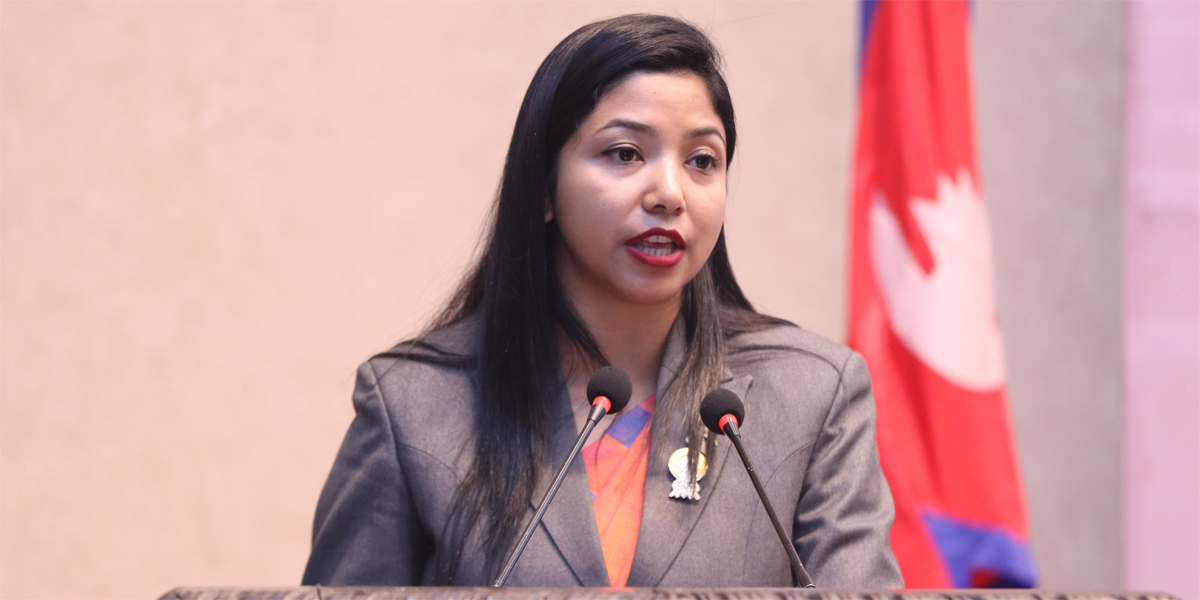
KATHMANDU: Kathmandu Metropolitan City (KMC) presented its policies and programs for the upcoming fiscal 2026/27 year during the 19th Kathmandu Municipal Assembly on Sunday.
Deputy Mayor Sunita Dangol presented the policies and programs document, outlining the city’s long-term vision of transforming Kathmandu into a “cultural city and prosperous metropolis.”
According to the document, KMC’s future roadmap is based on preserving Kathmandu’s historical identity, cultural heritage and urban civilization, while advancing it into an inclusive, good-governance-driven, technology-friendly, safe, clean, green and innovation-oriented smart city.
The KMC has said that ongoing multi-year projects will continue in the upcoming fiscal year, while unfinished initiatives will be carried forward into the next fiscal year.
Major programs and priorities:
- Introduction of “earn while you learn” programs, including internships, fellowships, and part-time engagements for university students.
- Expansion of youth-focused entrepreneurship and employment creation programs.
- Provision of concessional loans to promote self-employment and startups.
- Promotion of pedestrian-friendly and cycle-friendly infrastructure for safer mobility.
- Gradual expansion of night-time public transport services in coordination with Sajha Transport.
- Study and implementation of a structured urban parking management system.
- Legal arrangements to transfer and manage long-running land-pooling projects such as Newbazaar and Chamati.
- Budget allocation for the completion of the Manohara land pooling project within the coming fiscal year.
- Coordination with federal and provincial governments to manage and relocate vulnerable settlements along riverbanks and public spaces.
- Development of collective housing for urban poor, displaced families and vulnerable groups.
- Expansion of targeted social empowerment programs for women, children, senior citizens, Indigenous communities, Dalits, persons with disabilities, single women and marginalized groups.
- Free home-based health and counseling services for the elderly and persons with severe disabilities.
- Nutrition allowances for citizens aged 75 and above and fully disabled residents.
- Continuation of implementation of the “One Ward, One Model Program” with institutional sustainability.
- Rescue and rehabilitation initiatives toward declaring Kathmandu free from street-dependent homeless people, in coordination with partner agencies.
- Certification system for traditional knowledge, skills, and craftsmanship.
- Protection, digital documentation, restoration and promotion of Kathmandu’s monuments, temples, stupas, ponds, courtyards, and heritage settlements.
- Promotion of Kathmandu as an “open-air living museum” and creative city.
- Hosting an international-level Kathmandu Film Festival with foreign participation.
- Promotion of homestay tourism in traditional settlements in different parts of the metropolis.
- Lobby for UNESCO recognition of intangible cultural heritage, such as festivals, music, cuisine, rituals and traditional instruments.
- Preservation of festivals such as Indra Jatra and Seto Machindranath, locals along festival routes to be encouraged to make their building facades heritage-friendly.
- Building residences for deity figures used in major chariot festivals (including Ganesh and Bhairav).
- Restoration of traditional water systems, including ponds and stone spouts (hitis).
- Promotion of rainwater harvesting and groundwater recharge initiatives to maintain ecological balance.
- Promotion of film, food festivals, expos, and exhibitions to highlight local art, culture, crafts, cuisine, and traditional knowledge.
- Development of Kathmandu’s creative industries through cultural promotion and commercialization of heritage-based products.
- “Ye Deu Sanskritik Chhen” (Kathmandu Cultural House) at Dharmapath will be brought into operation in the current fiscal year.
- Special programs targeting Gen Z and Gen Alpha, recognizing youth as drivers of governance feedback and innovation.
- Support systems for marginalized and vulnerable communities will be strengthened through coordinated federal and provincial partnerships.
- Promotion of GIS-based digital address system, Open Data Initiative, AI technology, interoperability with national and provincial digital systems, cybersecurity, and system maintenance and support programs.
- Creation of the KMC Dashboard to provide real-time information and regular monitoring of plans, service delivery, development projects, revenue, expenditure, infrastructure, environment, disaster management, and grievance handling.
- Operation of GIS-based integrated information system as part of Digital Public Infrastructure to strengthen municipal governance.
- Home delivery of pesticide-free, clean fruits and vegetables through agro-pulling and metro marts to ensure food quality.
- Standards, including indicators related to the minimum living conditions of Kathmandu Metropolitan City residents, will be defined and implemented.
- Necessary arrangements will be made for the construction and operation of a well-managed slaughterhouse.
- To control the population of stray dogs and monkeys, effective management will be carried out by adopting humane, scientific, and technical methods while ensuring animal welfare.