
In a democratic system, a new government’s first 100 days are not a time for celebration, but rather a rigorous test of how effectively its commitments translate into reality. This period reveals a government’s momentum, priorities and governing style, and provides early answers about whether its commitment to governance, transparency and accountability extends beyond mere rhetoric.
Formed on March 27 under the leadership of Prime Minister Balendra Shah (Balen), this government is not the product of a traditional political coalition; it emerged from the foundation of last September’s Gen Z movement which claimed over 75 lives and caused destruction worth billions of rupees. Carrying a core agenda of good governance, transparency, and anti-corruption, it naturally faces exceptionally high public expectations compared to its predecessors. People are looking for a fundamentally new style of governance, a refined political culture and tangible results rather than just a change of faces. As a result, the government’s “100-Point Governance Reform Agenda” was viewed not just as routine paperwork but as a strong blueprint for governance.
The first 100 days are globally recognized as a political milestone for setting direction and allowing people to make initial assessments. This period offers clear insights into the government’s seriousness and working style. The practice of releasing 100-day achievements is slowly becoming institutionalized, fostering a culture of accountability. However, problems arise when this review is reduced to a superficial list of mere completed tasks.
Signs of Achievement
The government demonstrated the courage to intervene in politically sensitive areas that previous administrations had avoided under political protection. Investigations have been reopened into long-dormant files concerning public procurement, telecommunications, tourism and financial irregularities. Action against influential figures has sent a clear message that the law applies to everyone.
Likewise, the government has brought an end to formal inauguration ceremonies, reduced the number of ministries, cut administrative expenses, enforced strict office attendance and introduced digital service monitoring alongside online systems for staff transfers. These administrative changes have also signaled a shift in political culture.
The government has presented the distribution of land ownership certificates to landless squatters, the formation of a high-level commission to investigate the assets of high-ranking officials since 1991, the scrapping of 1,594 political appointments, beginning of the process to refund victims of cooperative scams, the reclaiming of encroached public land and reparations to amend over a hundred laws as its key achievements of the first 100 days. A push toward online services has raised hopes among the younger generation.
Questions Are Being Raised
Despite these gains, the first 100 days have also been marked by controversy. The force used during the management of landless squatters, the Prime Minister’s statements regarding border disputes with India, and controversies involving Minister for Home Affairs Sudan Gurung and his reinstatement as the minister without making reports of an investigation launched against him have triggered criticism.
The government also faces allegations of poor coordination with political parties and unusual interference from the Prime Minister’s Secretariat in constitutional bodies. There are fears that replacing formal processes with informal actors will affect good governance.
Furthermore, a rushed decision to implement a two-day weekend has disrupted services at major government hospitals and affected the academic calendar. Critics say services should have been made fully digital before transitioning to a five-day workweek.
Similarly, health insurance services collapsed in certain hospitals due to a shortage of funds at the Health Insurance Board, while shortages of cancer drugs and rabies vaccines have been seen.
Economic Stagnation
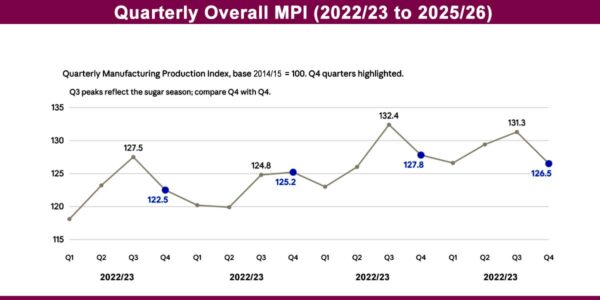
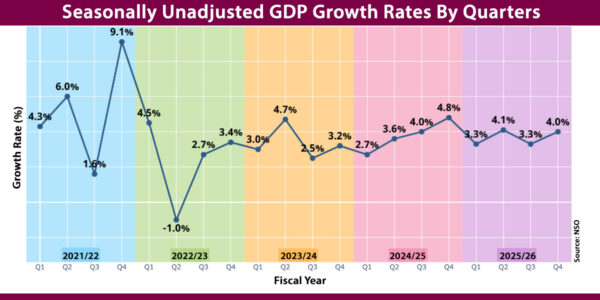
The government’s performance has been mixed in economic indicators. Despite the formation of a majority government, the private sector is still looking for policy stability, legal certainty and a trustworthy environment. While a crackdown on corruption is essential, it must not make the honest business community feel insecure. Investigative agencies must ensure that actions against bank directors and investors are legally airtight, as rushed detentions followed by immediate court releases only weaken the government’s credibility.
Despite ample liquidity in the banking system, private investment has not expanded as expected. The industrial, construction, tourism, and service sectors are in a “wait-and-watch” position. The government must also address unhealthy competition and lack of financial discipline within the banking sector. Critics say the Minister for Finance has spent too much time talking rather than delivering.
Although the 100-point reform agenda specified responsibilities and deadlines for each ministry, a detailed public evaluation of individual ministerial performance is missing. Vague assurances that “work is underway” do not satisfy the people’s demand for data and visible results.
There is also a risk of internal party dynamics affecting the government’s functioning. Infighting within the ruling camp could easily derail government operations and erode public trust.
Additionally, accountability must reach the top. In investigations, like the alleged irregularities in e-passport procurement, the scrutiny should not stop at the Director General of the Department of Passport while higher-level secretaries or ministers escape accountability. The core issue is why the cost was increased. The main questions center on why the decision was made to pay for the transfer of data from one supplier to the other, and why the printing and other related tasks were split into separate packages while calling for bids. Comprehensive investigations are needed into past shortcomings within some divisions of the foreign and finance ministries.
While the government is making rapid decisions, rushing steps without institutional coordination and adequate legal preparation could affect long-term efficacy. This applies to administrative reforms as well as security agencies—scrutinizing only the civil bureaucracy while ignoring the army and police will create an unbalanced system. However, this does not mean weakening the fight against corruption
Rule of Law or Populism
While people appreciate that politically protected individuals are being held accountable, an anti-corruption campaign must rely on unassailable evidence rather than popularity. Nepal’s history is filled with high-profile cases that fell apart in court due to weak preparation. If this pattern repeats, public faith in judicial fairness will be permanently lost.
Important bodies like the court, Nepal Police and Commission for the Investigation of Abuse of Authority (CIAA) must operate independently of political directives. If there are signs of collusion, there are constitutional tools to get rid of officials involved in such activities. The clearer the separation between the government’s political commitment and the institutional independence of investigative bodies, the stronger the rule of law becomes. A country’s greatest political capital is not merely a periodic electoral mandate, but rather the continuous trust of its citizens. The government must not make the mistake of replacing one middleman with another, or dismantling one power center only to build a new one.
Questions have also been raised regarding the Asset Investigation Commission’s jurisdiction. How well does a framework that investigates officials of constitutional bodies, the judiciary, security agencies, and past political leadership all under a single structure align with the constitution and existing laws? The government needs to pay serious attention to this issue. It must also ensure clarity on whether the evidence collected by the commission is strong enough to hold up in a court of law in the future. Otherwise, a political campaign that has captured public interest and received significant government preparation could ultimately get tangled in legal disputes and fizzle out into nothing.”
The Upcoming Test
The government’s performance should be measured by the quality, legal grounding, and implementation of its decisions rather than their sheer number. Many announced reforms are still in their infancy. Decisions like canceling political appointments and forming investigative commissions have sent the right signals. However, the main question is whether they reach a logical and legal conclusion. Concrete improvements in administrative efficiency, public service delivery, economic confidence, and the rule of law will be the yardstick to measure the government’s success.
The government’s only viable path is to rise above populist politics and establish procedure, transparency, and institutional governance as its true identity. If this government becomes successful, it could mark a genuine turning point in Nepali history. The public is keeping a close watch on the government with both hope and patience.
There are undercurrents of political instability, specifically regarding the alignment between RSP President Rabi Lamichhane and Prime Minister Shah. If their relation and cooperation falter, the government’s stability will face grave risks. The first 100 days have signaled a desire for change; the next 100 days must institutionalize these signals into lasting achievements.