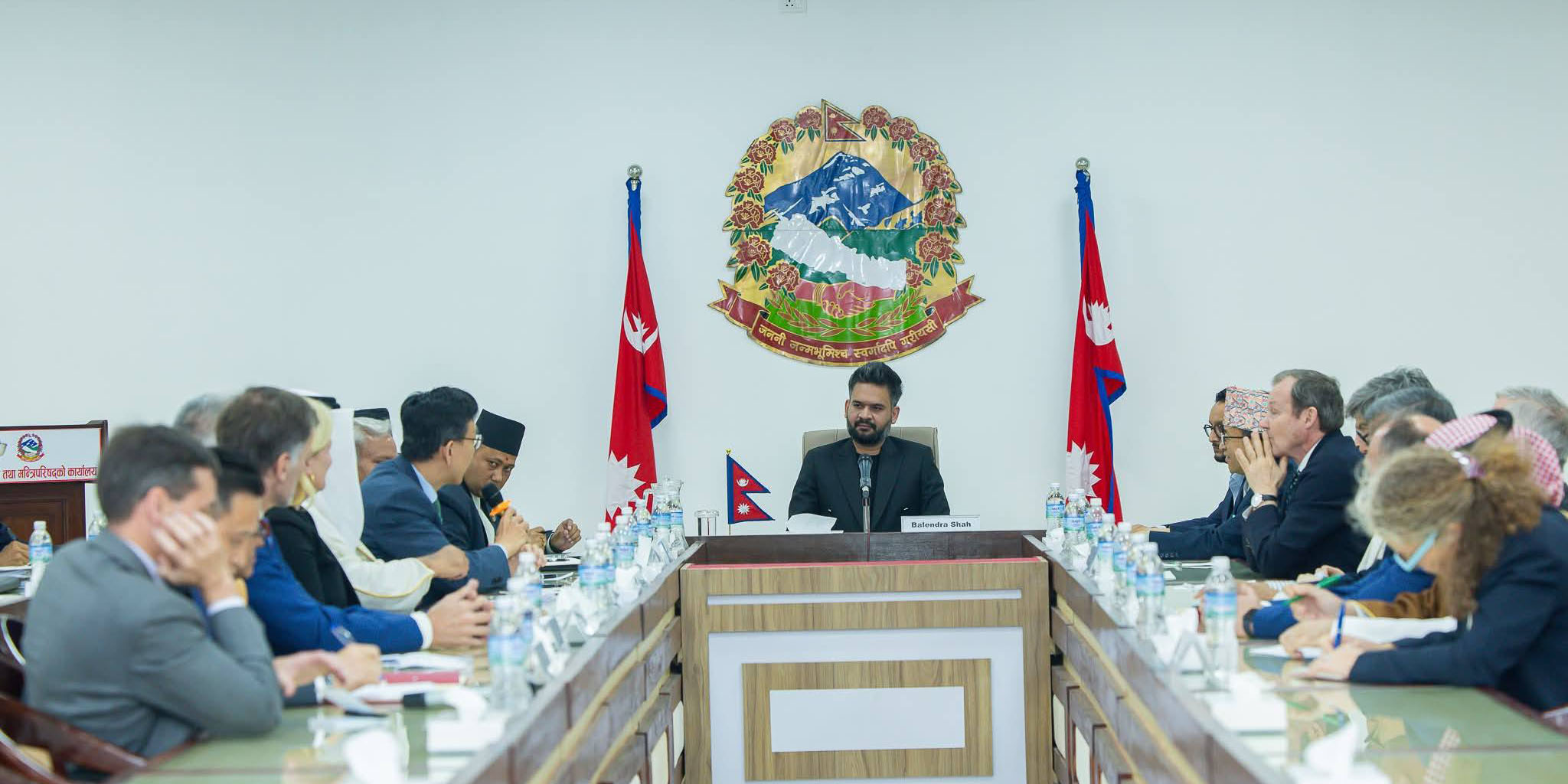
KATHMANDU: With the formation of a new government, the country’s diplomatic scene has seen an unusual surge in activity. The government led by Prime Minister Balen Shah of the Rastriya Swatantra Party (RSP) has signaled that it intends to set diplomatic priorities based on national interest rather than follow routine protocol. However, early signs suggest a degree of discomfort and confusion in how this approach is being implemented.
While Prime Minister Shah appears clear about maintaining a balanced, national interest–focused foreign policy, those close to him say Foreign Minister Shishir Khanal may be caught in the web of the foreign ministry bureaucracy. According to these sources, the prime minister has begun to take a closer interest in the matter.
Right now, the amount of foreign interest in Nepal feels a lot like the period following the 2006 People’s Movement, when major global powers actively engaged with Nepal. Today, however, China and the US seem to be leading the charge, while India’s involvement feels a bit more in the background.
Indian officials themselves have begun raising questions about Nepal’s diplomatic priorities. While US officials have been visiting Nepal regularly, reports of Indian representatives facing difficulties in scheduling meetings have raised concerns within Indian diplomatic circles.
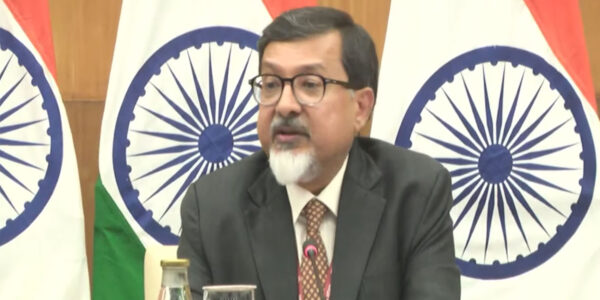
There had been discussion of a possible visit by Indian Foreign Secretary Vikram Misri. However, indications that Prime Minister Balen may avoid meeting representatives below the level of the foreign minister have prompted Indian officials to send messages through diplomatic channels. The lack of a clear response from Nepal has reportedly created uncertainty in New Delhi.
Indian media outlets have interpreted recent developments as a sign that the United States has gained an upper hand in Nepal. Indian Hindi-language daily Navbharat Times, for instance, has written that although India had planned to send a high-level delegation after the new government was formed, earlier US engagements have made it appear as though Washington has taken the lead in this diplomatic race.
Meanwhile, Sergio Gore, US President Donald Trump’s special envoy for South and Central Asia and the US ambassador to India, is scheduled to arrive in Nepal on May 10 for a four-day trip. Considered a trusted figure within the Trump administration, Gore has also been overseeing Nepal-related affairs from New Delhi, especially since the US ambassadorial post in Kathmandu has remained vacant following the recall of Dean Thompson in January 2026.
Gore’s role is seen as more senior than that of Assistant Secretary of State Paul Kapur, who visited Kathmandu recently and held talks with Nepali officials on investment, trade, technology, and policy reforms. Reports suggest that Gore is keen to meet with Prime Minister Shah, although the prime minister has indicated he does not typically meet officials below the level of foreign minister. The foreign ministry, however, is reportedly working to arrange such a meeting, and discussions are ongoing between the Prime Minister’s Office and the ministry.
Prime Minister Shah’s policy on whom to meet and whom not to has itself become a subject of debate. Whether he will meet a high-profile envoy like Gore remains uncertain, though some sources suggest that such a meeting has already been scheduled.
From the perspective of Indian analysts and media commentary, these developments suggest that Nepal’s diplomatic priorities may be tilting toward the United States. To counter that perception, the Prime Minister may refrain from meeting the US envoy. At the same time, conflicting signals from the foreign ministry, indicating that a courtesy meeting could take place, have added to the uncertainty.
Former foreign secretary Dr Madan Kumar Bhattarai says that meetings at the ambassadorial level do not typically take place with the head of government, even in India, unless under special circumstances. He argues that the designation of “special envoy” should imply a certain political stature, such as that of a former foreign minister, rather than a mid-level official.
Plans for Indian Foreign Secretary Misri’s visit, intended to prepare for Prime Minister Shah’s trip to India, appear to have been delayed following the arrival of US envoys. Indian media reports suggest that India had been preparing a high-level visit but now sees its priorities being challenged.
On a positive note, Prime Minister Shah has accepted an invitation from Indian Prime Minister Narendra Modi and may begin his foreign visits with India. According to India’s Ministry of External Affairs, Misri’s visit could precede Balen’s trip to restore balance in bilateral engagement.
Following Misri, Indian External Affairs Minister S. Jaishankar is also expected to visit Nepal, after which Shah’s trip to New Delhi could be finalized. These factors reduce the likelihood of the prime minister meeting other visiting officials in the interim.
Senior journalist Dhruba Hari Adhikary says while European countries have sent special envoys to Nepal in the past, the US has rarely done so in this manner. Neither Adhikary nor former foreign secretary Bhattarai remembers the US sending its special envoy to Nepal.
Against the backdrop of growing US interest, questions are being raised about how balanced Nepal’s diplomacy can remain. Both the United States and China are competing to strengthen ties with the new government.
Cao Jing, deputy director General in the Department of Asian Affairs at China’s Ministry of Foreign Affairs, recent Nepali officials in Kathmandu and reiterated concerns over issues such as the MCC Compact, the State Partnership Program, and Starlink. China has also maintained active diplomatic engagement, reiterating non-interference in Nepal’s internal matters.
Prime Minister Shah’s policy on whom to meet and whom not to has itself become a subject of debate. Whether he will meet a high-profile envoy like Gore remains uncertain, though some sources suggest that such a meeting has already been scheduled.
These developments cannot be viewed as routine diplomacy alone. Former US Secretary of State Henry Kissinger once described Nepal as a country that successfully navigated between major powers through careful diplomacy. He also famously warned that while hostility with the US can be dangerous, close friendship does not always guarantee safety.
That message, understood by earlier generations, raises questions about whether the current leadership will manage a similar strategic balance. Given the unpredictability often associated with President Trump’s decisions and rhetoric, there are significant risks.
At the same time, India has conveyed concerns that sidelining Indian officials while prioritizing US engagement could strain bilateral cooperation. With India playing a central role in regional groupings like the Quad, its strategic sensitivity has grown.
Nepal is now facing the challenge of maintaining its traditional closeness with India, leveraging economic opportunities with the US, and managing China’s interests in a balanced manner. Some Indian analysts even question whether Nepal is beginning to view India from a more distant, global perspective rather than as a close neighbor.
Still, Prime Minister Shah’s decision to accept Modi’s invitation offers an opportunity to reinvigorate bilateral ties. Preparations are underway to prepare a foundation for new agreements and projects in sectors such as trade, health, investment, Ayurveda, and security.
In this context, Nepal appears to be transitioning from a reactive to a more proactive diplomatic posture. If managed effectively, this competitive diplomatic environment could be turned into an opportunity serving national interests.
The contrast between awaiting India’s foreign secretary and welcoming a US envoy signals a shift: Nepal may now be prioritizing national interest over protocol. Whether this approach succeeds or leads to confusion will become clearer through such high-level engagements.
Ultimately, only a balanced, independent, and interest-driven foreign policy can turn great-power competition into an advantage for Nepal. The emerging “US versus India” narrative highlighted in Indian media underscores the importance of strengthening Nepal’s own strategic footing.