 Himal Press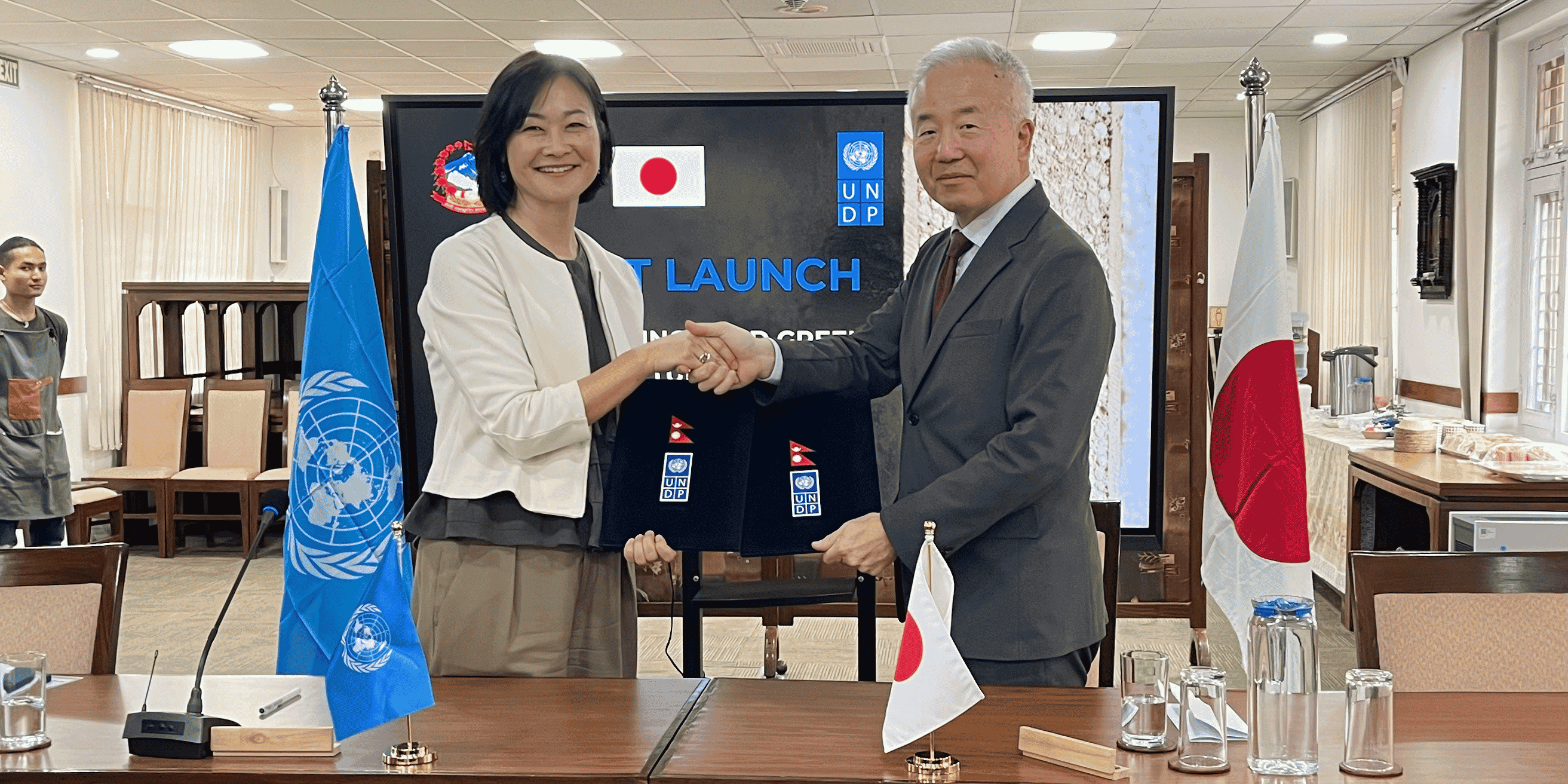
KATHMANDU: The Government of Japan and the United Nations Development Programme (UNDP) have launched a $1.296 million project aimed at strengthening urban resilience to climate risks in Dhangadhi Sub-Metropolitan City.
The initiative, titled “Smart Buildings and Green Infrastructure for Improved Human Security and Sustainable Development,” is part of UNDP’s global Climate Promise programme. It focuses on addressing rising heat risks and promoting sustainable urban development.
The project was launched in Kathmandu by Japanese Ambassador to Nepal Toru Maeda and UNDP Nepal Resident Representative Kyoko Yokosuka, according to a statement issued by the Embassy of Japan in Kathmandu.
“Nepal is warming at nearly twice the global average, with urban areas facing
increasing risks. In Dhangadhi, temperatures frequently exceed 40°C during recurrent heatwaves from May to August,” the embassy said in the statement. “Rapid and unplanned urbanization, shrinking green spaces, and limited energy-efficient infrastructure are intensifying impacts on health, livelihoods, and essential services, particularly for low-income households and outdoor workers.”
Speaking at the event, Ambassador Maeda reaffirmed Japan’s commitment to supporting climate resilience in Nepal, especially for vulnerable communities. He said the project is expected to enhance the city’s ability to cope with extreme heat through integrated urban heat management solutions.
Similarly, UNDP’s Yokosuka said the project will focus on practical interventions, including thermal retrofitting of public buildings, restoration of urban wetlands, and promotion of nature-based cooling solutions. She added that these approaches are designed to be scalable and replicated in other cities facing similar climate challenges.
The project will combine infrastructure development, urban planning, and local capacity building to address rising heat risks. It is expected to directly benefit around 4,000 people.