Today, the quest for sustainable solutions to peace is far more pressing in a world fraught with geopolitical conflicts, ideological splits and rising mental health crises. Buddhist teachings, especially the virtues of compassion (Karuna), non-violence (Ahimsa) and mindfulness (Sati), are appreciated around the world as influential soft common resources for minimizing these problems.
For centuries, museums around the world have been promoted as important spaces for people’s well-being. Buddhist principles offer powerful tools in making this role more effective, and they are already being applied in practice in many countries. The Rubin Museum of Himalayan Art (New York) incorporates meditation and reflection into its experiences, and the Smithsonian National Museum of Asian Art (Washington) offers contemplative programs to support support mental health. Similarly, Canterbury Museums of England has pioneered work linking museum experiences with children’s mental health, demonstrating how Buddhist wisdom-based activities within museum settings can generate what some scholars describe as “sticky soft power,” a form of cultural influence that goes beyond momentary attraction to remain with visitors and gradually reshape their attitudes, emotions, and decision-making over time.
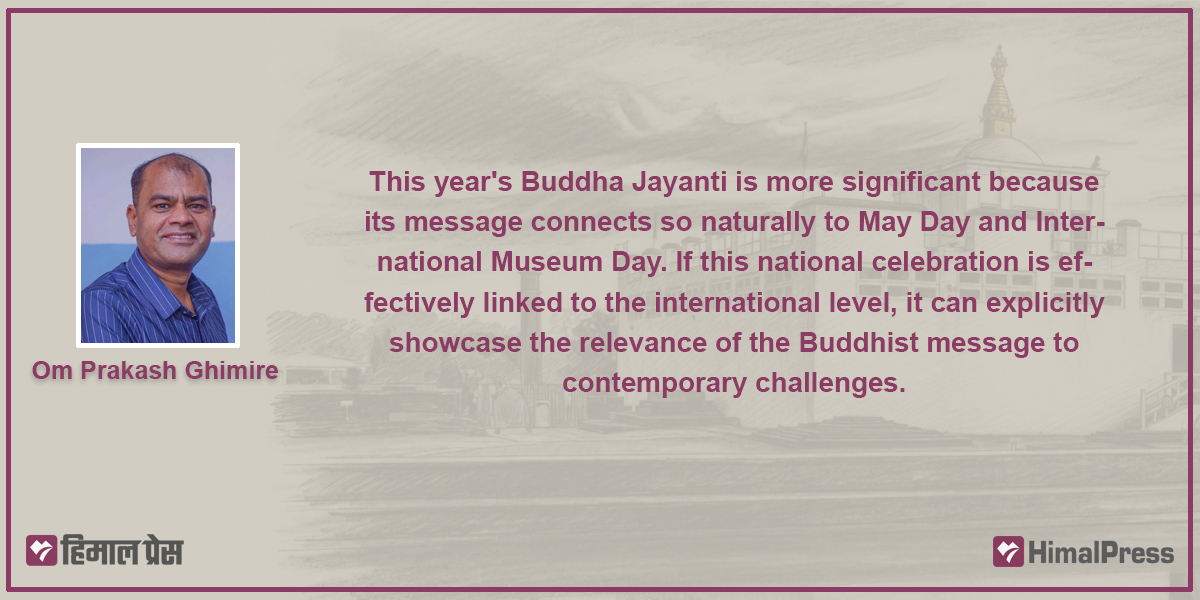
International Museum Day is celebrated globally on May 18 to promote the crucial role of museums in cultural exchanges, education and community development. The theme for this year’s International Museum Day celebration is ‘Museums Uniting a Divided World’. The theme coined by the International Council of Museums (ICOM) is close to the Buddhist principles of peace and spirituality in many ways. The potent ideological legacy of Buddhist scriptures such as the Dhammapada, which emphasize love and compassion and assert that ‘hatred can only be dispelled by non-hatred’, resonates strongly with contemporary calls for dialogue and peacebuilding. For Nepal, such an essence of solidarity would be a matter of purpose, not mere coincidence.
For centuries, museums around the world have been promoted as important spaces for people’s well-being. Buddhist principles offer powerful tools to make this role more effective, and they are already being applied in practice in many countries.
Anchored by Lumbini, a UNESCO-recognized world heritage site authenticated by the Ashokan inscription of 249 BCE, Nepal possesses a form of “spiritual capital” that is both authentic and irreplaceable. This historical asset can be transformed from a sacred heritage to strategic soft power in a divided world, aligning with the theme of the International Museum Day 2026. However, as emphasized by American political scientist Joseph Nye, the effectiveness of such assets depends not on their existence alone but on their strategic mobilization and institutionalization.
Lumbini Museum as Wellbeing Hub
As the 21st century comes under increasing strain from mental stress and illness, spirituality and mindfulness based on Buddhist teachings from Nepal offer vital pathways to inner peace. Recognizing this need, the International Council of Museums (ICOM) in 2022 embraced museums as spaces of well-being, reimagining them not as passive repositories of artifacts but as active, therapeutic locations. The Lumbini Museum is becoming increasingly important in this context.
Opened in 2004, the museum remained largely dormant for years, missing a valuable opportunity to engage with the growing global interest in mindfulness and spiritual healing. Now, given its unique location at the birthplace of Gautam Buddha, the Lumbini Development Trust is working actively to turn it into a world-class Buddhist museum, an international center for well-being and a premier destination where the Buddha’s teachings can be experienced firsthand as an expression of peace, mindfulness and human well-being.
At its center are six extensive galleries that synthesize key elements of Buddhist philosophy into a unified experiential journey: impermanence, interdependence, loving-kindness and joy, compassion, equanimity, and awakening. Titled “Ground–Path–Fruition,” this series of galleries reconceptualizes a very tangible and practical example for the theme of International Museum Day 2026 and how it can be applied to operationalize the idea of well-being. Based on the teachings of Gautam Buddha, the museum has the potential, if applied correctly, to become a model for museums as places of reflection, healing and meaningful transformation.
As the 21st century comes under increasing strain from mental stress and illness, spirituality and mindfulness based on Buddhist teachings from Nepal offer vital pathways to inner peace.
In line with Nye’s notion of soft power, the strategic utilization of this opportunity could attract the global seekers of peace and wellness, positioning Nepal as a leading center of cultural diplomacy anchored in the living wisdom of the Buddha.
The vision is further reinforced by the Government of Nepal’s decision to accept an $ 85 million loan from the World Bank on April 7, 2026, for the Greater Lumbini Project. Covering Rupandehi, Kapilvastu and Nawalparasi West, the project aims to develop Buddha-related heritage sites in four municipalities. It reflects growing recognition among the government, multilateral partners, local community and heritage bodies such as the ICOM and ICOMOS of the Buddhist values. While focusing on physical infrastructure across three districts, the project also prioritizes the promotion of spirituality and well-being, with the Lumbini Museum envisioned as its central hub. It serves as both a catalyst and a foundation for transforming Greater Lumbini into a holistic global destination where Buddhist philosophy is actively practiced.
Senior Director of the Lumbini Development Trust, Gyanin Rai, says that the museum is evolving from a space of objects into one of lived experience, inviting visitors into mindfulness and meditation rather than mere observation. This World Bank–supported project will reenergize Lumbini as a global wellness capital, a ‘State of Zen’, reaffirming Nepal’s true identity as the true Land of the Buddha with a world-class Buddhist museum.
Greater Lumbini: A Ground of Spiritual Power
According to reports from the Lumbini Development Trust, more than 1.5 million people visited the Lumbini site in 2004, reflecting a growing global demand for spiritual engagement and psychological well-being. In contemporary settings, secular applications of mindfulness practices derived from Buddhist principles have become an integral part of modern psychology, neuroscience and public health programs. For instance, major universities in the US, such as Harvard and Stanford, have produced empirical evidence demonstrating that mindfulness meditation can significantly reduce stress levels, as well as symptoms associated with depression and anxiety. Such findings substantiate insights articulated by the Buddha over 25 centuries ago. They also offer relevant data for modern health policy strategies being implemented by organizations such as the World Health Organization.
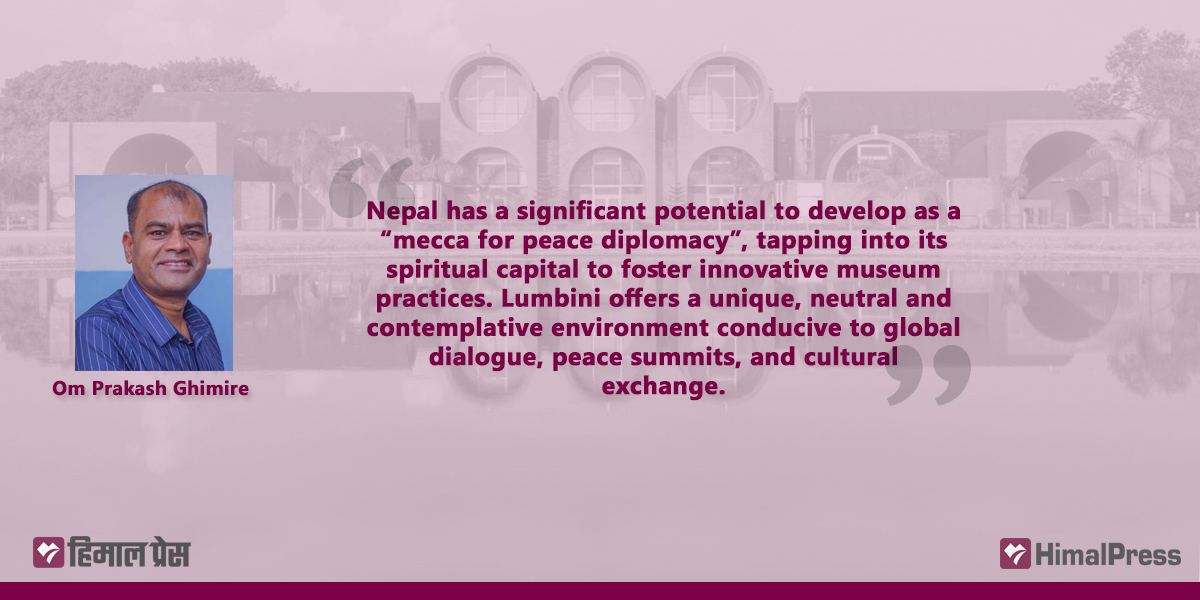
Lumbini offers a unique, neutral and contemplative environment conducive to global dialogue, peace summits, and cultural exchange.
Transforming the Lumbini Museum into an international hub for dialogue and well-being could play an important role in deepening visitors’ engagement with Buddhist teachings and spirituality. In this context, Nepal has significant potential to develop as a “mecca for peace diplomacy”, tapping into its spiritual capital to foster innovative museum practices. Lumbini offers a unique, neutral and contemplative environment conducive to global dialogue, peace summits, and cultural exchange.
This year’s International Museum Day’s theme offers a strategic opportunity for a nationally coordinated initiative involving institutions like ICOM Nepal, Lumbini Development Trust, Nepal Tourism Board, Lumbini Buddhist University, and all three tiers of government. Such collaboration could align museums, Buddhist heritage, and national branding efforts.
Nepal possesses an extraordinary strategic asset in the living legacy of Gautama Buddha, a universal symbol of peace, wisdom, and compassionate moral authority. This aligns with Nye’s concept of soft power, which emphasizes that real influence in global affairs derives from attraction and credibility rather than coercion. In this perspective, strategically transforming Lumbini into a global hub for well-being and dialogue would allow Nepal to move beyond symbolic heritage toward active global leadership. It would offer not only national identity and cohesion but also a credible, practice-based pathway for peace, healing, and coexistence in an increasingly fragmented world.
Ghimire is the Secretary of the International Council of Museums Nepal (ICOM Nepal). He can be reached at [email protected] for comments.
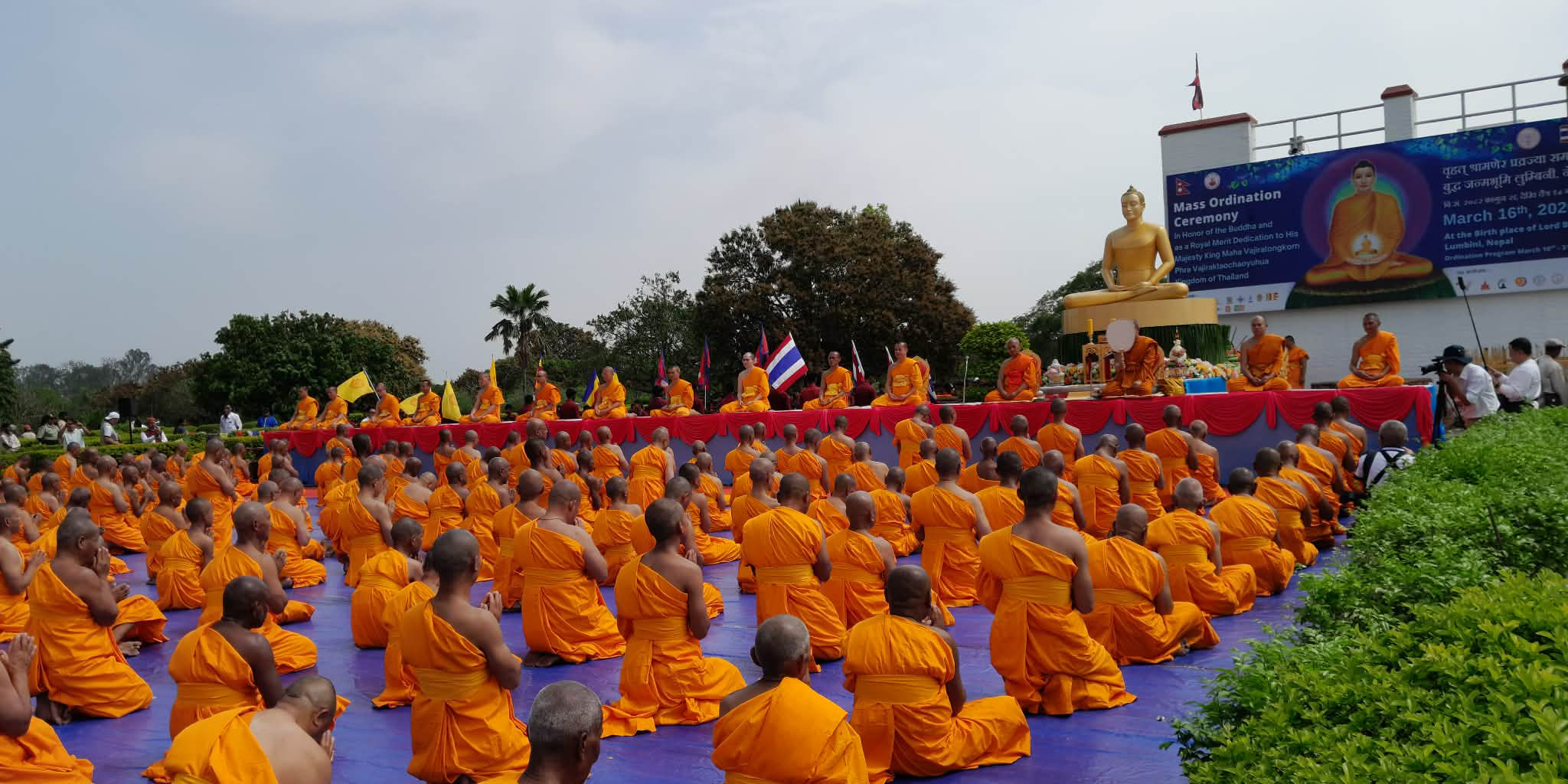
![Pravrajya ceremony held for 500 novice monks in Lumbini [In Pictures]](https://en.himalpress.com/wp-content/uploads/2025/03/prabajya6.jpg)



![Yosin pole raised as Indrajatra festival begins in Kathmandu [In Pictures]](https://en.himalpress.com/wp-content/uploads/2026/09/Indrajatra-5-600x300.jpg)