 Himal Press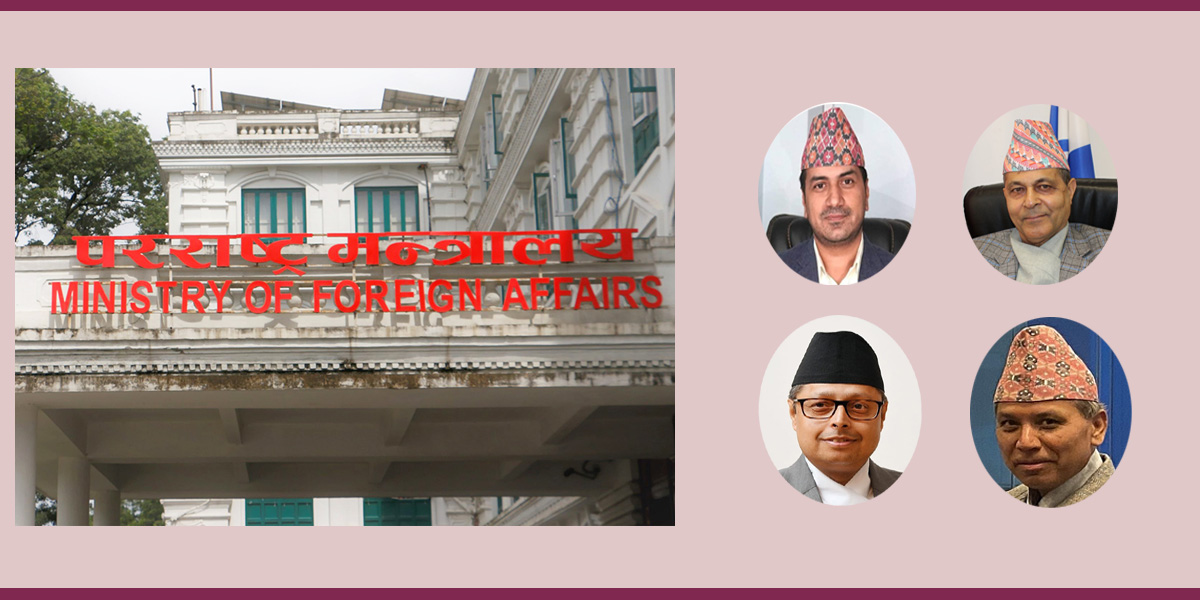
KATHMANDU: Ambassadors recalled from several Nepali missions abroad have been drawing substantial salaries and foreign allowances while remaining in Nepal without performing any duties.
Of the 11 recalled ambassadors, four former envoys are set to receive monthly salaries equivalent to a secretary and one month’s foreign allowance (approximately Rs 500,000).
These four had bagged the position primarily due to their political connections. Their backgrounds suggest that their appointments were based more on political proximity and quota allocations than on expertise. Durga Bahadur Subedi was a former joint secretary at the Ministry of Foreign Affairs and was appointed as ambassador to Japan under a political party quota while retiring from the ministry. He tendered his resignation on Friday after negotiating the pay package, according to a foreign ministry official.
Dhana Prasad Pandit, who taught at Bishwa Bhasa Campus and Padma Kanya Campus before retiring, was appointed ambassador to Israel through political lobbying. Dr Shail Rupakheti was known as the personal physician of then Foreign Minister Arzu Rana Deuba and was appointed ambassador to Germany. Similarly, Shanil Nepal was also appointed ambassador to Spain, not for diplomatic experience or expertise, but due to close relations with Arzu and a former chief justice.
All these appointments were made under the political quota by the KP Sharma Oli-led government.
After the Gen Z uprising, the interim government led by Sushila Karki decided to recall ambassadors from 11 countries. The decision was mainly based on dissatisfaction with their performance, allegations that their presence had caused unnecessary difficulties for Nepali citizens, and concerns over political appointments.
While many recalled ambassadors submitted their resignations, some challenged the decision at the Supreme Court. Hearing their petition, the apex court issued an interim order stating that the ambassadors need not return immediately. The bench also said it would need to determine whether the interim government had the mandate to recall them before announcing a final verdict in the case.
Following the court’s order, the government instructed the ambassadors to report to the ministry instead of their embassies.
Some recalled ambassadors felt insulted by the government’s decision and tendered their resignations. The first to do so was former Secretary Chandra Kumar Ghimire, who served as ambassador to the United Kingdom. Subsequently, Krishna Prasad Oli, ambassador to China, also chose not to report to the ministry. Likewise, Lok Darshan Regmi, ambassador to the United States, also tendered his resignation.
Ramesh Chandra Paudel (Qatar), Netra Prasad Timsina (Malaysia), and Jang Bahadur Chauhan, who returned late from Russia due to health reasons, also submitted their resignations.
However, Naresh Bikram Dhakal (Saudi Arabia), Subedi (Japan), Pandit (Israel), and Shanil Nepal (Spain) chose not to resign and continued to mark their attendance at the ministry.
Of them, Dhakal resigned two weeks ago, while Subedi resigned on Friday. The other two have still not resigned.
The ministry has arranged a separate ‘ambassador room’ for these recalled envoys. However, they do not stay there for long. They leave the ministry after signing their attendance.
Foreign ministry officials describe this trend as surprising and shameful. They say they could not have imagined that individuals representing the nation could have such narrow thinking. They consider this a clear example of the misuse of state resources.
Such distortions arise when the ambassadorial position is used not on the basis of expertise and merit but as a political reward. If such practices continue, they could seriously affect the credibility of the diplomatic service and accountability to the public.