 Himal Press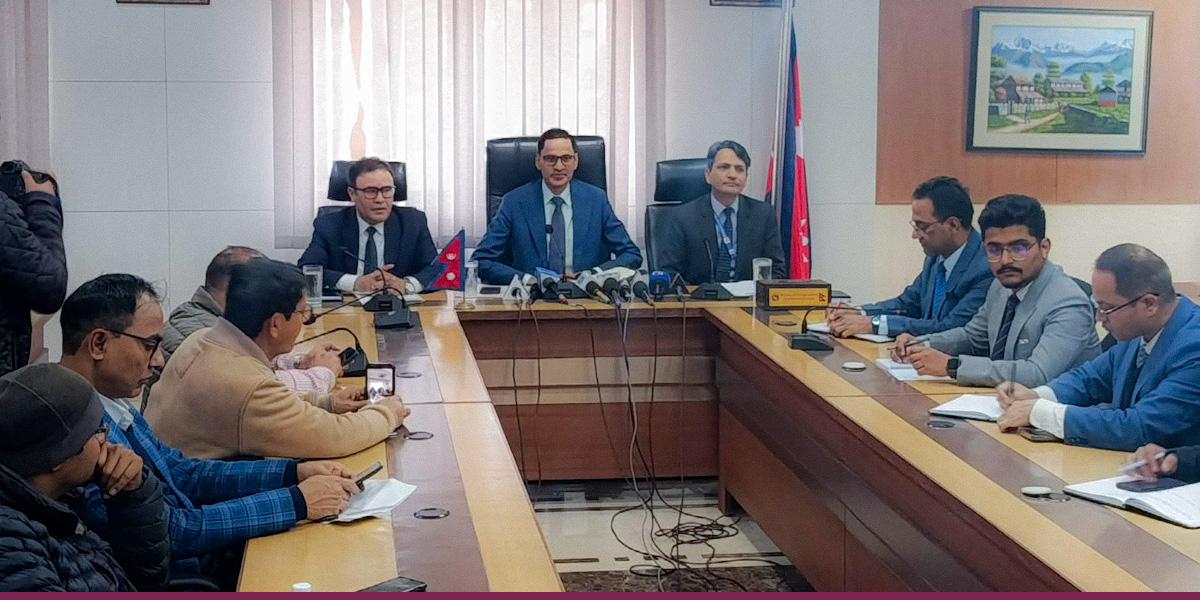
KATHMANDU: The Ministry of Foreign Affairs has reported that a total of 1,729,288 Nepalis are currently in 13 countries in the Gulf region
At a press meet in Kathmandu on Sunday, the ministry said of the 10 Nepalis in war-torn Iran, two have already returned, while two are in the process of returning. Six are still in Iran.
Similarly, around 6,500 Nepalis are currently in Israel. Although the largest numbers are in Tel Aviv, Jerusalem, and Haifa, the ministry said Nepalis are spread across the country.
According to the ministry, there are around 500 Nepalis in Egypt, including students pursuing medical studies, students at Al-Azhar University studying Islam and Arabic, domestic workers, and factory employees.
Likewise, Oman has 25,000 Nepalis. More than 80% of them are female domestic workers.
Qatar has 357,913 Nepalis. Of these, 10,010 work in the government sector, 4,546 in semi-government institutions, 340,844 in private companies, and 25 under personal sponsorship.
Kuwait hosts 175,000 Nepalis, including 75,000 female domestic workers. In Jordan, 3,000 Nepalis work in the domestic and garment sectors.
Similarly, there are around 28,000 Nepalis, including around 4,000 women, in Bahrain.
Saudi Arabia hosts 384,865 Nepalis, including 3,541 women.
In the United Arab Emirates, around 700,000 Nepalis may be on employment visas, according to the ministry.
Lebanon hosts 1,500 Nepalis working in the domestic and service sectors, while Iraq has 30,000 Nepalis.
Likewise, 17,000 Nepalis are employed in the domestic and service sectors in Cyprus.
In light of recent developments in West Asia, the government has emphasized giving the highest priority to the safety of Nepalis in the region.
According to Ram Kaji Khadka, Undersecretary of the Middle Asia, West Asia, and Africa Division at the ministry, a WhatsApp group has been formed, including ambassadors and mission heads in West Asia, for crisis management. “This group shares updates on the latest security conditions, potential risks, and problems faced by Nepali citizens in each country,” he added.
The ministry has instructed the Consular Service Department to develop an online registration platform, allowing Nepalis in West Asia to register their details, should a need for rescue arise.
The ministry is also developing a mobile app and preparing a 24-hour consular response hotline, according to Khadka.
Similarly, preparations are underway to form a multi-stakeholder emergency rescue team under the coordination of the Foreign Secretary.
According to the ministry, Nepalis in the Gulf are currently facing four main problems: flights being halted even after visas and tickets are issued, difficulties exiting airports upon arrival, being stranded during transit to Europe or America, and workers unable to reach employers even after arrival.
According to Khadka, internal discussions are underway regarding issuing new labor permits, temporarily suspending flights, and issuing NOCs for study purposes. A temporary halt to new departures may also be implemented if necessary, he added.
The government is also preparing to coordinate with the International Labour Organization for rescue and management efforts.