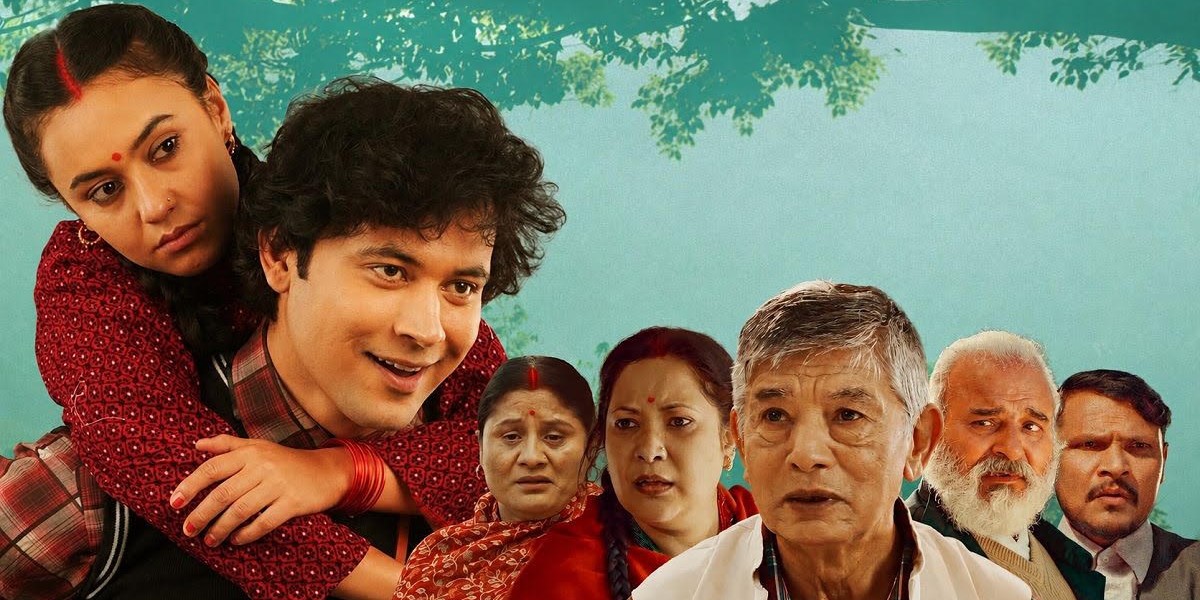

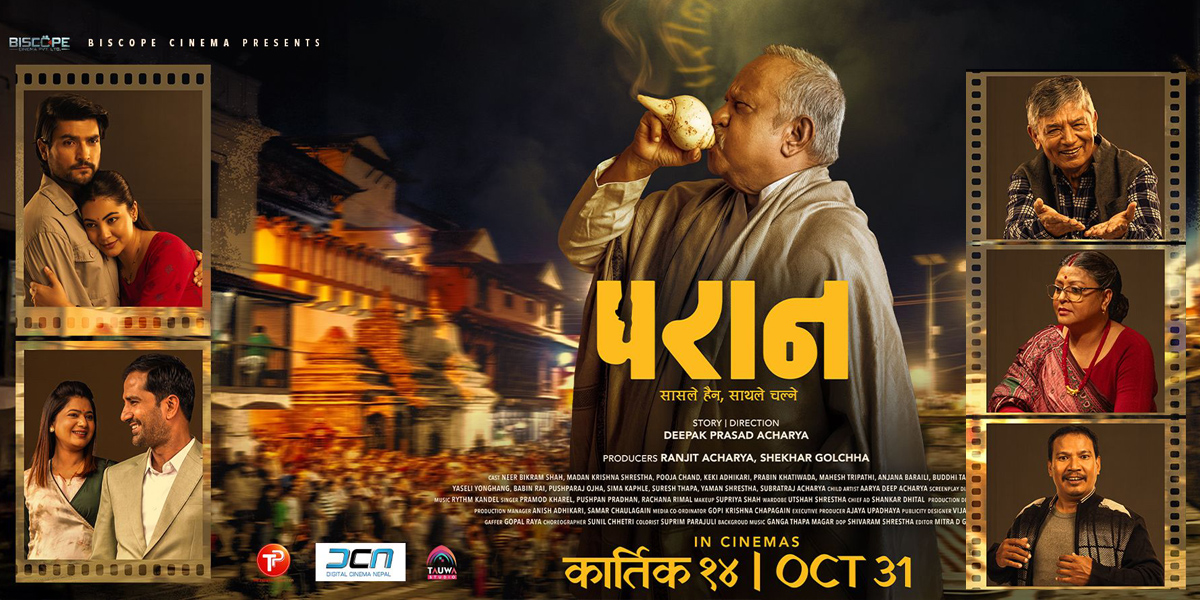
KATHMANDU: Paran literally means life or breath. Director Dipak Prasad Acharya’s debut film beautifully captures how parents draw their very breath from the companionship of their children in their later years.
The film’s tagline, it’s not breath, but togetherness that keeps us alive, neatly encapsulates the central theme. Set in a rural family backdrop, Paran mirrors the emotional reality of many Nepali households today — parents whose lives are bound to their children’s presence, and whose loneliness deepens when those children leave for foreign lands. Acharya tells this story with deep sensitivity.
Veteran actor Neer Shah portrays the father, Dharmanath, while Pooja Chand plays his wife, Durgadevi. Keki Adhikari, Anjana Baraili, Mahesh Tripathi, Praveen Khatriwada, Subrata Raj Acharya and Buddhi Tamang also have important roles in the film.
Dharmanath and Durgadevi have three sons: the eldest has settled in Australia, the middle one in Kathmandu, and the youngest, Gopalanath, remains with them in their ancestral village. A junior technical assistant (JTA), Gopalanath raises poultry for a living — a simple yet dignified life that fills his father with pride. Dharmanath sees in him the hope and comfort that his other sons have taken away. His youngest son’s companionship becomes his strength, his very breath.
But when Gopalanath announces his plan to go abroad for a short training — a pretext for permanent migration, Dharmanath’s world begins to collapse. His breath, his very life, seems to drift away. Will Gopalanath leave, or will he stay with his parents? For that, one must watch the film unfold on screen.
Paran explores two important issues of the modern Nepali society: the allure of foreign lands and the discontent with rural life. Acharya presents this conflict so authentically that it feels like the story of one’s own family. The film’s heartfelt dialogues and restrained performances make it deeply relatable.
The village setting, with its familiar rhythms, feels real. Acharya often uses silence and visuals instead of dialogue to communicate — particularly in the touching moments between Dharmanath and his mute helper, Man Bahadur Limbu, played by Buddhi Tamang. Known for comic roles, Tamang surprises audiences with this quiet, emotional performance.
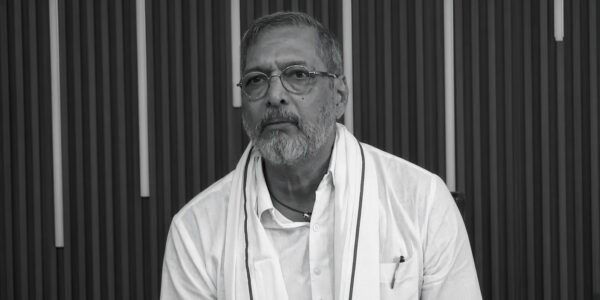
Neer Shah delivers a commanding yet vulnerable performance, embodying an aging patriarch caught between tradition and change. His transformation from a proud landowner to a father willing to sacrifice everything for his children’s happiness is deeply moving. His acceptance of his sons’ choices — even when they break his heart — captures the quiet pain of countless fathers.
Madan Krishna Shrestha also makes a notable appearance as Dharmanath’s neighbor, another father living alone after his sons move abroad. Despite his frail health in real life, Shrestha’s portrayal is vibrant and poignant, especially in scenes where he cheerfully digs his own grave, waiting for his sons’ return.
While the story is emotionally heavy, Acharya balances it with humor — Dharmanath teasingly calling his wife “girl” in every conversation, his playful attempts to adapt to city life in shirts and trousers, and his efforts to charm his grandson into returning to the village.
Visually, Paran is a treat. The lush green hills of Dhankuta, the quiet village life, and the contrast with the bustling city are captured nicely. Everyday rituals, like applying sandalwood paste each morning, ringing the conch shell before prayers, circling the sacred tulsi plant when leaving or returning home, are woven naturally into the narrative.
Paran is a film about belonging — to one’s family, one’s roots, one’s breath. It reflects the emotional truth of many Nepali families divided by migration. With Paran, Acharya, known for his comedic television persona, has delivered a heartfelt surprise — a tender, reflective film that will leave many viewers misty-eyed, thinking of their own parents.