 Himal Press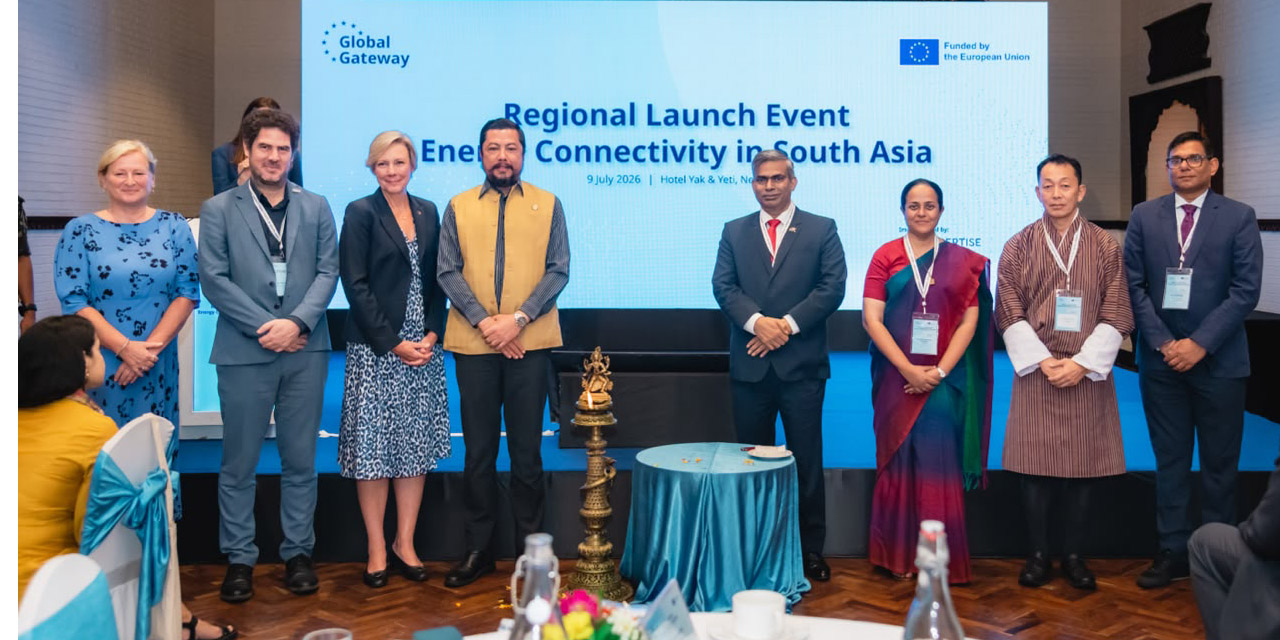
KATHMANDU: The European Union has launched a five-million-euro ($5.9 million) regional project aimed at strengthening cross-border electricity trade and energy connectivity across South Asia.
The four-year Energy Connectivity in South Asia (ECSA) project, funded by the EU under its Global Gateway investment strategy and implemented by Expertise France, seeks to support a more integrated regional power market delivering affordable, clean and reliable electricity in Bangladesh, Bhutan, India, Nepal and Sri Lanka.
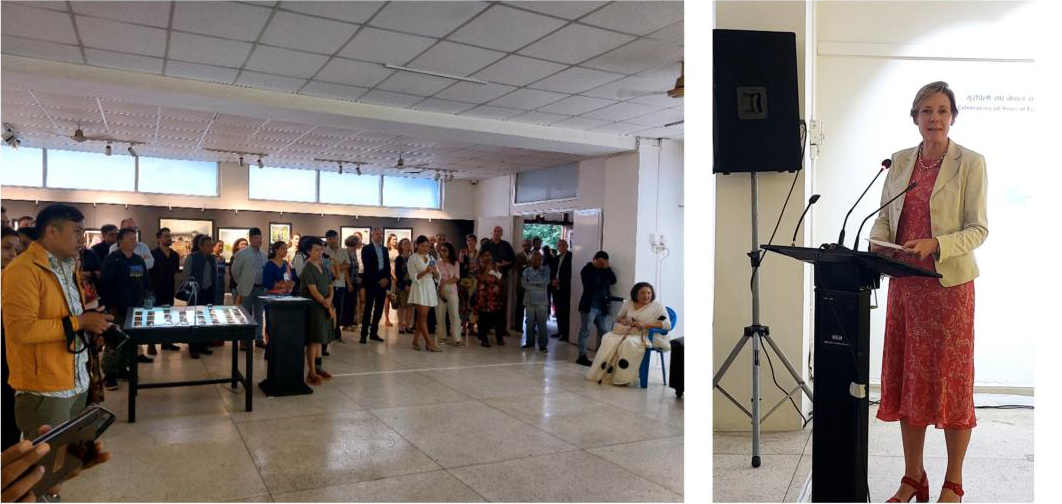
The project was officially launched in Kathmandu at a regional event titled Powering South Asia’s Energy Future: Advancing Cross-Border Electricity Trade, Investments and Energy Security. The event brought together senior government officials, development partners, regulators, energy sector leaders, investors and technical experts from the participating countries.
European Commissioner for International Partnerships Jozef Síkela said the initiative would help strengthen energy security while creating new economic opportunities across the region. “With the launch of this Global Gateway flagship, the European Union is investing in cheaper, cleaner and more reliable electricity that will strengthen resilience and unlock many opportunities for communities and businesses in South Asia,” he said in a statement issued by the EU.
Addressing the event, EU Ambassador to Nepal Véronique Lorenzo said Europe’s experience in building an integrated electricity market demonstrated that stronger regional connectivity leads to more resilient, affordable and sustainable energy systems. “Through this energy connectivity project, the European Union is proud to work in partnership with South Asian countries to help unlock the tremendous benefits of regional energy cooperation and clean energy integration,” she said.
Minister for Energy, Water Resources and Irrigation, Biraj Bhakta Shrestha, welcomed the initiative, saying that South Asia possesses abundant renewable energy resources and growing electricity demand. “Enhanced cross-border electricity trade can help countries meet their development goals while improving energy reliability, affordability and sustainability. Nepal looks forward to strengthening regional partnerships through initiatives such as ECSA,” he said.
According to the EU, the project will support policy and regulatory reforms, technical studies, capacity building, investment roadmaps and regional cooperation to facilitate cross-border electricity trade and greater integration of renewable energy resources.
The ECSA project is part of the EU’s Global Gateway strategy, which seeks to mobilize up to €400 billion in public and private investments worldwide betwe