 Himal Press
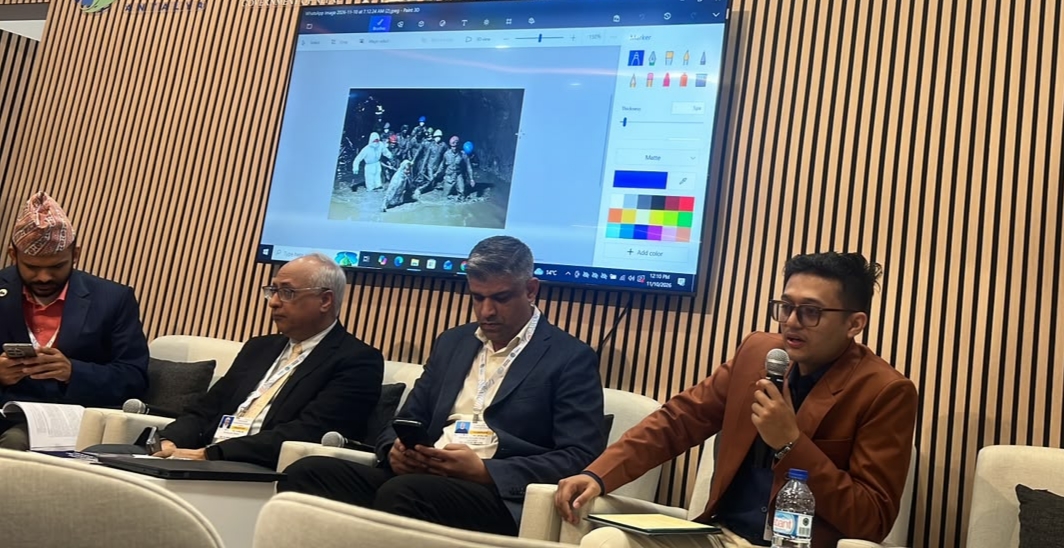
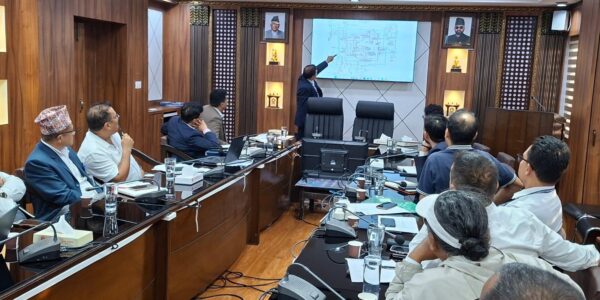
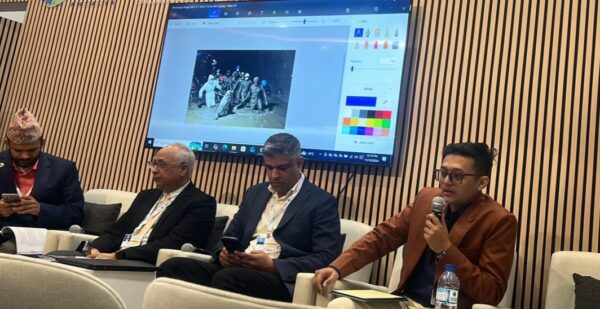
KATHMANDU: A special interactive session titled “Climate-Resilient Energy Infrastructure and Clean Energy Investment” was organized at the Nepal Pavilion during the 31st United Nations Climate Change Conference (COP31) in Antalya, Turkiye, on Tuesday.
The session was organized jointly by the Ministry of Energy, Water Resources and Irrigation, the Alternative Energy Promotion Centre (AEPC) and the Independent Power Producers’ Association, Nepal (IPPAN).
According to the energy ministry, the discussion focused on the impacts of climate change on energy infrastructure, measures to minimize damage and ways to increase investment in clean energy.
Professor Shobhakar Dhakal of the Asian Institute of Technology (AIT), Thailand, delivered the keynote presentation. The session was moderated by Dr Mukesh Ghimire, a Horizon Europe MSCA postdoctoral researcher at Middle East Technical University, Turkey.
The panelists included Engineer Shirish Pandey, technical and infrastructure adviser at the energy ministry; Jyoti Gaire, an executive committee member of IPPAN; and Gulshan Vashishtha, head of the Financial Strategy Support Unit at the Global Green Growth Institute (GGGI), South Korea.
Discussion on recent damages to energy infrastructure and the need to strengthen its climate resilience were held in the first session. Pandey briefed participants on recent damage to energy infrastructure, while Gaire highlighted the challenges faced by the private sector in developing climate-resilient energy infrastructure. Vashishtha shared regional experiences of climate-related damage and resilient infrastructure, along with emerging global trends.
The second session focused on planning and investment for climate-resilient energy infrastructure. Pandey outlined government plans and strategies to address climate risks, the need for an appropriate energy mix and the importance of battery energy storage systems.
Gaire focused on infrastructure-related challenges and risks facing the private sector, while Vashishtha shared his organization’s experience in energy investment, available financing mechanisms and Nepal-specific examples, including NIFRA’s green energy bonds.
In his concluding remarks, lawmaker Sagar Dhakal, who chaired the session, shared his field experience from the Bhotekoshi region and lessons learned from international practices.
The event brought together policymakers, researchers, development partners and private sector representatives for an in-depth discussion on growing climate risks to energy infrastructure, Nepal’s resilience priorities and ways to mobilize investment in climate-resilient infrastructure and clean energy systems.