
KATHMANDU: The Parliamentary Hearing Committee’s recent decision to reject two of the 13 ambassadorial nominees recommended by the government—and put a third on hold—has raised serious questions about the selection process led by Minister for Foreign Affairs Shishir Khanal and his ministry.
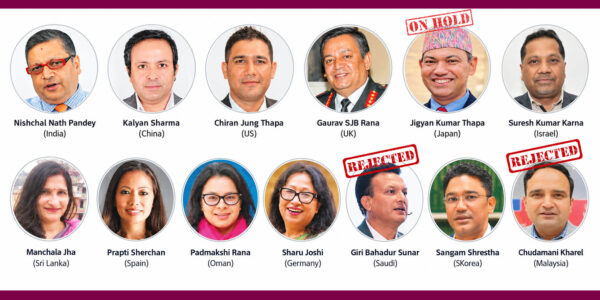
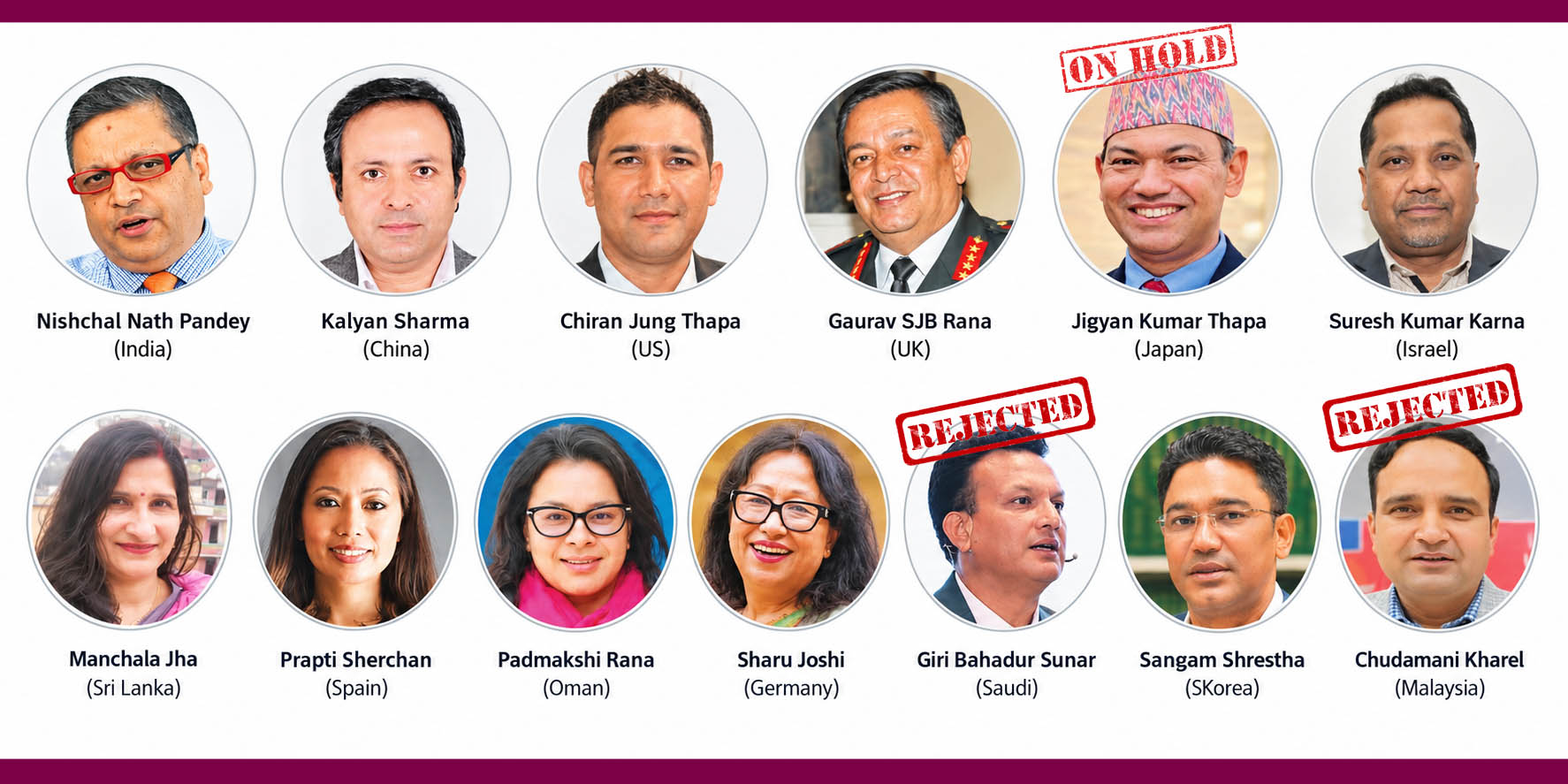
The committee rejected the recommendations of Giri Bahadur Sunar for Saudi Arabia and Chudamani Kharel for Malaysia, while it put the decision on Jigyan Kumar Thapa, recommended for Japan, on hold to review additional documents. While the committee approved the remaining 10 nominees, the hearings have reignited a broader national debate: Are diplomatic appointments driven by merit or political convenience? More importantly, did the government follow its own appointment criteria and properly evaluate the qualifications and backgrounds of its candidates?
Thapa’s nomination came under scrutiny because of his permanent residency status, his family’s foreign residence and his previous government service. However, the allegations against Sunar and Kharel highlight even broader systemic flaws in early-stage background checks.
Sunar faced severe allegations, including an extramarital relationship involving torture and threats, pressuring a former partner toward suicide, being detained in Germany and deported back to Nepal in handcuffs, and partnering with Rastriya Swatantra Party (RSP) lawmaker Khagendra Sunar to collect Rs 3.3 million during police promotions.
Kharel, recommended to Malaysia, faced complaints alleging financial conflicts of interest, illicit transactions, and collecting money on promises of securing grants for local governments. He was rejected after failing to give satisfactory answers to lawmakers during the hearing.
While these allegations require formal investigation by relevant authorities, their sheer severity raises a legitimate question: Did the government conduct adequate background checks before recommending them for diplomatic posts? The complaints across the nominee pool range from personal ethical conduct and financial impropriety to links with manpower companies and foreign permanent residency. Scrutiny must not depend solely on whether a formal complaint happens to be filed against a candidate. The foreign ministry and parliamentary committee must evaluate the legal eligibility, ethical standing, and professional background of all nominees against uniform standards.
Rejection by the Parliamentary Hearing Committee—or worse, a host nation refusing to grant consent—damages Nepal’s diplomatic standing. The foreign minister and his ministry fell short of their primary duty by failing to weed out unqualified or high-risk candidates before public submission.
An ambassador’s role extends far beyond flying Nepal’s flag abroad; it involves safeguarding national interests, expanding economic opportunities, and protecting millions of Nepalis working and living overseas. Small diplomatic lapses can produce lasting geopolitical consequences. That is why only qualified, legally eligible and ethically sound individuals should be appointed to ambassadorial positions.
The government appears to have adopted a reactive approach—scrambling to investigate candidates only after public complaints surface during hearings. Nepal possesses intelligence and investigative bodies, including the National Investigation Department, capable of vetting candidate backgrounds. Scrutiny should rigorously assess financial history, professional conduct, and public reputation before names reach parliament.
Financial ties between proposed ambassadors and manpower agencies that send workers abroad demand strict scrutiny. Saudi Arabia and Malaysia host immense populations of Nepali migrant workers. Embassies in these nations play critical, daily roles in protecting labor rights and fair wages, facilitating emergency rescues, and pursuing compensation or legal protection for mistreated workers. If an ambassador holds personal or financial ties to businesses operating in these exact sectors, a direct conflict of interest is inevitable. The parliamentary committee was right to challenge these ties, but such standards must be applied systematically across every single candidate rather than selectively.
A major point of controversy is whether the government violated its own established guidelines for diplomatic appointments. Opposition lawmakers have pointed to provisions that prohibit individuals employed by foreign-funded non-governmental organizations or those who held salaried positions with foreign governments (unless 10 years have elapsed since leaving) from taking ambassadorial posts.
Gyan Bahadur Shahi, parliamentary party leader of the Rastriya Prajatantra Party, publicly questioned the professional backgrounds of four nominees: Prapti Sherchan (Spain), Saru Joshi (Germany), Padmakshi Rana (Oman) and Sangam Shrestha (South Korea).
The government owes the public a clear explanation. While foreign organization experience can offer valuable international perspective, the state cannot selectively enforce or ignore its disqualification criteria depending on who is being appointed. Selective interpretation undermines public confidence in the entire process.
Reports also indicate political friction among Prime Minister Balendra Shah, RSP President Rabi Lamichhane, and Foreign Minister Shishir Khanal over ambassador selection. Whatever the internal political dynamics are, the ministry was required to conduct independent, objective background checks. It failed to do so effectively.
The hearing committee’s decision to reject unsuitable candidates marks a positive shift toward parliamentary independence. However, its oversight must become proactive rather than reactive. It should utilize state investigative bodies for background checks of ambassadorial nominees even when formal public complaints are not filed.
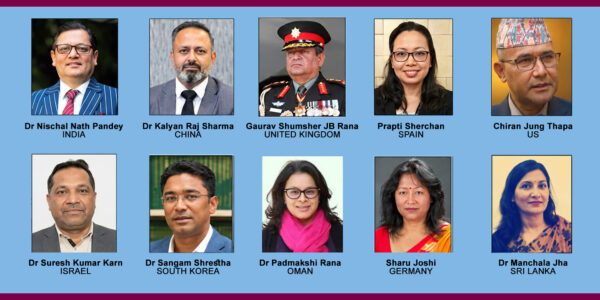
During the hearings, several high-profile nominees, including Nischal Nath Pandey (India), Kalyan Raj Sharma (China), Chiran Jung Thapa (US) and Gaurav Shamsher JB Rana (United Kingdom), presented their plans. Nominees for Germany, Israel, Oman, South Korea and Spain also outlined their professional experience. However, an impressive presentation or strong institutional background cannot replace thorough vetting for conflicts of interest or ethical flaws.
Modern diplomacy requires skilled representatives who can drive economic diplomacy, secure foreign direct investment, expand trade and tourism, facilitate technology transfer, and protect Nepali citizens abroad. This applies equally to political appointees and career diplomats from within the foreign ministry, as career officials should not be automatically presumed immune to conflict or ethical oversight either.
To restore credibility to Nepal’s diplomatic corps, the government must first strictly enforce its own legal criteria and conduct thorough background vetting through state agencies before making recommendations public. Following this executive screening, the Parliamentary Hearing Committee must independently evaluate candidates against uniform standards. It can invite non-partisan diplomatic experts to help review plans presented by ambassadorial nominees, when necessary.
Ambassadors are not merely formal representatives; they are among the most visible faces of Nepal on the world stage. By elevating diplomatic appointments above power-sharing deals and political patronage, Nepal can ensure its representatives abroad possess the integrity, competence, and public trust required to serve the national interest.