 Himal Press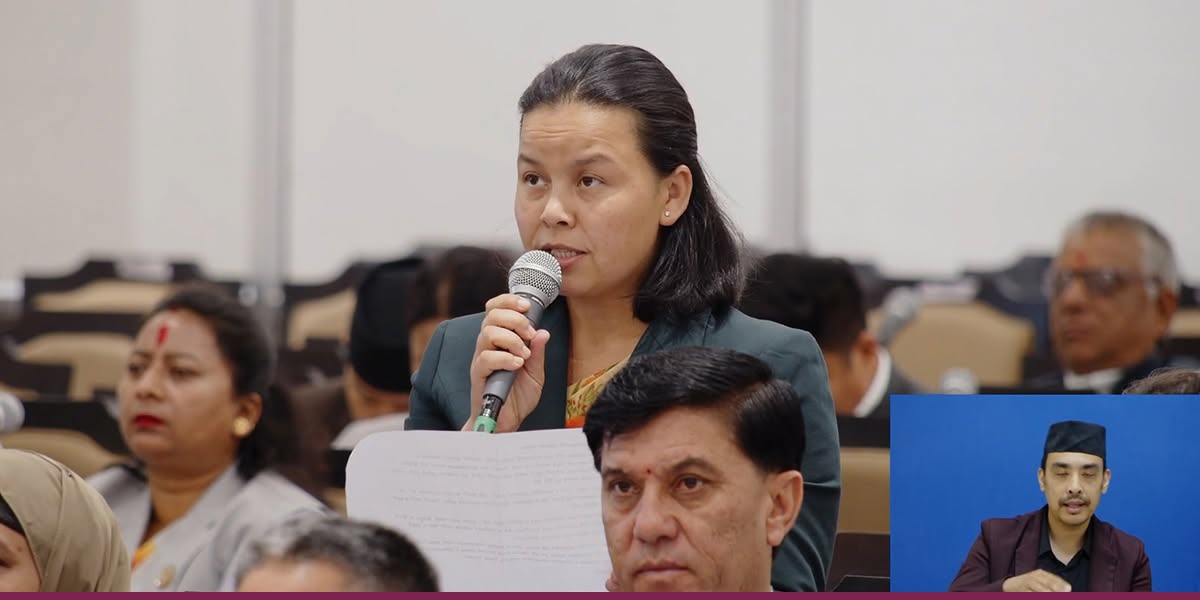
KATHMANDU: Rastriya Swatantra Party (RSP) lawmaker Sujata Tamang has said that the budget allocation proposed for the Ministry of Agriculture, Forest and Environment reflects serious contradictions and raises concerns over the government’s priorities.
Participating in the budget discussion in the meeting of the House of Representatives on Thursday, Tamang said more than two-thirds of the ministry’s budget has been earmarked solely for the purchase of chemical fertilizers. “Looking at the structure of the budget, it appears that the belief that chemical fertilizers are the only basis for increasing agricultural production has dominated policy thinking,” she said. “More than two-thirds of the ministry’s budget has been set aside to procure chemical fertilizers.”
She warned that excessive dependence on chemical fertilizers could degrade soil quality in the long run and have serious consequences for human health. “Overreliance on chemical fertilizers not only damages our soil over time but also poses serious risks to human health. Statistics show that artificial fertilizers and pesticides are contributing not only to soil degradation but also to the rise of serious non-communicable diseases among people,” she added.
Tamang also highlighted the need for a balanced budget allocation that promotes agriculture, tourism and industry to build a self-reliant economy and create employment opportunities for young people.
She also welcomed the government’s decision to bring agriculture, forests and the environment under a unified policy approach. “This reflects a commitment to prioritizing nature and environmental conservation,” she said, highlighting the need to develop an integrated agriculture-forestry system to ensure environmental sustainability.
According to Tamang, the budget should also provide clear direction for increasing investment in green energy, forest conservation, soil improvement and pollution control, taking into account the potential impacts of climate change on the agricultural sector.
She also said that the budget should ensure access to education, healthcare and employment opportunities for smallholder farmers, who make up more than 60% of the farming population.
Tamang, however, said efforts to establish greater discipline in economic policymaking, pursue governance reforms and prioritize development infrastructure were among the positive aspects of the budget.