 Himal Press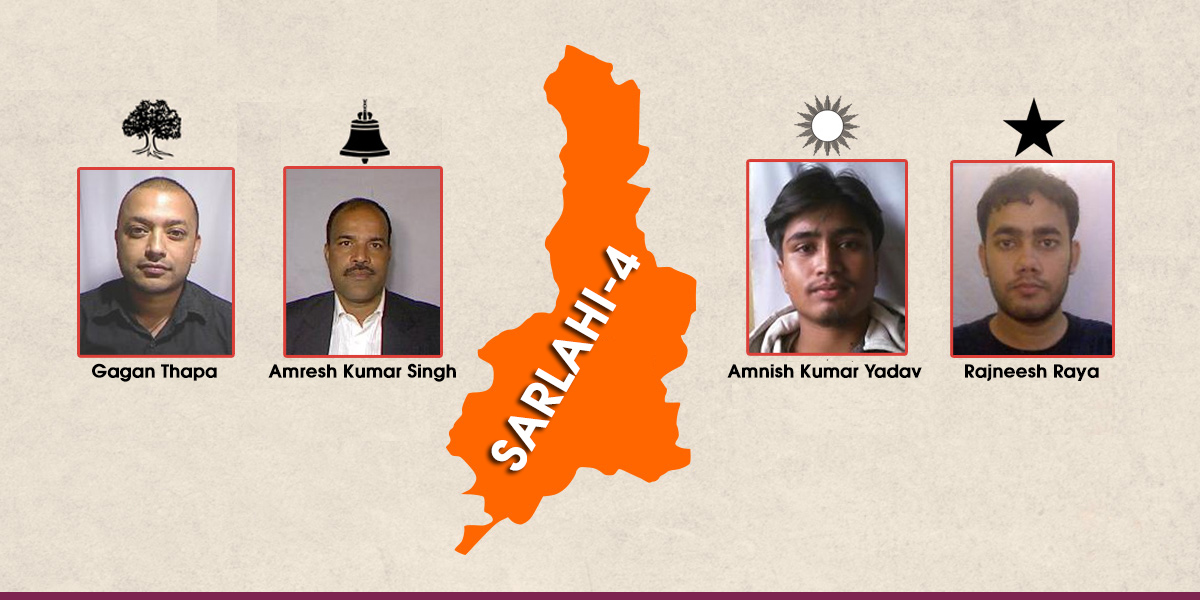
SARLAHI: As the date for the House of Representatives elections draws closer, electoral activity has intensified across the country. Candidates contesting the March 5 polls have stepped up campaign efforts and door-to-door outreach.
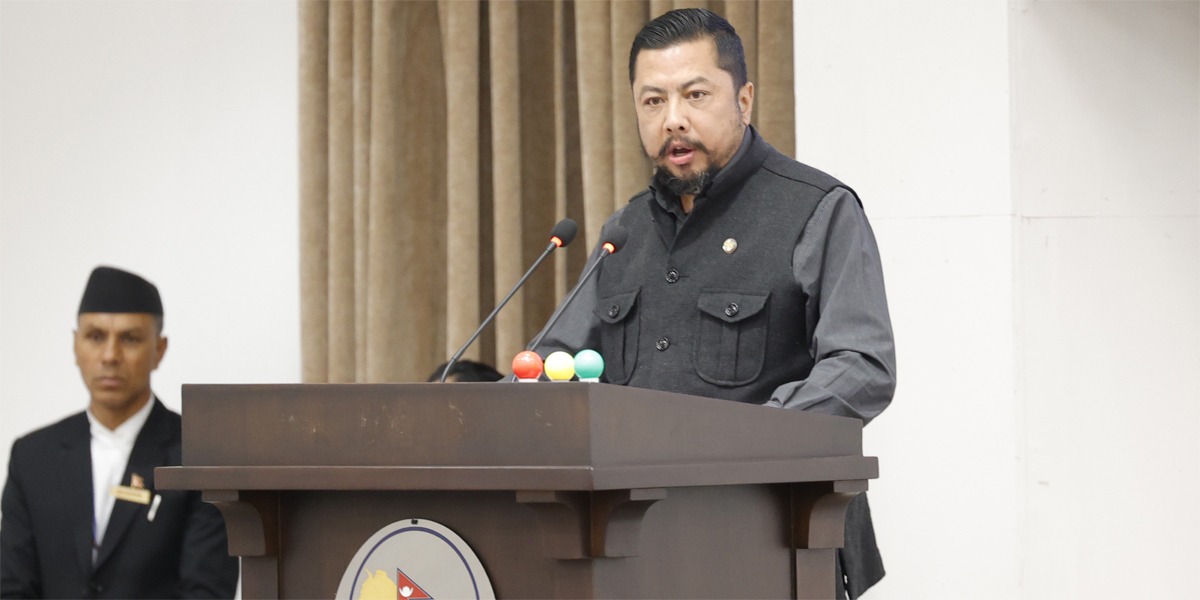
Amid the rising nationwide election fever, Sarlahi-4 has emerged as a focal point of national attention. The reason behind this is the candidacy of Gagan Kumar Thapa, president of the Nepali Congress, from the constituency. The party has also named Thapa as its prime ministerial candidate.
Leaving behind his relatively secure Kathmandu-4 constituency, Thapa has chosen to contest from a completely different geography and social setting. In terms of language, attire, lifestyle, culture, and identity, Sarlahi-4 is not considered an easy constituency for him.
Some critics have described his decision as “political suicide,” while others have called it a “bold move.”
Thapa, however, says he chose Sarlahi to build a bridge between Kathmandu and Madhesh. He has argued that his candidacy aims to connect the capital with the Madhesh region.
The NC president is currently engaged in intensive door-to-door campaigning in the constituency. He remains busy from early in the morning till late evening.
On Tuesday afternoon, he was campaigning in Mirzapur in Balara Municipality. The Balara Municipality is also the hometown of outgoing lawmaker Amaresh Kumar Singh, who is expected to offer a tough fight to Thapa.
In the 2022 elections, Singh was elected to the seat as an independent candidate. This time, he is contesting as a candidate of the Rastriya Swatantra Party (RSP).
Sarlahi-4 has long been regarded as an NC stronghold. Since 1991, NC candidates have consistently won from the constituency. Mahanta Thakur won three elections from this seat as an NC candidate, while Singh himself was elected in 2013 and 2017 as a Congress candidate.
He contested as an independent candidate after he was denied a ticket by the party in 2022. He defeated NC’s official candidate, Nagendra Kumar, who also had the backing of leftist and Madhes-based parties. He secured 20,017 votes against Kumar’s 18,253. Analysts say discontent among NC voters over electoral alliances at the time contributed to Singh’s victory.
This time, Singh appears to be banking on his personal influence in the constituency and the wave of support for the RSP’s “change” agenda in Madhesh. At campaign events, he has claimed that voters will not trust an “outsider” candidate—a clear reference to Thapa.
Observers say Singh is also attempting to exploit factional divisions within the NC, accusing Thapa of “hijacking” the party through a special convention and parachuting into Sarlahi-4. However, NC leaders in Sarlahi claim that internal factionalism has ended and insist the party will win regardless of Singh’s strategy.
Voters in Sarlahi-4 appear divided. Some favor the RSP candidate, citing the need for change, while others believe electing a prime ministerial candidate like Thapa could transform the constituency.
At the same time, many voters say the national wave of change demands an alternative to traditional parties. Though candidates from other parties are also in the race, locals say the main contest will be between Thapa and Singh.
Candidates from the CPN-UML, Nepali Communist Party (NCP), Janata Samajbadi Party (JSP) Nepal, and Janamat Party are also expected to play decisive roles in the election. UML has fielded Amnish Kumar Yadav, while Rajneesh Raya, son of party leader Shivpujan Rai, is contesting from the NCP. In the previous election, Rajneesh’s sister, who ran as a rebel independent, secured more than 14,000 votes. This makes Rajneesh a strong contender in the seat.
However, former minister Rameshwar Raya Yadav recently defected from the NCP to join JSP Nepal and is contesting from the same constituency. Some voters say his candidacy can split the left vote. Meanwhile, Rakesh Kumar Mishra, who secured over 5,000 votes as a JSP Nepal candidate in 2022, is now contesting under the Janamat Party banner. His votes are also seen as potentially decisive.
In 2017, Mishra lost to Singh by a narrow margin.
Voters speculate that candidates with little chance of winning could endorse either Thapa or Singh at the last moment. If all candidates remain in the race, many believe Thapa could emerge victorious.
In 2022, Singh benefited from the votes of dissatisfied NC supporters. But with the NC president and prime ministerial candidate himself competing, Singh’s chances of drawing NC votes appear slim this time.
In the previous elections, Singh received significant support from the Kushwaha and Sahani communities. This time, candidates from those communities are also in the fray. Meanwhile, the Kushwaha Society has publicly endorsed Thapa. With two strong Yadav candidates—Rajneesh Raya and Rameshwar Raya Yadav—also contesting, the Yadav vote is expected to split.
Sarlahi-4 comprises 51 wards of Dhanakaul Rural Municipality, Ramnagar Rural Municipality, Balara Municipality, wards 1–4 and 13–15 of Barahathwa Municipality, wards 1–4 of Bishnu Rural Municipality, and wards 1–3 of Basbariya Rural Municipality. The constituency has a total of 121,012 voters.
If all candidates remain in the race, analysts estimate that securing between 20,000 and 25,000 votes could be sufficient to win.