 Himal Press
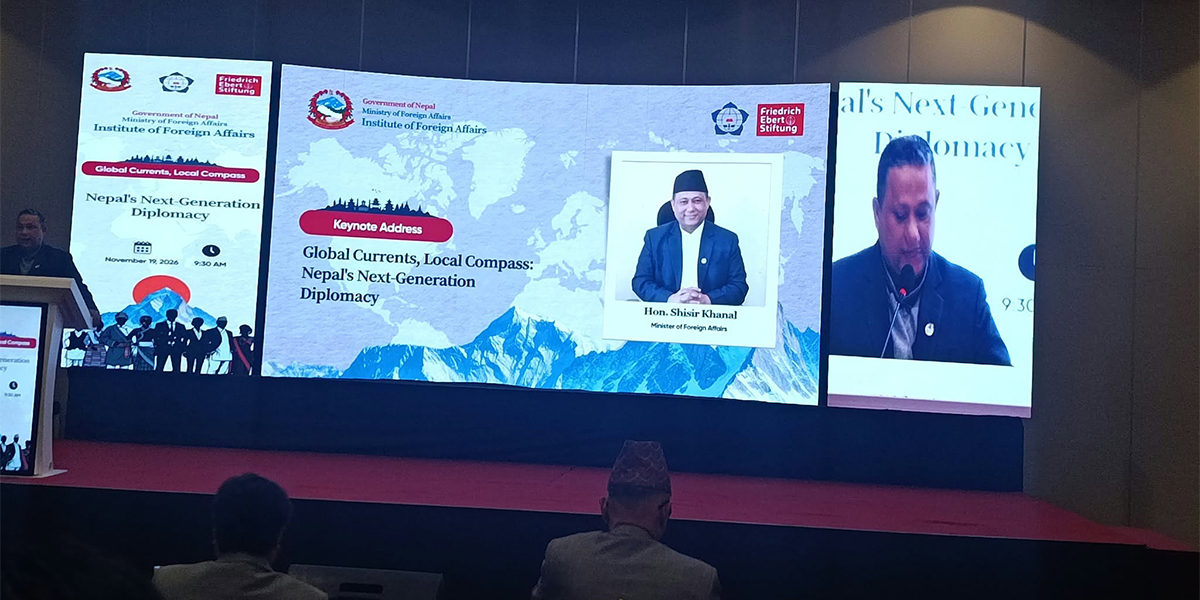
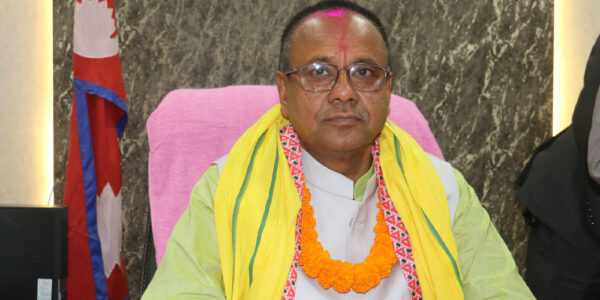
KATHMANDU: Minister for Foreign Affairs Shisir Khanal has said Nepal must move beyond traditional diplomatic practices and embrace a new generation of diplomacy shaped by technology, climate change, human mobility and global networks to navigate the changing world.
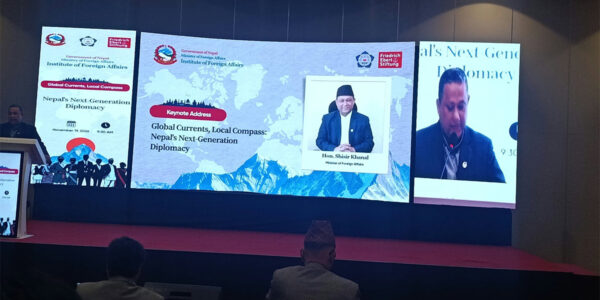
Addressing a one-day policy dialogue titled “Global Currents, Local Compass: Nepal’s Next-Generation Diplomacy,” organized by the Institute of Foreign Affairs, in Kathmandu on Friday, Khanal said the country’s diplomacy must be adaptive, agile, confident and collaborative to address emerging global challenges.
He said geopolitical tensions, fragmentation in global trade, artificial intelligence (AI), emerging technologies, climate change and evolving dimensions of national security were reshaping international relations.
“Geopolitical tensions are fragmenting global trade and multilateral rules. Emerging technologies and artificial intelligence are rewriting the rules of economic power and governance,” he said. “Accelerating climate change is placing unprecedented pressure on our ecosystems, infrastructure and human mobility.”
Khanal compared traditional diplomacy to a game of chess played behind closed doors, while likening next-generation statecraft to a dohori folk song, in which participants exchange verses and respond to one another.
He stressed the need to involve civil society, business leaders, local innovators, experts and the Nepali diaspora in diplomatic efforts.
“Traditional government mechanisms alone are not sufficient to address cross-border challenges,” he said, calling for the participation of all stakeholders.
The foreign minister also said the diplomatic strength of small and sovereign countries like Nepal depended not on their physical size but on strategic clarity, institutional credibility and the effective mobilization of networks.
“Our diplomats must be fluent at the intersection of policy and technology. We must partner with engineers, researchers and global institutions to anticipate disruptions before they reach our shores,” Khanal said.
Linking climate change to Nepal’s diplomatic priorities, he said the country could play a meaningful role in protecting the Himalayan region, advancing climate justice and promoting regional energy cooperation.
He added that Nepal must make a stronger case for its climate vulnerabilities on international platforms.
“Next-generation diplomats must connect rigorous climate science with moral advocacy. They must translate the lived realities of our mountain communities into global climate justice and regional energy cooperation,” he said.