 Himal Press
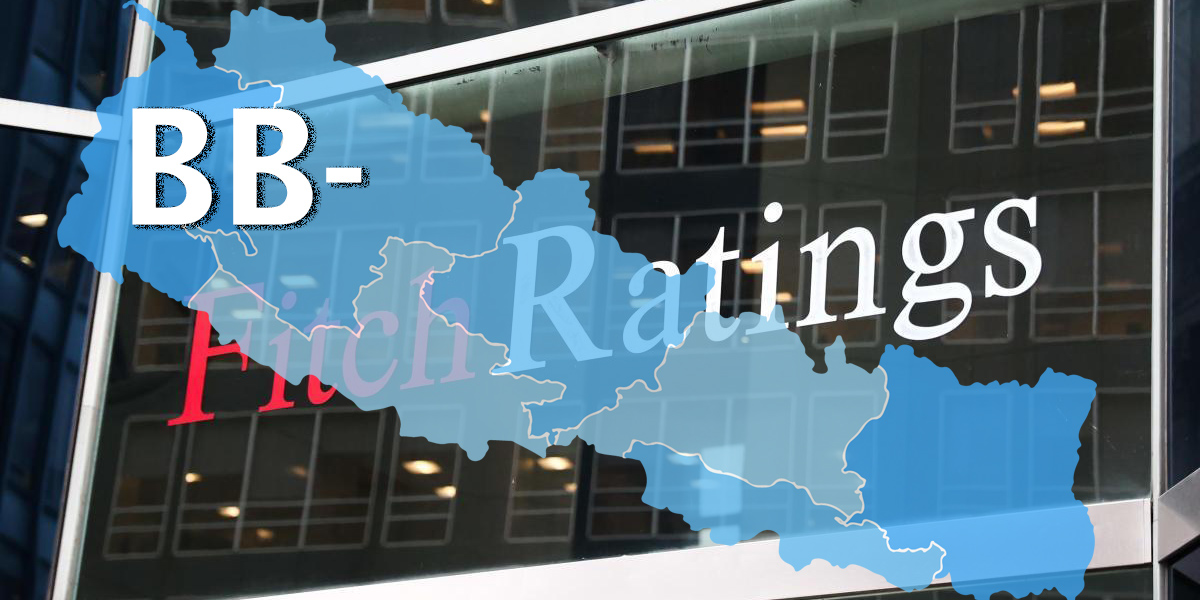
KATHMANDU: International rating agency Fitch Ratings has affirmed Nepal’s Long-Term Issuer Default Ratings (IDRs) at ‘BB-’ with a stable outlook, citing the country’s low government and external debt, strong foreign exchange reserves and robust remittance inflows.
According to Fitch, Nepal’s credit profile is supported by relatively low public debt, most of which is on highly concessional terms, strong external liquidity and access to multilateral financing.
A team from Fitch visited Nepal in the last week of October for an on-site assessment. During the visit, the team held discussions with government officials, representatives of chambers, development partners, economists and former finance ministers, among others.
Fitch first assigned a ‘BB-‘ rating with a stable outlook to Nepal in 2024. It retained the same rating in 2025.
The country’s medium-term growth prospects, particularly those driven by the hydropower sector, also support the rating, Fitch said in its rating action commentary.
However, Fitch said Nepal’s underdeveloped economy, vulnerability to external shocks and natural disasters, low per capita income and weak governance indicators continued to constrain its credit profile compared with countries in the ‘BB’ rating category.
Fitch expects Nepal’s economic growth to slow to 3.4% in fiscal year 2026/27, from 3.9% in 2025/26, largely due to the impact of the August 2026 floods. The disaster caused significant human and economic losses, affecting more than 10% of the country’s installed power capacity and disrupting electricity generation and transmission, transport connectivity, tourism and industrial activity.
The agency, however, expects growth to rebound to 5.2% in 2027/28 as reconstruction gathers pace and damaged hydropower and electricity-grid infrastructure is restored.
“That said, delays in reconstruction could slow the recovery in productive capacity. A prolonged Iran conflict could also disrupt energy and fertiliser imports, exacerbate terms-of-trade shocks, heighten the risk of supply shortages and dampen travel demand from key source markets. This could further cloud near-term growth prospects,” it added.
Fitch has identified improved political stability following the March 2026 parliamentary election as a positive factor. It, however, warned that political instability could re-emerge if the ruling party fails to deliver credible reforms or relies excessively on ordinances to implement policies.
On the external front, Fitch expects Nepal’s current account surplus to narrow to an average of 5.6% of GDP over the current and next fiscal years, from 14% in 2025/26.
“This is likely to stem from higher imports for reconstruction needs and continued hydropower development, as well as temporary disruption to electricity exports,” it said. “Lower tourism receipts will also narrow the surplus. We expect remittance inflows, which accounted for 36% of GDP in 2025/26, to remain resilient, despite ongoing geopolitical tension, supporting domestic demand.”
The agency expects foreign exchange reserves to cover around 16.4 months of current external payments for the next two years, substantially higher than the projected median of 5.2 months for countries in the ‘BB’ rating category. Such a strong reserve position provides a significant buffer against external shocks and supports Nepal’s currency peg to the Indian rupee, it added.
On public finances, Fitch projects federal government debt to rise to 48.2% of GDP by 2027/28, from 45.2% in 2025/26. Despite the increase, the debt ratio will remain below the projected ‘BB’ category median of 52.7%, it added.