 Himal Press
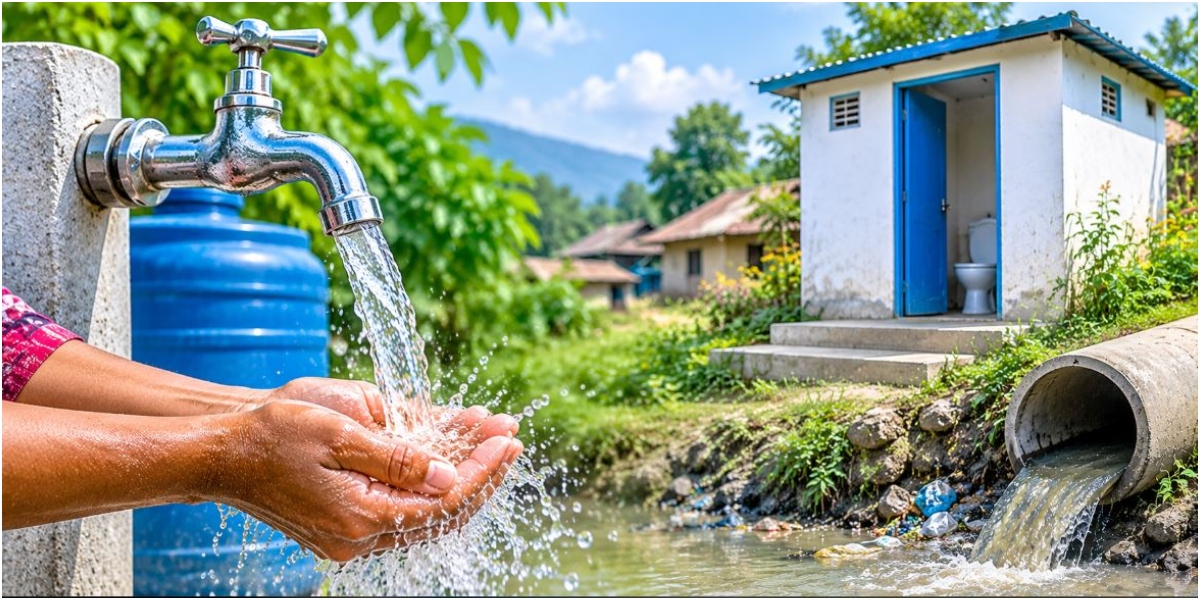
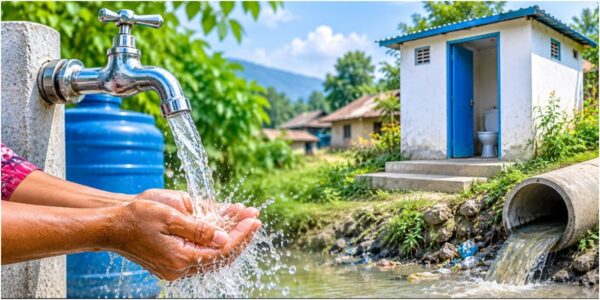
KATHMANDU: A new government report shows that despite major progress in building toilets and water taps over the past two decades, water consumed by more than 61% of households tests positive for E.Coli bacteria.
According to a thematic report titled “Water Supply and Sanitation Situation in Nepal,” published by the National Statistics Office (NSO), the country’s biggest challenge for the next decade is turning basic infrastructure that has already been developed into safe and reliable services.
While 96.4% of Nepalis have basic access to water, the 2024/25 national survey shows only 47.5% get clean and safe drinking water. Water quality usually worsens inside homes due to poor storage, the report said. E.Coli bacteria was found in 46.1% of water sources, and the contamination climbed to 61.2% in household containers. Among tubewell users, the contamination more than doubled from 26.6% to 59%.
In Terai belt, naturally occurring arsenic in groundwater also poses a public health threat, according to the report. About 7.4% of the Tarai population drinks water with arsenic above World Health Organization (WHO) safety limits compared to less than 0.5% in the Hill and Mountain regions.
The report also shows wide provincial gaps hidden behind national averages. People in Madhesh Province get about 66.1% of safe drinking water, but it drops to just 22.1% in Karnali Province.
According to the report, families face water shortages mostly because taps are either too far away or broken down. In Bagmati Province, non-functioning water systems cause 54.1% of reported water insufficiency.
It added that the burden of carrying water falls heavily on women and girls. They make up 71.5% of household water collectors. Even among teenagers aged 15 to 19, girls fetch water three times as often as boys.
Although homes without a toilet fell sharply from 53.2% in 2001 to 4.5% in 2021, safe sanitation still lags behind due to improper waste disposal and poor sewage treatment, the report said.