 Himal Press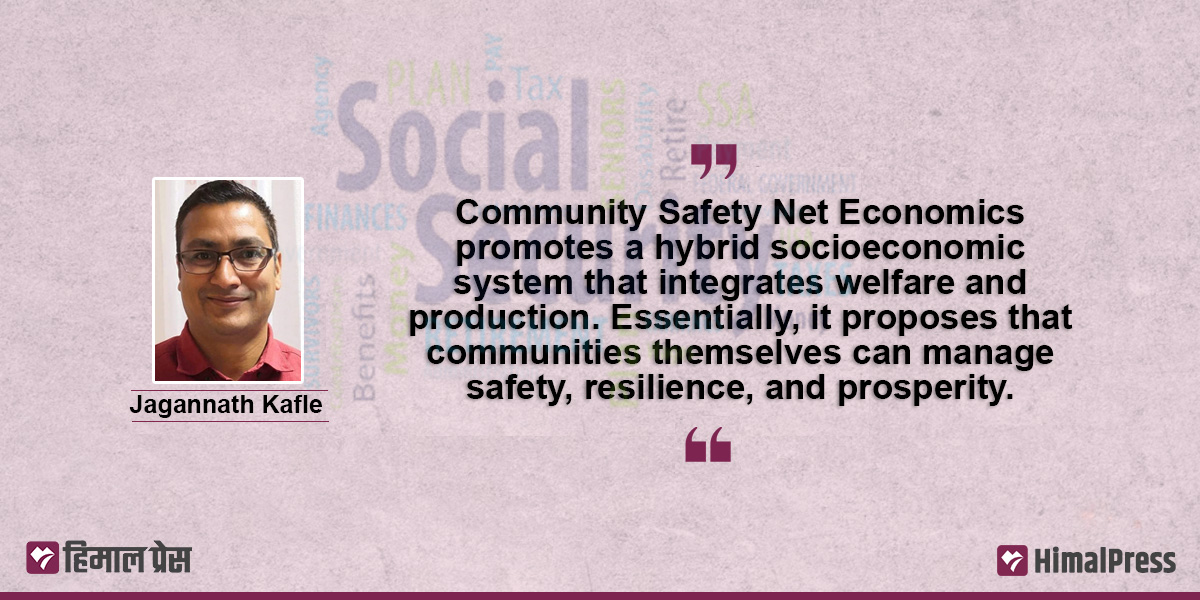
Election enthusiasm has swept Nepal in the changed political atmosphere following the Gen Z movement. Both emerging and established parties, each hoping to secure a single-party majority in the upcoming elections, have already named their preferred candidates for Prime Minister. However, the election outcome—who will form the government and what the new administration will actually deliver—remains uncertain.
What is striking is the absence of clear post-election plans. Neither new nor old parties have outlined a concrete roadmap for governance. They have offered little guidance on how they intend to address public dissatisfaction, manage national challenges, or resolve persistent social and economic problems to ensure steady progress.
The old parties are expected to continue with their familiar approaches. But if the new parties, which claim to offer fresh alternatives, also fail to introduce new issues or policy agendas, public frustration will persist. Even if a new party leads the next government, the absence of a clear direction suggests it will fail to deliver as expected.
Against this backdrop, a hybrid model has been proposed to strengthen social security through sustainable economic transformation with immediate, nationwide impact. If adopted by the post-election government, this model could help respond to public aspirations and catalyze rapid, positive change.
Welfare systems are under strain throughout the world. Even traditionally strong welfare states such as Finland, Sweden, Norway, and Denmark have faced sustainability challenges in recent years, especially after the COVID-19 pandemic. Once known for universal coverage and generous benefits, these countries are now struggling with tighter budgets, increased service demands, and demographic pressures. In contrast, many developing countries rely on large donors and World Bank-funded social safety programs. While these initiatives have helped millions, coverage gaps remain wide and long-term sustainability is uncertain.
Welfare systems are under strain throughout the world. Even traditionally strong welfare states such as Finland, Sweden, Norway, and Denmark have faced sustainability challenges in recent years, especially after the COVID-19 pandemic.
The paradox is clear: while wealthy welfare states struggle to sustain their systems, poorer countries rely on external aid that rarely ensures long-term stability. These pressures have sparked new thinking on how societies can protect vulnerable populations while building resilient, self-reliant foundations for economic and social security.
One such idea is “Community Safety Net Economics,” proposed by this scribe. The concept is gaining attention among policymakers, researchers, and development experts. It promotes a hybrid socioeconomic system that combines community-owned enterprises with locally managed social protection systems. The approach challenges both state-led welfare models in developed countries and donor-funded safety nets in developing ones. Instead, it emphasizes a community-based, self-sufficient framework that integrates welfare and production. Essentially, it proposes that communities themselves can manage safety, resilience, and prosperity.
The model begins by recognizing the limitations of the existing systems. Traditional safety nets—like cash transfers, food aid, housing support, and unemployment benefits—are vital for helping vulnerable populations. But they often depend on external funding or fluctuate with government budgets, political cycles, and economic conditions. In many developing countries, delays, weak institutions, elite influence, and poor alignment with local realities reduce their effectiveness. Even in wealthier nations, ageing populations and fiscal stress are raising concerns about the long-term viability of these safety nets. The COVID-19 pandemic exposed and accelerated many of these weaknesses.
Community Safety Net Economics addresses these pressures by redefining the links between communities, markets, and the state. Rather than treating people as passive recipients of welfare, the model sees them as active participants in a locally managed socioeconomic system. Central to this approach is a community-supported institutional body representing all households. This body manages socioeconomic accounts, oversees collective investments, distributes shares and incentives, collaborates with government programs, and ensures access to basic needs and risk coverage. It also serves as a bridge among households, entrepreneurs, local governments, and external actors, while protecting the community from elite capture and ensuring fair distribution of benefits.
The economic foundation of this model is built on collective investment and shared enterprise. Communities pool local resources such as capital, land, labor, and knowledge into community-owned funds and businesses. These ventures generate income that directly finances the community’s safety net, reducing dependence on government budgets or donor aid. By linking social protection to productive economic activity, the model shortens the long transition from reliance to independence seen in traditional welfare systems. At the same time, it encourages entrepreneurship, job creation, and economic diversification. This strengthens competitiveness and resilience at the local level.
A distinctive feature of this model is its integration of scientific advances with indigenous knowledge. It recognizes the value of traditional practices, ecological wisdom, and local skills that can be strengthened through modern technology. This coordination helps communities increase productivity, support environmental sustainability, and become more resilient to climate change and other disruptions. Communities are seen not only as economic units, but also as custodians of cultural and ecological heritage.
Communities pool local resources such as capital, land, labor, and knowledge into community-owned funds and businesses. These ventures generate income that directly finances the community’s safety net, reducing dependence on government budgets or donor aid.
The framework operates across three interconnected levels. At the macro level, national policies, legal frameworks, and market conditions create an enabling environment for community systems. Governments play a critical role through regulation, technical support, and complementary social protection programs. At the meso level, the community governing body ensures accountability, manages investments, and collaborates with state agencies and markets. At the micro level, households and individuals participate based on their resources, livelihood strategies, vulnerabilities, and access to safety nets. This layered structure keeps the model rooted in local realities while linking it to broader institutional support.
The model identifies four key actors with interconnected roles. Governments provide regulation, technical support, and social protection programs. Community governing bodies manage collective investments, allocate resources, resolve conflicts, and ensure fair distribution of benefits. Entrepreneurs foster innovation, create employment, adopt new technologies, and contribute to the community safety net fund. Households and individuals invest resources, participate in decision-making, propose new ventures, and access both economic opportunities and social protections. Together, these actors form a balanced ecosystem of shared responsibility and benefit.
Despite its promise, the model also recognizes its challenges. Weak incentives, poor institutional design, elite domination, and mismatches with local contexts can undermine its effectiveness. Moving from dependency to self-reliance requires careful institutional design, strong governance, and local adaptation. These challenges are not unique; they reflect broader difficulties facing welfare systems worldwide. Still, the model’s emphasis on local ownership and integrated governance offers a more grounded and sustainable path forward.
As welfare systems around the world face mounting pressures, momentum is growing for sustainable, community-driven alternatives. Community Safety Net Economics offers a hopeful vision that reduces government burdens, empowers local communities, and builds neighborhood economies capable of sustaining their own safety nets. It aligns with global goals of equity, resilience, and opportunity, and offers lessons for both developed and developing countries. Although still in the conceptual and testing stages, the model confidently argues that, with the right institutions and economic tools, communities can build welfare systems that are not only protective but also productive, resilient, and self-sufficient.
In a world where traditional welfare models are under strain and donor-driven projects often fail to deliver lasting results, this model presents a timely and innovative solution. It motivates policymakers, researchers, and communities to reimagine social protection—not merely as a safety net, but as a platform for shared prosperity led by communities.
(Kafle is a researcher at Turku School of Economics, University of Turku, Finland)