 Himal Press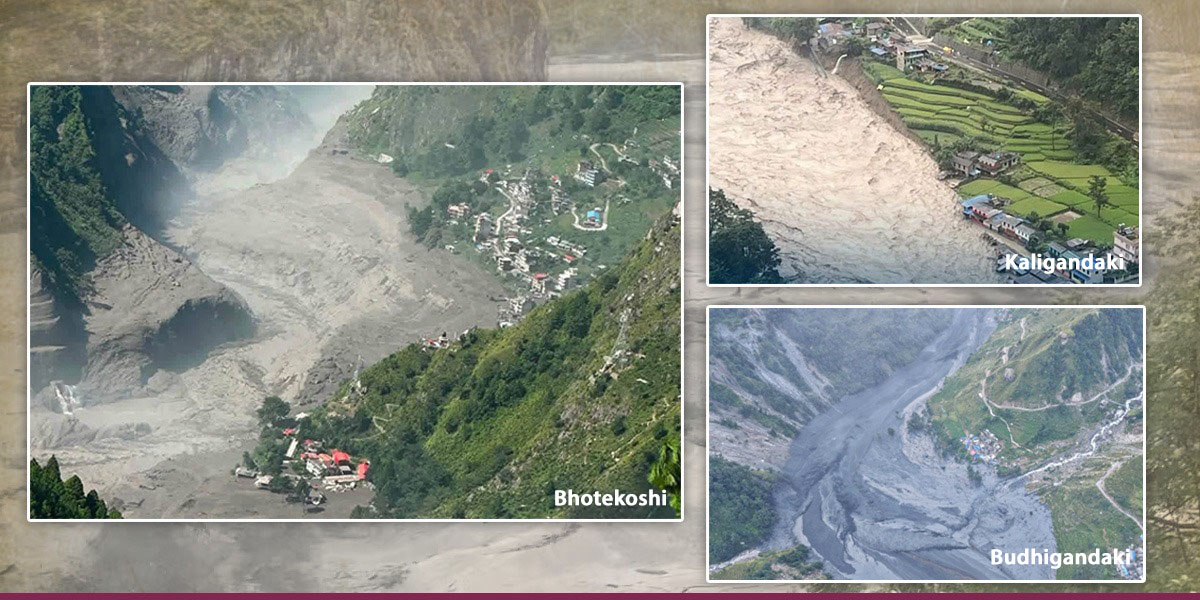
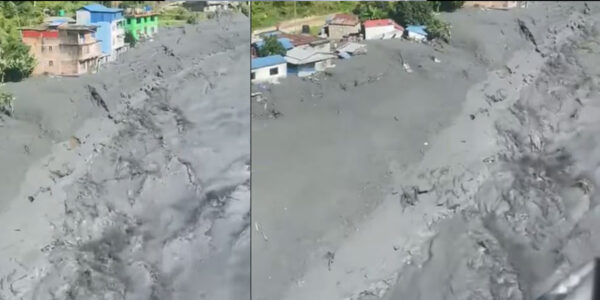
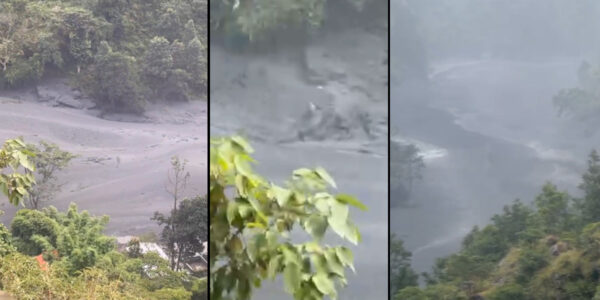
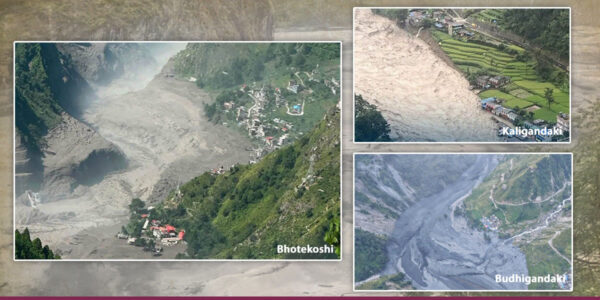
KATHMANDU: Three major floods in the Bhotekoshi, Kaligandaki and Budhigandaki rivers over the past two months have caused widespread destruction to lives, settlements, and key infrastructure across Nepal.
Hundreds of people have died, many remain missing, and daily life in affected regions has been severely disrupted following damage to roads, bridges and hydropower projects.
All three rivers are part of the broader Gandaki (Narayani) basin. The Bhotekoshi, which is known downstream as Trishuli, is the easternmost tributary of Narayani. Budhigandaki River, which originates in Gorkha and flows through Gorkha and Dhading districts, meets Trishuli at Benighat near the Prithvi Highway. Similarly, Kaligandaki, which originates in Mustang and flows through Myagdi, Baglung, Parbat, Palpa, Gulmi, Syangja and Tanahun, meets Trishuli, which is known as Narayani in Nawalparasi East.
The sequence of flooding, which struck the Bhotekoshi on August 26, the Kaligandaki a month later and the Budhigandaki on Sunday, has raised serious questions about hazards originating in high-mountain river systems and the lack of research into why these disasters are recurring within the same basin.
Studies have shown the Bhotekoshi flood was triggered by ice-rock collapse from the northern slopes of Langtang Lirung, which deposited debris in the Lhende stream that flowed into the Bhotekoshi-Trishuli river system. Similarly, the Kaligandaki flood was caused by heavy rainfall in upper catchment areas. Likewise, a preliminary study shows the Budhigandaki flood occurred after a dry landslide blocked one of its tributaries in Tsum Valley in northern Gorkha for a few hours.
Although all three major floods occurred in the Gandaki basin, experts say it cannot be explained why such severe floods are concentrating in the Gandaki River system.
Basanta Raj Adhikari, director of the Center for Disaster Studies at the Institute of Engineering, Pulchowk, said that although major floods have struck tributaries of the Gandaki over the past two months, no studies have been conducted on why flooding is recurring in the same river system.
“Major floods have hit the tributaries of the Gandaki in the past two months. However, there has been no study focusing on why floods are occurring in a concentrated manner within the same river system,” he said.
Watershed expert Madhukar Upadhya said three recent disasters in the Gandaki basin exhibit novel characteristics. He, however, pointed to rising global temperatures as a key driver.
“Rocks and glaciers remain frozen together. As temperatures rise in the Himalayan region, these formations are weakening, leading to such disasters. This is a matter of grave concern,” Upadhya told Himal Press over the phone.
Upadhya added that the sediment washed down during the floods in both the Bhotekoshi and Budhigandaki originated from high mountain areas. “The composition of debris is similar to the debris flow seen during the Melamchi floods in 2021,” he added.
He said it was high time infrastructure planning accounted for these evolving risks along Himalayan river corridors. “The flood in the Budhigandaki River has also raised questions about the proposed reservoir-based Budhigandaki Hydropower Project,” he said.
The government is planning to build a 1,200 MW storage project on the Budhigandaki River. The project is estimated to cost $2.5 billion.