 Himal Press
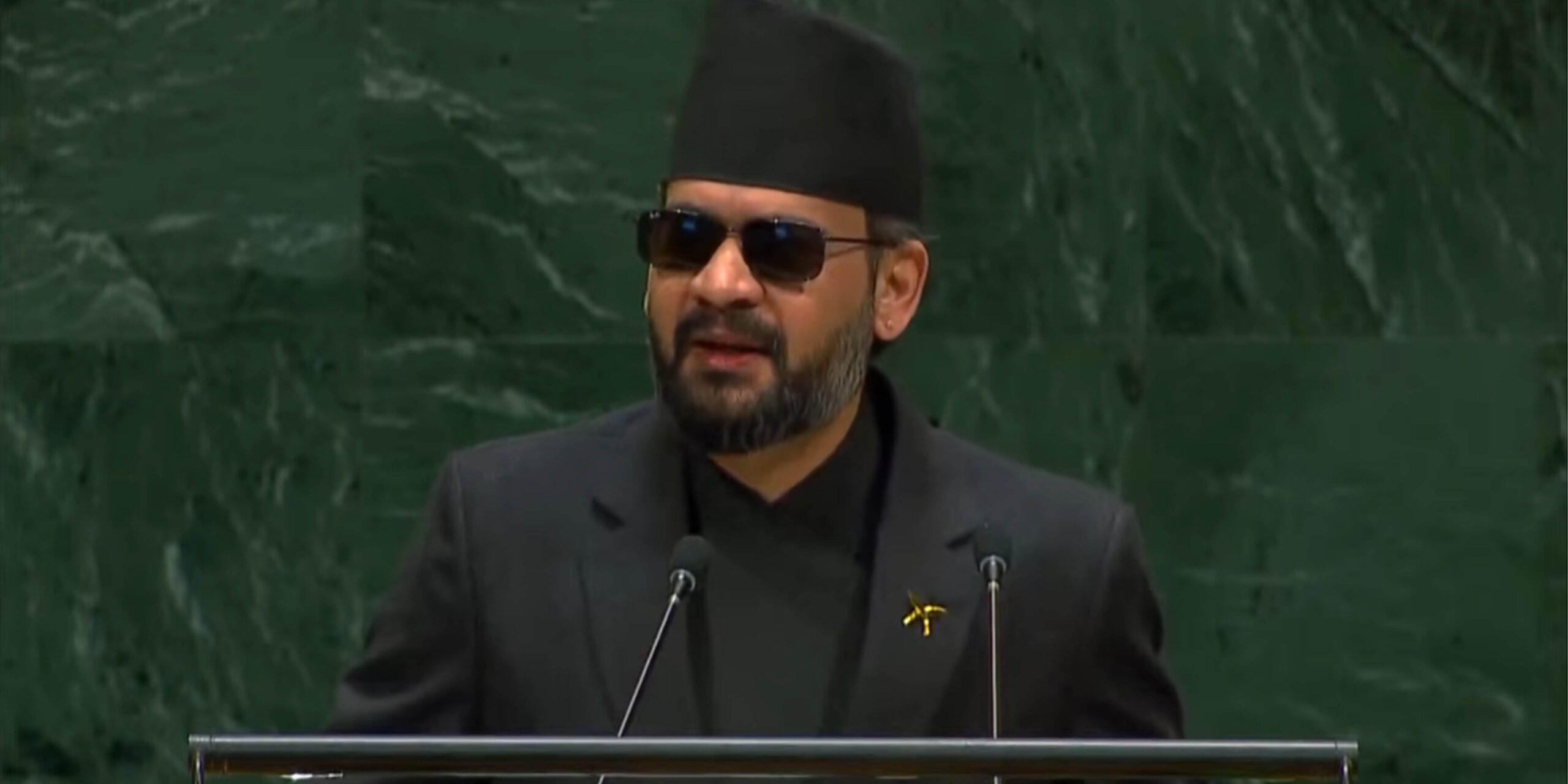
KATHMANDU: Prime Minister Balendra Shah is embarking on a two-day state visit to India on November 22.
The visit was initially planned for three days, but was shortened to two days at the request of the prime minister, officials at the Ministry of Foreign Affairs said.
Shah will fly to New Delhi on a Nepal Airlines flight on the afternoon of November 22 and return to Kathmandu the following evening.
According to the current itinerary, he will spend no more than 27 hours in the Indian capital.
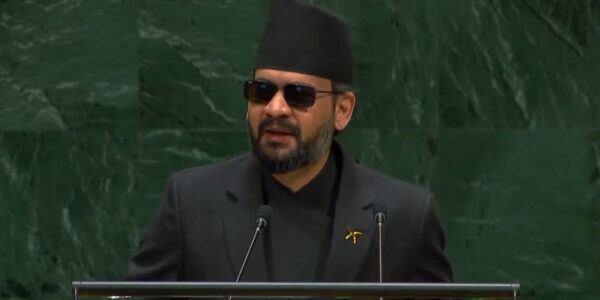
During his recent visit to New York to attend the 81st United Nations General Assembly, Shah spent around 37 hours in the US.
His upcoming India visit is similarly focused on high-level political engagements and bilateral discussions. It will be his first formal bilateral foreign visit since becoming prime minister. Eight months ago, shortly after assuming office, he had indicated that he would not undertake foreign trips during his first year in office. However, the visit was eventually scheduled in view of an invitation from Indian Prime Minister Narendra Modi and the importance of bilateral relations.
No Nepali prime minister has undertaken such a short visit to India since the political change of 1990. This is set to be the shortest-ever India visit by a Nepali prime minister. Even during relatively brief visits, Nepali prime ministers have generally spent at least two nights in Delhi.
India had proposed to take Shah outside New Delhi, either to Bengaluru or Ahmedabad, as part of the visit. However, Shah indicated that he would not travel outside the Indian capital and would return to Kathmandu immediately after the key meetings.
Foreign ministry officials say preparations are underway for Shah to hold a 30-minute one-on-one meeting with his Indian counterpart Modi, followed by delegation-level talks. The two leaders are expected to discuss both formal and informal matters during their private meeting, while the delegation-level talks will focus on agreed bilateral agendas. Several areas of cooperation are expected to be finalized during the discussions, foreign ministry officials said.
Foreign Minister Shisir Khanal and Indian Ambassador to Nepal Sudhakar Dalela discussed the visit’s schedule, agenda, expected outcomes and logistical arrangements during a meeting on Monday. Ambassador Dalela has also held meetings with Minister for Infrastructure Development Sunil Lamsal, Minister for Culture, Tourism and Civil Aviation Khadkaraj Paudel, and Minister for Industry, Commerce and Supplies Deepak Kumar Sah to discuss issues concerning their respective sectors.
Earlier, Indian Foreign Secretary Vikram Misri visited Kathmandu on November 4-5 and held discussions with Prime Minister Shah and key ministers. He also held delegation-level talks with Foreign Secretary Amrit Bahadur Rai and helped prepare the framework for the prime minister’s visit.
A team comprising foreign ministry and security officials is scheduled to travel to India toward the end of this week to make preparations. Tourism Minister Paudel is also scheduled to visit India on Tuesday. Final discussions on outstanding technical issues related to air routes are expected during his visit.
Air connectivity, economic cooperation top agenda
Several key bilateral issues that Nepal has been raising for years are expected to feature prominently during the visit. In particular, Nepal has long sought additional air entry routes through Indian airspace to expand its international connectivity. The issue is considered crucial for the effective operation of the Gautam Buddha International Airport in Bhairahawa and Pokhara International Airport.
The issue has remained under discussion for decades. Nepal is hopeful of achieving a breakthrough in negotiations this time.
One of the major expected outcomes of the visit is progress on Nepal’s longstanding demand for additional air entry routes through Indian airspace. Discussions could advance on routes through Mahakali, Bhairahawa, Nepalgunj and Janakpur.
India has given positive indications regarding the Mahakali route. In return, Nepal has expressed willingness to allow India to use eastern Nepal’s airspace for flights to Bagdogra Airport. India has also asked for delegated control over air traffic in Nepali airspace near Raxaul, sources say. The issue is expected to move forward on a reciprocal basis.
On the economic front, Nepal expects India to announce a financial assistance package, lay foundation stones for some new India-supported projects and inaugurate completed projects.
Officials said financial and technical assistance from India for reconstruction following the floods and landslides in the Rasuwa-Bhotekoshi region would also feature in the discussions. Officials say Nepal is seeking around $2 billion in assistance from India.
Projects likely to feature in the program include a direct railway link between Ayodhya and Janakpur, a new building for the Nepal Police Academy in Panauti, a bridge in Darchula and an integrated check post in Bhairahawa.
Other proposals on the table include direct air connectivity, cross-border liquefied petroleum gas (LPG) pipelines, expansion of petroleum pipelines, development of religious and tourism circuits, establishment of branches of Indian Institutes of Management (IIMs) and Indian Institutes of Technology (IITs), cooperation in sports including cricket, and collaboration in artificial intelligence (AI).
In the energy sector, Nepal wants to increase its annual electricity exports to India to more than 1,650 megawatts and raise exports to Bangladesh from the current 40 megawatts. Disaster preparedness, early warning systems and timely completion of India-supported projects are also expected to be discussed.
India, for its part, wants to expand its involvement in Nepal’s hydropower sector and remove obstacles affecting projects associated with India’s state-owned hydropower company NHPC.
Although some concrete announcements are expected during the visit, officials see little possibility of breakthroughs on longstanding and contentious issues such as the border dispute, widening trade deficit, trade and transit arrangements, recruitment of Nepali citizens into the Indian Army and the Pancheshwar Multipurpose Project.
Both sides are working to prepare a draft of the joint statement and reach an understanding by the end of this week. Despite the short duration of the visit, progress is expected on key bilateral issues. However, resolving all longstanding disputes in a single visit appears unlikely.