 Himal Press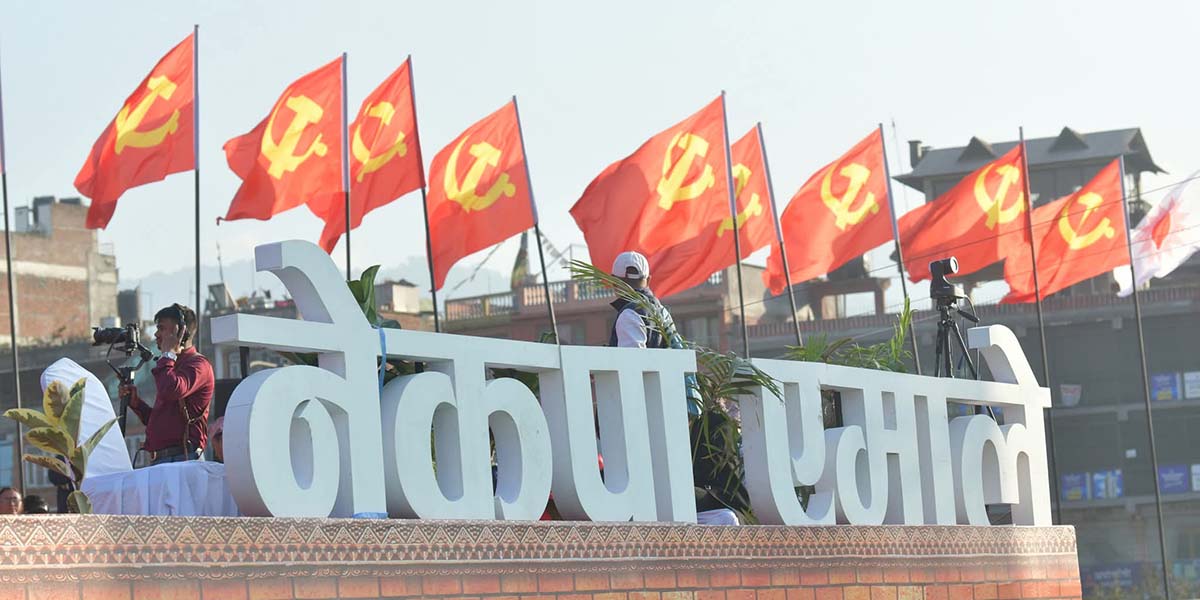
KATHMANDU: The CPN-UML has identified six reasons behind its poor performance in the March 5 elections.
A report prepared by the Election Review and Party Reorganization Task Force formed by the party identified the failure to justify the ruling coalition, public discontent, last September’s Gen Z protest, geopolitical maneuvering and digital algorithms, weaknesses in governance, and factionalism within the party as the main reasons for the defeat.
The task force prepared the report based on suggestions from various levels of the party.
The report does not attribute the UML’s defeat merely to weaknesses in its election campaign or candidate selection. It links the loss to shortcomings ranging from government performance and internal party management to the party’s relationship with the public and its failure to understand changing political sentiments.
The task force identified growing public dissatisfaction and mistrust as the first reason. According to the report, the UML failed to convince people of the rationale behind repeatedly changing its power-sharing arrangements with the Nepali Congress (NC) and the then-CPN (Maoist Center). This weakened public trust in the party, it added.
Likewise, the report added that growing frustration among ordinary and marginalized communities, amid perceptions that even the government formed with a two-thirds majority after the 2017 elections failed to perform as expected, was exploited by populist forces to their advantage.
The report also states that internal disputes during the Nepal Communist Party (NCP) period and political attacks against each other during the UML split increased dissatisfaction among left-wing voters.
The task force concluded that the opposition narrative that the coalition with the NC was formed primarily to serve power interests, rather than around policy and an agenda, gained ground after the party said the constitutional amendment process, which was presented as a key agenda of the alliance, would be pursued only after 2030.
Likewise, it said public dissatisfaction increased because the UML failed to maintain good governance while in government, could not address the demands of protesting groups and communities, and failed to take timely action even when some ministers and elected representatives were accused of corruption and irregularities.
The UML also cited its failure to create legitimate employment and income opportunities commensurate with rising living standards and aspirations as a reason for its electoral defeat.
The party considers the Gen Z protest one of the most influential political factors behind its defeat.
“There was no reason for the party or government to oppose the September 8 protest. However, infiltrators entered the protest, which resulted in serious loss of life,” the task force said in its report.
According to the task force, the September 9 protests involved deliberate acts of destruction and that important state structures and the foundations of democracy were attacked within a short period. “Following the resignation of then-Prime Minister KP Sharma Oli, a process was initiated to legitimize a political conspiracy,” it added.
The task force has acknowledged that the UML failed to establish its political interpretation of the September 8-9 events as a premeditated conspiracy among the general public.