 Himal Press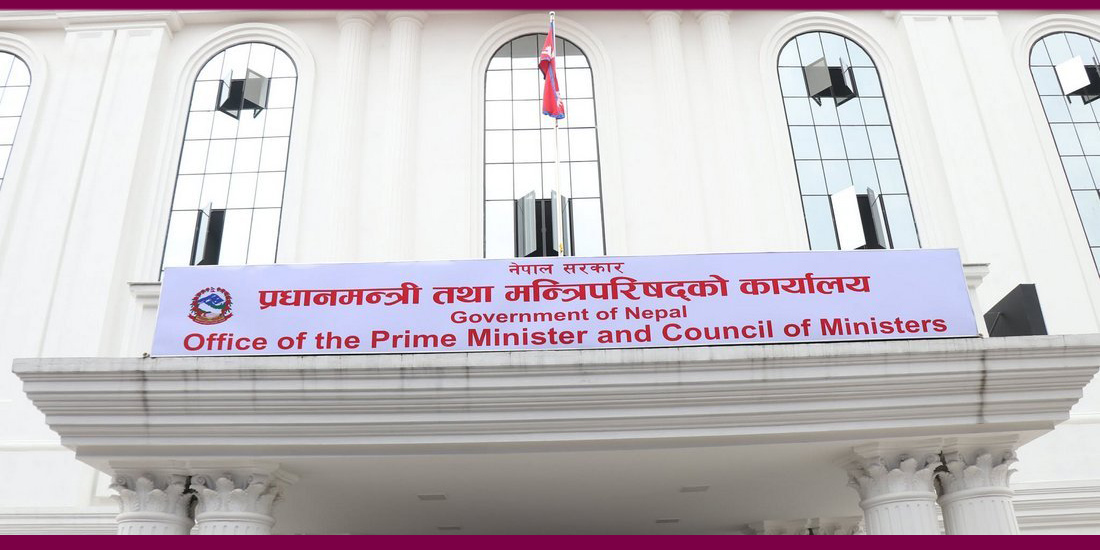
KATHMANDU: The government led by Prime Minister Balendra Shah has issued dozens of directives, guidelines and circulars to ministries, commissions, secretariats, provincial and local governments, and their subordinate bodies as part of its efforts to promote governance reforms, improve public service delivery and strengthen good governance.
According to the Office of the Prime Minister and Council of Ministers (OPMCM), nearly 40 directives, procedures and circulars have been issued since the formation of the current government. The initiatives were taken to make the administrative system more efficient, transparent, accountable and citizen-friendly.
Most of the measures are directly linked to the effective implementation of the government’s 100-point governance reform agenda, according to OPMCM.
The directives primarily focus on administrative reform, public service delivery, fiscal discipline, promotion of agriculture and trade, natural resource management, corruption control, good governance, public accountability, education, health, foreign employment, health insurance reform and grievance handling.
Deepa Dahal, Press and Research Advisor to Prime Minister Shah, said the directives were introduced to eliminate bureaucratic delays, promote digital governance, simplify unnecessary procedures, ensure prudent use of public expenditure and provide faster and more effective services to citizens.
To streamline administrative processes, the government has implemented Business Process Reengineering (BPR) guidelines, which have cut decision-making processes to a maximum of three levels. It has also directed all government agencies to strengthen the Government Integrated Office Management System (GIOMS) and expand the use of digital systems in official work.
The government has further prioritized reform initiatives such as the “Zero Pending Files” campaign, grievance management, regular updating of official records and preservation of institutional memory.
Through the circulars, ministries and agencies have been instructed to maintain austerity by refraining from purchasing new materials except when absolutely necessary, repairing and reusing existing equipment and preventing the misuse of government vehicles.
To ensure governance reform efforts are not disrupted, the government had also temporarily restricted foreign travel by civil servants.
In the agriculture sector, directives have been issued to operate cold storage facilities at full capacity, increase the consumption of milk and dairy products, improve record-keeping of agricultural imports, and make the distribution and stock levels of chemical fertilizers more transparent.
The government has also instructed all ministries to approve Organization and Management (O&M) guidelines by the end of the current fiscal year. Guidance has likewise been issued for preparing annual work plans and program concepts for fiscal year 2027/28.
Additional directives have been issued related to the disclosure of financial management details of madrasas, the dismissal of vice-chancellors and other office-bearers of universities and public institutions, television-based classes for all secondary-level subjects, strengthening Nepal Aushadhi Limited, stipends and working hours for MBBS and BDS intern doctors, management of Nepali migrant workers, reform of the health insurance program, and regulation of NGOs, INGOs and the Social Welfare Council.
To protect natural resources, the government has issued special instructions to curb the illegal extraction, collection and transportation of riverbed and mining materials. It has also prioritized office cleanliness and environmental sanitation through the National Sanitation Week campaign.
The government has directed all ministries, commissions, secretariats and offices to control corruption-related activities. Likewise, offices have been instructed to regularly update the details of office chiefs, spokespersons and information officers, and to ensure that telephone calls are answered during office hours and public complaints are promptly addressed.