
 All photos: Ayush Raj Manandhar/WWF
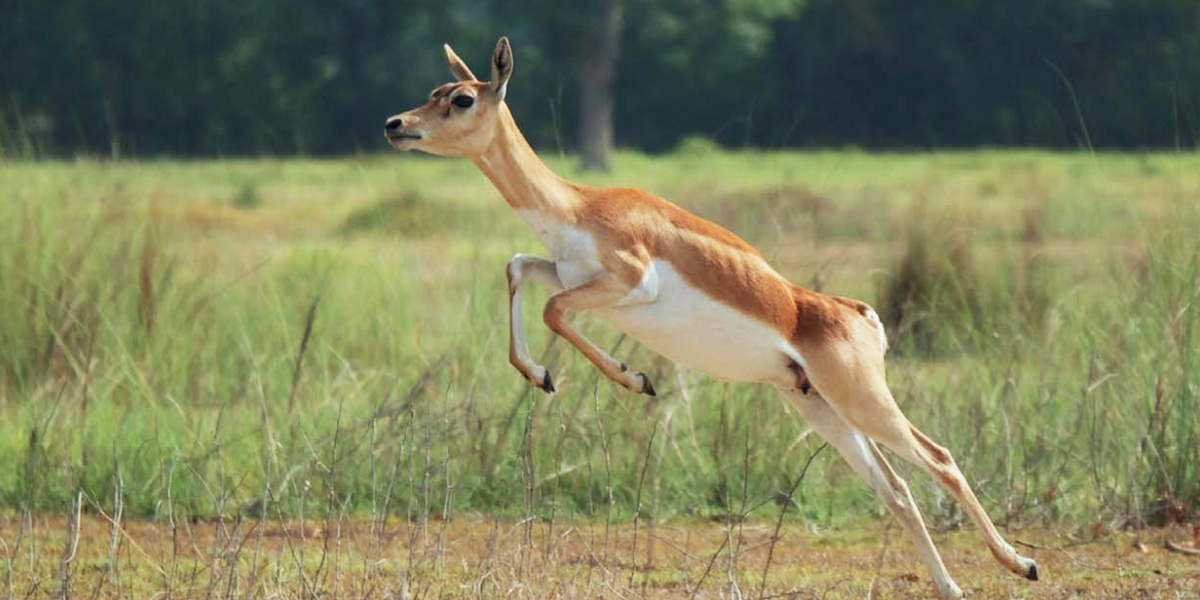
KATHMANDU: The endangered blackbuck is a beautiful mammal. It looks even more captivating when it leaps. People travel from far and wide to Khairapur in Bardiya just to witness this sight. But behind this beauty lies a pressing question: are these animals still truly wild?
Blackbucks, once found in the forests of Banke, Bardiya, and Kanchanpur, were feared to have disappeared entirely from Nepal in the 1970s, when the Bardiya Wildlife Reserve (now Bardiya National Park) was established. A study was launched to determine whether any remained. According to the Department of National Parks and Wildlife Conservation, the study found nine blackbucks near the forest edge in Khairi Panditpur of Bardiya: one old male with a broken horn, one adult male, three females, and four calves.
Efforts to conserve the small surviving population began in the joint initiatives of the District Forest Office, Bardiya and Bardiya National Park. Between 1977 and 1987, a total of 52 blackbucks were translocated to the Baghaura grassland inside the park. Of these, 25 were moved from Khairapur in two phases and 27 from the Central Zoo, Lalitpur.
However, the first attempt to establish a second population failed. According to Laxmiraj Joshi, senior conservation officer of the National Trust for Nature Conservation (NTNC), blackbucks prefer short, tender grasses, but Baghaura had tall grass, making it unsuitable habitat. Additionally, predators caused significant losses.
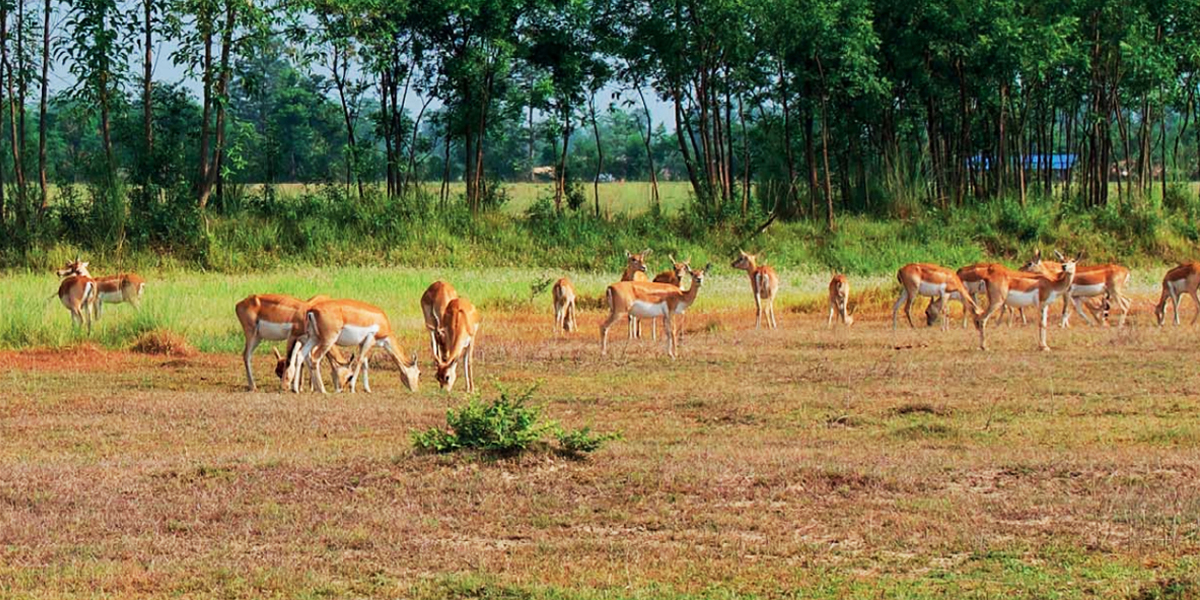
Recognizing the importance of Khairapur, the government declared a 16.95 sq km area as the Blackbuck Conservation Area in 2009. Of this, about 5.27 sq km serves as blackbuck habitat. Since then, the population has increased to around 250. Similarly, 42 more blackbucks were moved to Hirapur in Shuklaphanta—22 from Nepalgunj Mini Zoo in 2012, six from the Central Zoo in Lalitpur, and 14 from Khairapur in 2015. Today, Khairapur has around 300 blackbucks. Altogether, excluding zoos, Nepal now has roughly 550 blackbucks in the wild.
Losing natural defense abilities
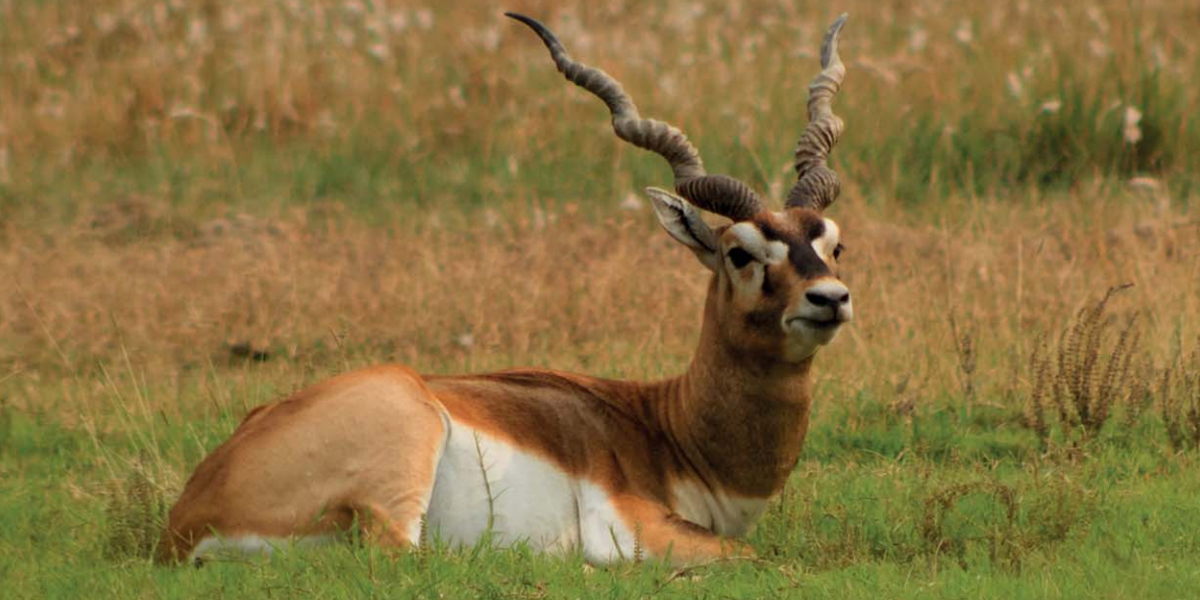
Although blackbuck numbers have increased, experts say the mammal is losing their natural instincts and defensive behaviors as they have ben raised in fenced, controlled environments to protect them from predators such as leopards and hyenas.
According to Chandramani Aryal, associate professor of Environmental Science, prolonged human care has meant blackbucks no longer struggle for food or need to evade predators. “These blackbucks can’t recognize predators,” Aryal said. “If released into fully open forests, they won’t be able to protect themselves from leopards or other carnivores.”
Even within fenced areas, occasional predator intrusions have led to multiple deaths at once, highlighting their weak defensive capacity. Government data shows leopards killed 34 blackbucks and hyenas nine in fiscal year 2016/17. Dogs also attacked and killed five in the previous fiscal year.
Senior Ecologist Haribhadra Acharya says blackbucks have long lived close to humans and livestock, unlike other wild animals that develop strong survival instincts. “They lack behaviors like fighting or hiding from predators, so their protection requires extra attention,” he said. “These habitats, however, are still natural to some extent, as they lie within forests, even if fenced. The fencing is meant to prevent predator entry due to the small population size.”
Deep ties with human communities
Blackbucks are among the most beautiful mammals and have long been associated with human communities. According to Hindu tradition, they were cared for during the era of Lord Krishna and grazed alongside cattle. The Yadav community, in particular, regards them as sacred.
Blackbucks prefer short grasses and are often seen grazing near settlements alongside livestock. This reflects their long-standing coexistence with humans.
According to Acharya, releasing blackbucks into open habitats is not currently feasible due to their small population. “The goal is gradual release, but it’s not immediately possible,” he said.
Although the Hirapur area has been expanded from 17 to 58 hectares, it is still not enough. He also points out that the natural process of mothers teaching offspring survival skills has been disrupted.
So what can be done? Aryal suggests mandatory “pre-release training” before releasing blackbucks into the wild. This includes teaching them to recognize predators and respond defensively.
Such training methods are also highlighted in Nepal’s Blackbuck Conservation Action Plan (2023–2027), which includes soft release strategies. Techniques may involve using dummy predators and recorded predator sounds, as well as acclimatizing animals within controlled enclosures.
Modern technologies like radio collars can also help monitor their movement and behavior, enabling timely rescue if needed and providing valuable data for future conservation efforts.
Blackbucks to be introduced in Chitwan
Plans are underway to translocate 18 blackbucks — six males and 12 females — from Bardiya and Kanchanpur to Tikouli in Chitwan. The Ministry of Forests and Environment has already approved the plan.
A 20-hectare fenced area with basic infrastructure has been prepared in Tikouli. The animals will be moved once habitat management work is completed.
Wildlife translocation sometimes faces opposition from local communities and conservationists. Local opposition was seen during rhino transfers from Chitwan to Bardiya in the past. However, experts say translocation is necessary.
Wildlife expert Rajendra Narayan Suwal explains that keeping all animals in one location increases risks. “In case of disease outbreaks or natural disasters, an entire population could be wiped out,” he said. Creating satellite populations in multiple locations helps reduce such risks and enhances genetic diversity which improves resilience against diseases.”
The ministry has also said that confining any wildlife to a limited area can create genetic, environmental, and unforeseen risks which could lead to sudden extinction. The approval for blackbuck translocation was granted based on the recommendations of a feasibility and field study report submitted by a task force formed by the ministry, as well as on past policy decisions and approved action plans, the ministry said in a notice.
![Anjali, Pushpa thriving in Koshi Tappu [In Pictures]](https://en.himalpress.com/wp-content/uploads/2025/04/raino-2.jpg)