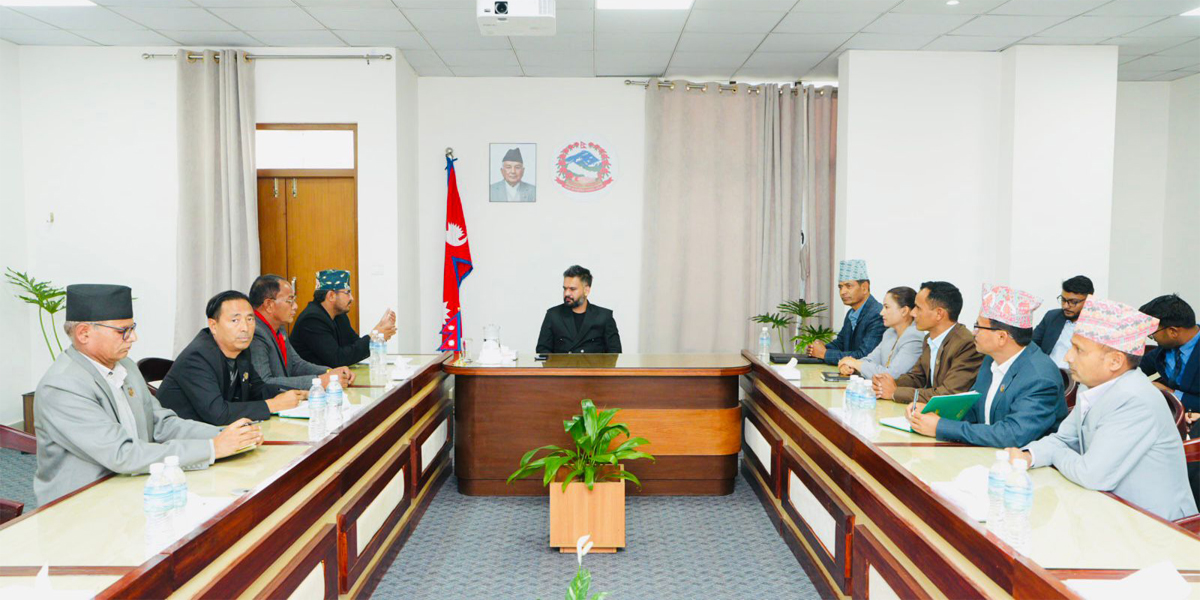
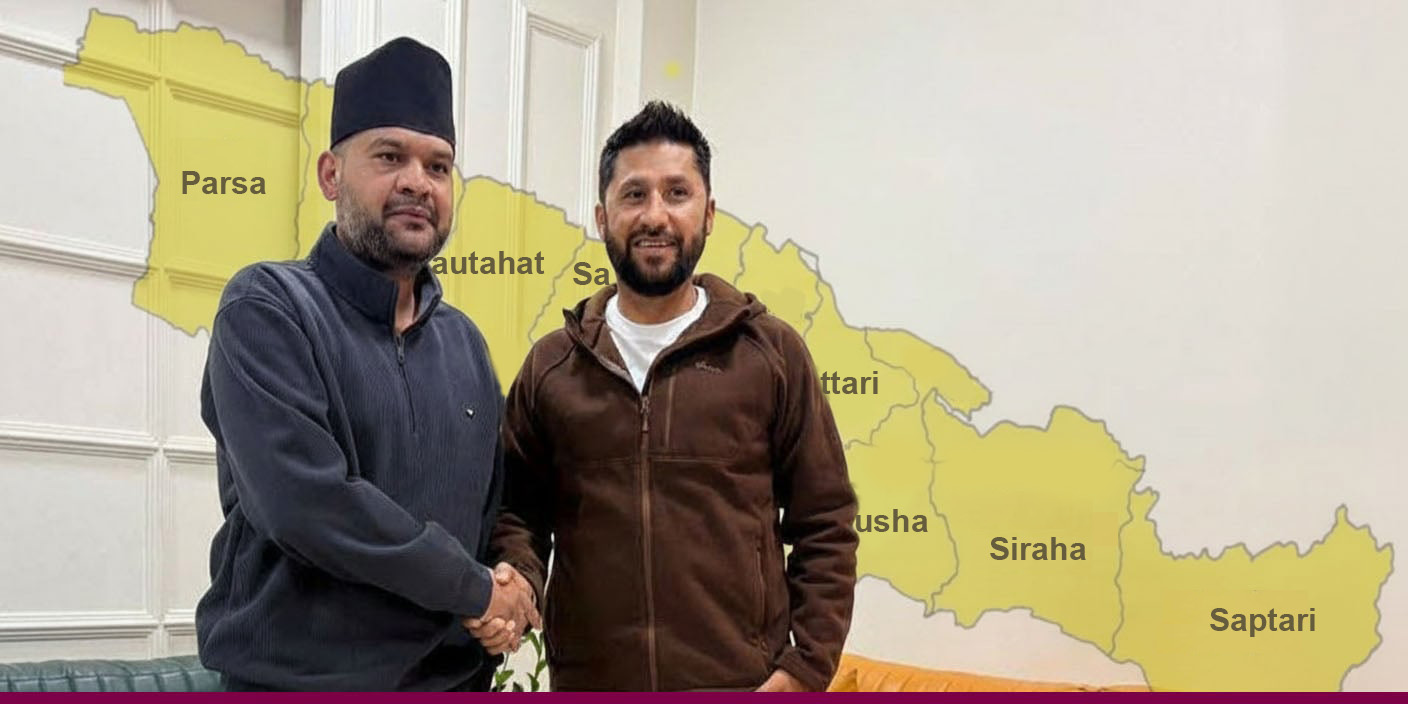
KATHMANDU: Balendra Shah (Balen), who was elected Mayor of Kathmandu Metropolitan City as an independent candidate, has now joined the Rastriya Swatantra Party (RSP) and become its Senior Leader.
Balen’s formal entry into party politics and RSP’s decision to project him as a prime ministerial candidate have sparked a debate over the possible impact on Madhesh politics ahead of the upcoming House of Representatives election scheduled for March 5.
With political polarization intensifying before the polls, Balen’s integration into RSP is being closely watched, particularly in Madhesh, a region that is electorally crucial due to its dense population. Madhesh accounts for 32 of the 165 first-past-the-post (FPTP) seats in the House of Representatives—second only to Bagmati Province—and also holds significant weight in the proportional representation system. Together, Madhesh and Bagmati make up around 21% of Nepal’s population and send the largest number of lawmakers to parliament.
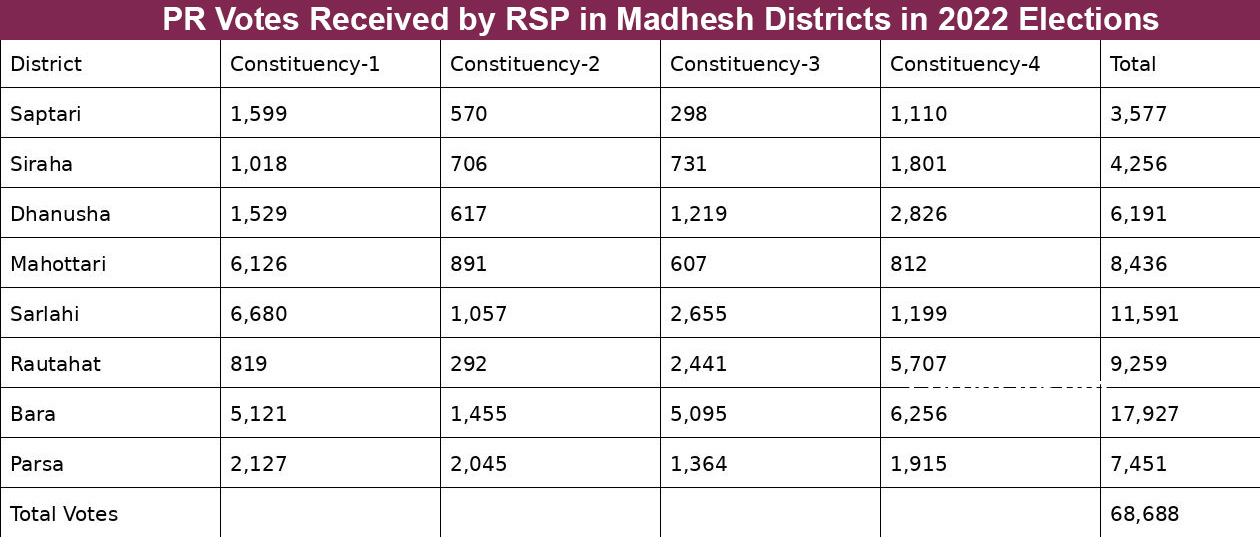
RSP, which contested its first general elections in 2022, performed strongly in urban areas of Bagmati, including Kathmandu and Chitwan, but failed to win a single FPTP seat in Madhesh. Although the party secured a respectable number of proportional votes in the province—68,628 in total—its organizational presence remained weak. Bara (17,927) contributed the highest number of PR votes for the party, while Saptari (3,517) recorded the lowest.
RSP leaders argue that the political scene has changed since the Gen Z movement of September 8 and 9, and reshaped public discourse around governance, accountability, and generational change. They say the party’s merger with figures such as Balen and former NEA chief Kulman Ghising has strengthened its appeal and strategy in Madhesh.
RSP Spokesperson Manish Jha claims that projecting a Madheshi leader as a prime ministerial candidate will have a positive impact in the region. “The fact that a Madheshi is being seen as a prime ministerial contender will certainly matter,” Jha said.
Balen, whose permanent home is in Ekdara Bela Rural Municipality of Mahottari, has been named both a Senior Leader and a prime ministerial candidate of RSP. RSP leaders believe this will translate into improved electoral performance in Madhesh, particularly as the party positions itself as the main vehicle for governance reform and leadership transition.
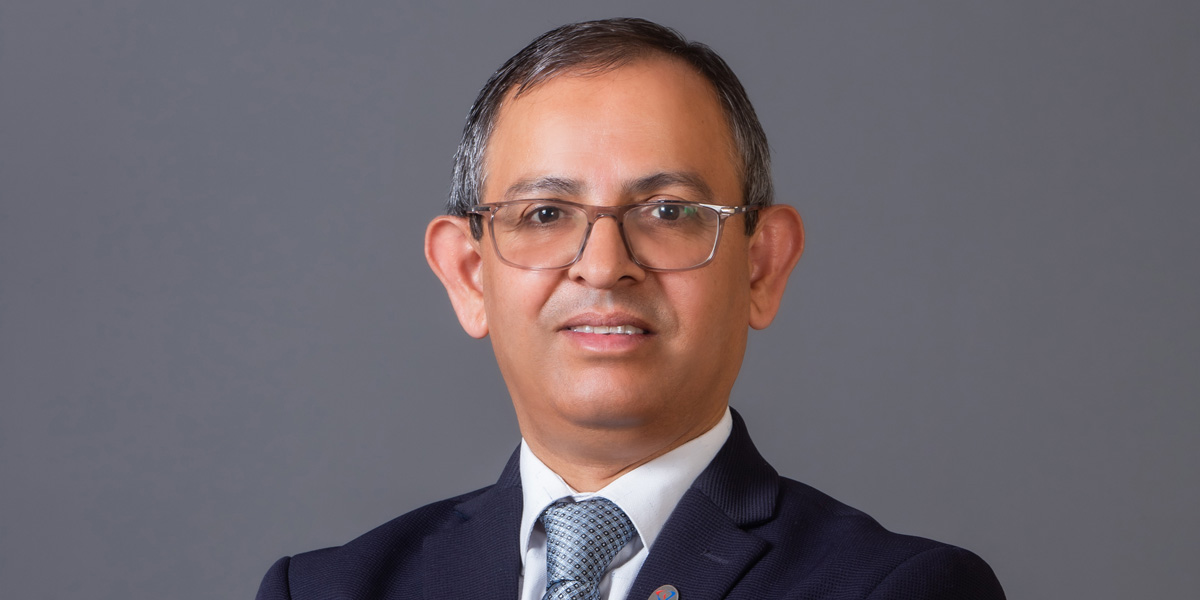
However, analysts caution against overestimating the ‘Balen factor’. Political analyst Roshan Janakpuri argues that electoral outcomes in Madhesh are driven more by party organization than by individual personalities. “RSP lacks a strong organizational base in Madhesh and does not have widely recognized local leaders,” he said.
Janakpuri explains that Balen has never publicly projected himself as a Madheshi leader, despite his surname ‘Sah’ appearing in official records. He has been using ‘Shah’—a surname associated with hill communities—even on his official nameplate. “The narrative that a Madheshi prime ministerial candidate will sway Madhesh voters is being constructed by others, not by Balen himself,” Janakpuri said, adding that this will limit RSP’s potential gains in the region.
Janakpuri further argues that RSP’s ambiguous stance on federalism could weaken its appeal in Madhesh. “Madhesh will not compromise on the federal agenda,” he said, ruling out the possibility of Balen’s entry increasing RSP’s chances in Madhesh.
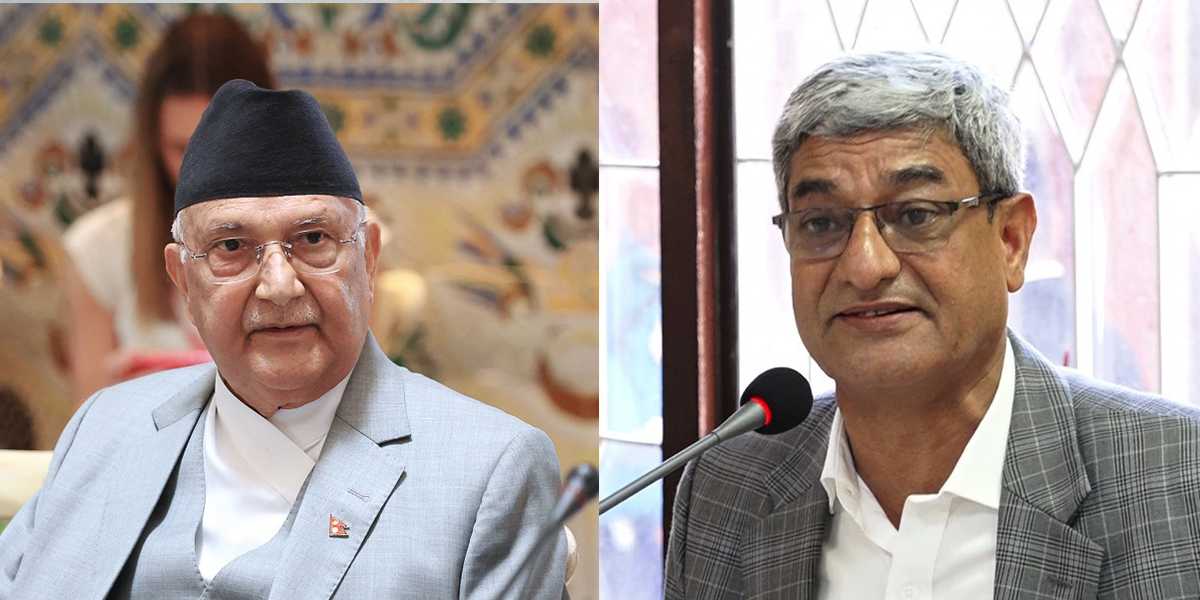
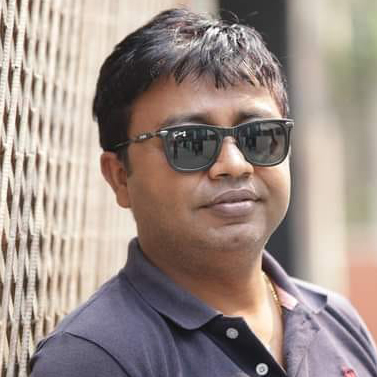
Political analyst Tula Narayan Sah said amid growing political polarization, Balen’s entry could enable the RSP to establish a notable presence in Madhesh.
Another analyst on Madhesh affairs, Tula Narayan Sah, holds a different view from Janakpuri’s assessment. He says that amid growing political polarisation, Balen’s entry could enable the RSP to establish a notable presence in Madhesh.
“It would be premature to say exactly what kind of impact there will be in Madhesh, as the RSP had little influence in the region,” Sah said. “However, Nepal’s political equation has changed after the Gen Z movement. Political polarization is taking place along the lines of old versus new parties. If voting turns against the old parties, the influence of figures like Balen is certain to be felt in Madhesh as well.”
Sah argues that since questions are being raised not only about the Nepali Congress and the CPN-UML but also about Madhesh-centric parties, the influence of Balen, Ravi and Kulman will be evident in the region. “Madhesh-based parties too have been in power in recent times, and their style of governance has come under scrutiny, much like that of the NC, UML, and Maoists.”
He believes the Gen Z movement has introduced new agendas that will have an impact not only across the country but also in Madhesh. “The Gen Z movement has set new agendas—ending corruption and generational change in leadership,” he says. “To understand today’s polarization, it is important to recognize that it is no longer along the Madhesh–hill lines. Analyzing the current political polarization based on identity would be wrong.”
Stating that political analysis after the Gen Z movement should not be based on caste or community, Sah insists discussions should center on agendas. “It has become a contest of good governance and service delivery versus the rest. Analyzing politics based on caste or community is inappropriate,” he said. “Voters in Madhesh will vote for Balen not because he is Madheshi, but on the basis of his work.”
Sah says there is a widespread perception among people in Madhesh that Balen has not been involved in corruption. “I have not heard people say they will vote for Balen simply because he is Madheshi,” he said. “There is talk that Balen has helped Madheshi students secure scholarships at schools in Kathmandu.”
According to Sah, a narrative is emerging in which citizens assess leaders not only by identity but also by performance. “Given the way society is currently polarizing, if elections were held as early as this March, this wave would certainly work in Nepal.”