 Himal Press
 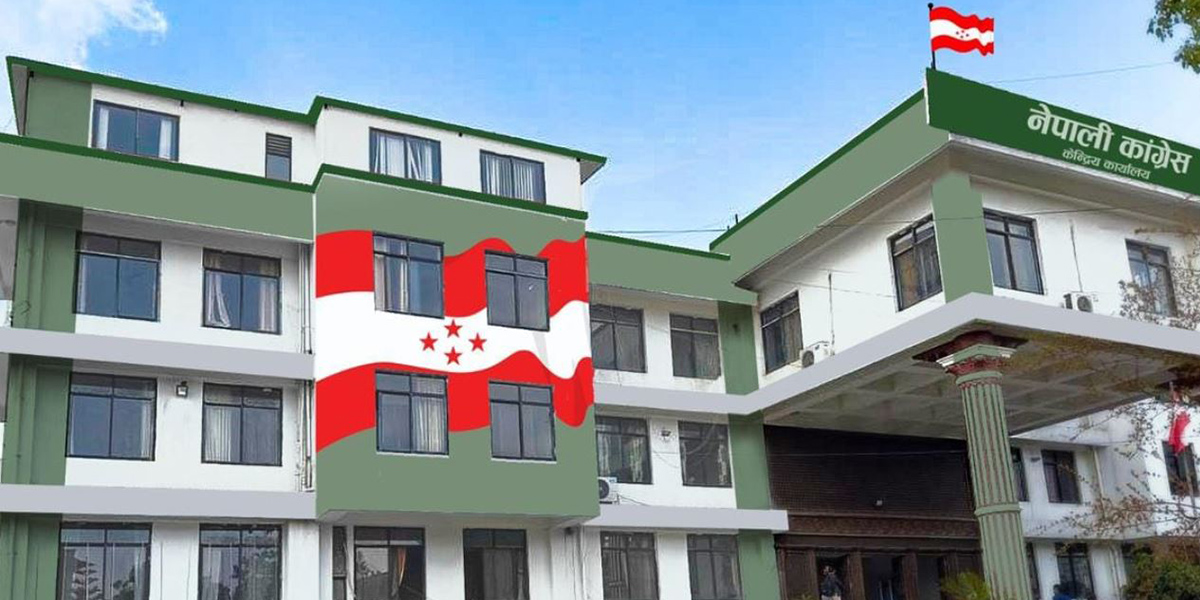 Nepali Congress Central Party Office
KATHMANDU: Many Nepali Congress (NC) leaders and cadres fear the party has reached the brink of a split.
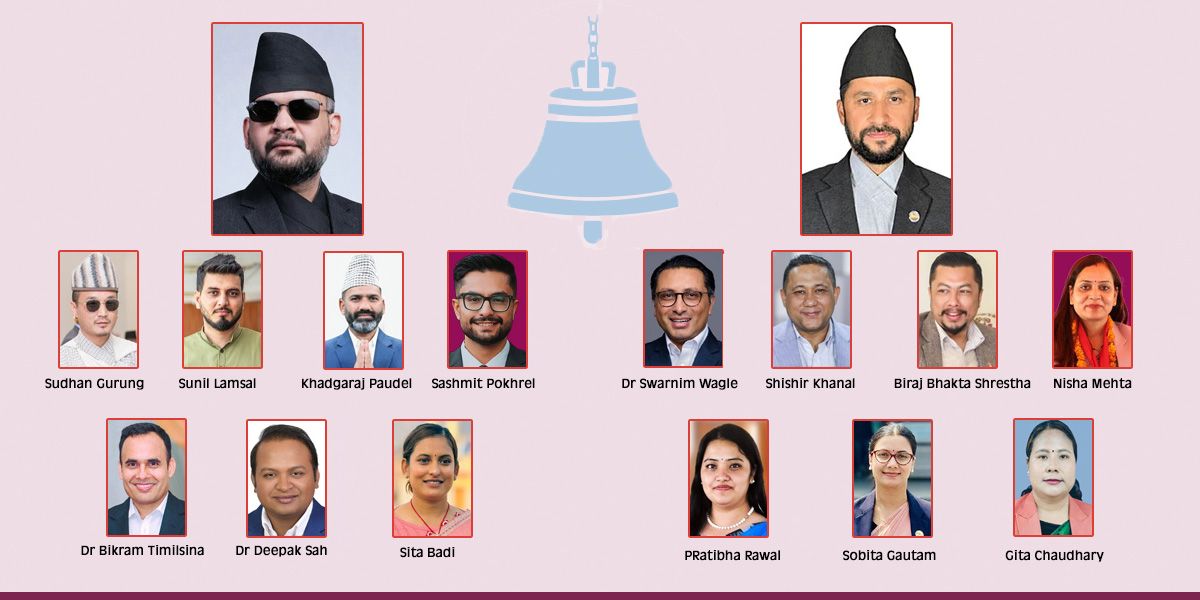
Leaders are clearly divided into different factions because of the dispute over the ongoing 2nd Special General Convention called by General Secretaries Gagan Kumar Thapa and Bishwa Prakash Sharma. Although leaders have intensified talks to keep party unity intact, many are wondering which faction would be granted official recognition should the party split.
Speculation about an imminent split intensified after supporters of the special general convention made public an election schedule and began advancing election-related activities on Tuesday. If the party does split, it is almost certain that both factions will knock on the doors of the Election Commission and the Supreme Court seeking recognition for themselves. Should the dispute reach the judiciary, its resolution would be guided by the Constitution of Nepal, 2015, the Political Parties Act, 2017, and the Nepali Congress Party Statute.
Here, we take a look at legal provisions related to party split.
Article 269(4)(a) of the Constitution states that a political party’s statute and regulations must be democratic. This means that decisions cannot be taken arbitrarily in the name of a majority but must follow due process as prescribed by the party statute. Similarly, Article 269(4)(b) states that elections of office-bearers must be held at least once every five years. The Nepali Congress statute, which provides for a four-year term with a possible one-year extension, has not crossed this constitutional limit.
Articles 269(1) and (2) place political parties under the Political Parties Act, 2017, and Article 272 clearly states that the operation of political parties must be in accordance with this law.
The Political Parties Act, 2017, addresses the gap between the legal jurisdiction of the special general convention and the Election Commission. As per Sections 43 and 44 of the Act, registering a leadership dispute with the Election Commission requires the signatures of at least 40% of the members of the central committee—not general convention representatives. Similarly, Section 44 states that when resolving a dispute, the Election Commission grants official recognition to the faction that commands a majority in the central committee registered with it prior to the dispute arising.
According to Election Commission precedents, including the Rishi Kattel case, party decisions must conform to the “established procedures” laid down in the party’s own statute. Decisions made in violation of these procedures are not recognized as legally valid by the courts.