 Himal Press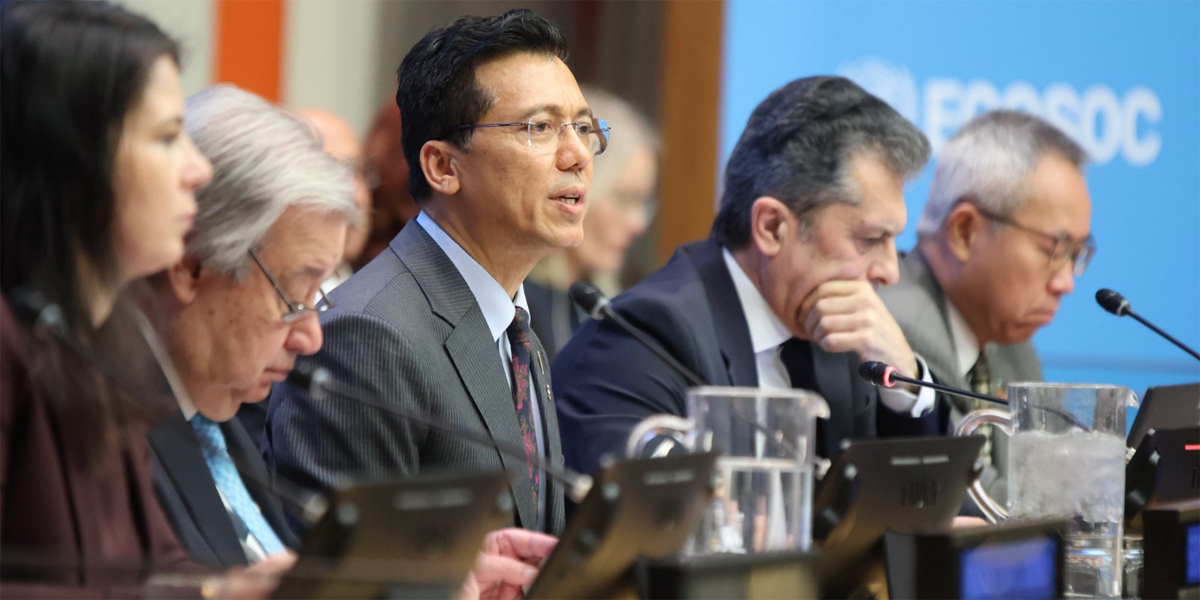
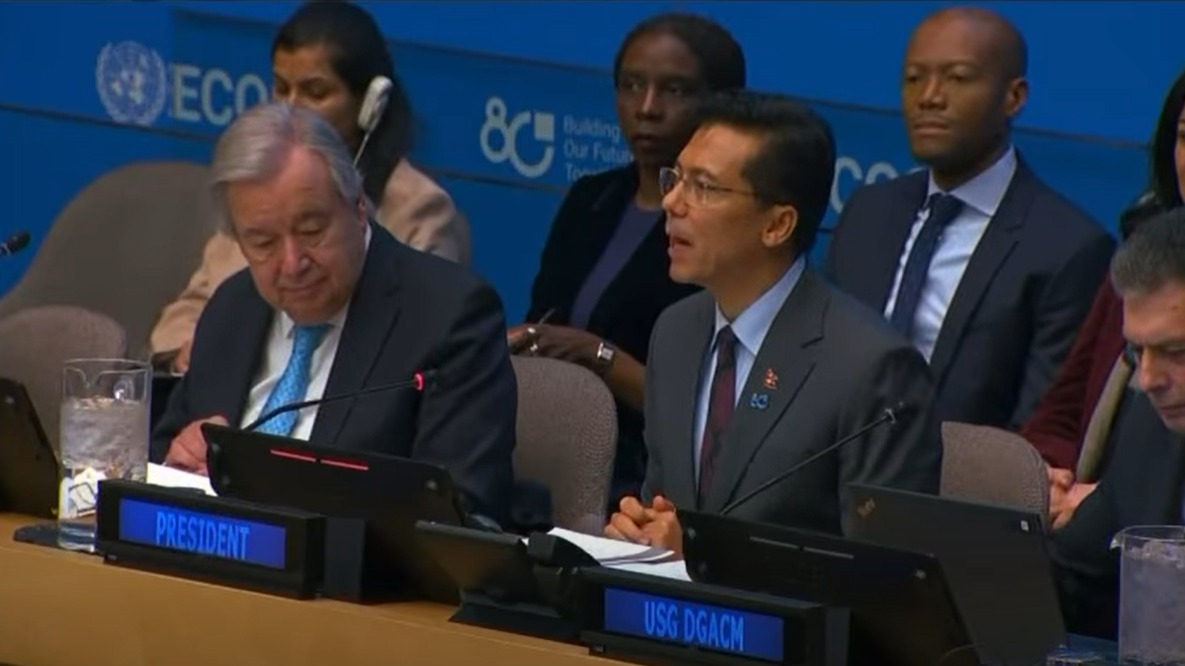
KATHMANDU: President of the UN Economic and Social Council (ECOSOC) Lok Bahadur Thapa has called for renewed commitment to multilateralism, saying the Council must deliver better as the world confronts overlapping crises of poverty, inequality, climate change, and debt.
Speaking at the commemoration of ECOSOC’s 80th anniversary at the UN headquarters, Thapa said the Council’s mandate—set out in the UN Charter in 1945—remains as urgent today as it was eight decades ago. He added that ECOSOC was founded on the principle that development is essential to lasting peace.
“Peace cannot endure where poverty and hunger persist, where inequality and marginalization take deeper root, or where individuals and communities are denied the opportunities that allow human dignity to flourish,” he said, adding that development must remain central to global efforts to maintain stability and human dignity.
Recalling ECOSOC’s first meeting in London on January 23, 1946, Thapa described the Council as the UN’s primary platform for addressing economic, social, and environmental challenges. He said ECOSOC has played a key role in shaping global policies, fostering partnerships, and coordinating action across the UN system.
However, he warned that progress has been uneven, as poverty and hunger continue to undermine sustainable development, food insecurity is rising, climate impacts are intensifying, and gaps in digital and social protection are widening. A growing global debt crisis, he said, is further limiting countries’ ability to invest in people.
“These intersecting challenges, along with eroding trust in multilateralism, demand a stronger and more effective ECOSOC,” Thapa said.
Thapa said ECOSOC’s history—from early debates on human rights and decolonization to the Millennium Development Goals and the 2030 Agenda—demonstrates the power of collective action. With the 2030 deadline approaching, he urged member states to treat the anniversary as a turning point for rebuilding trust in multilateralism.
“As President of ECOSOC, I am committed to making the Council more responsive, inclusive, and forward-looking,” he said. “But this effort requires conviction, courage, and commitment from all member states.”