 Himal Press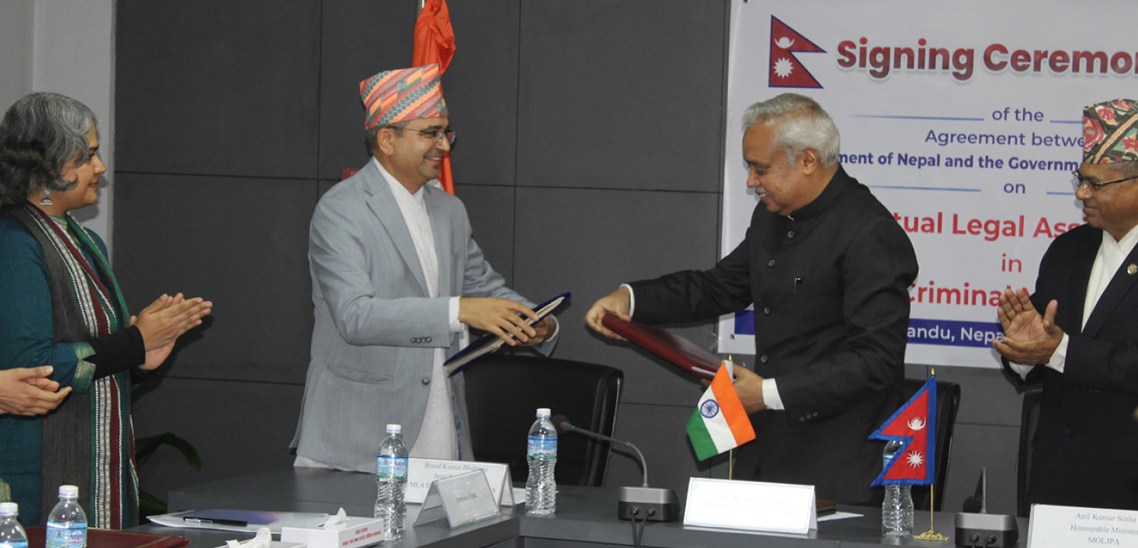
KATHMANDU: After two decades of negotiations, Nepal and India have finally signed an agreement on Mutual Legal Assistance in Criminal Matters.
Although neighboring India had shown interest and pushed the process forward during previous political governments, bilateral issues of this nature had often become contentious. However, the agreement was finalized and signed during the tenure of the current interim election government.
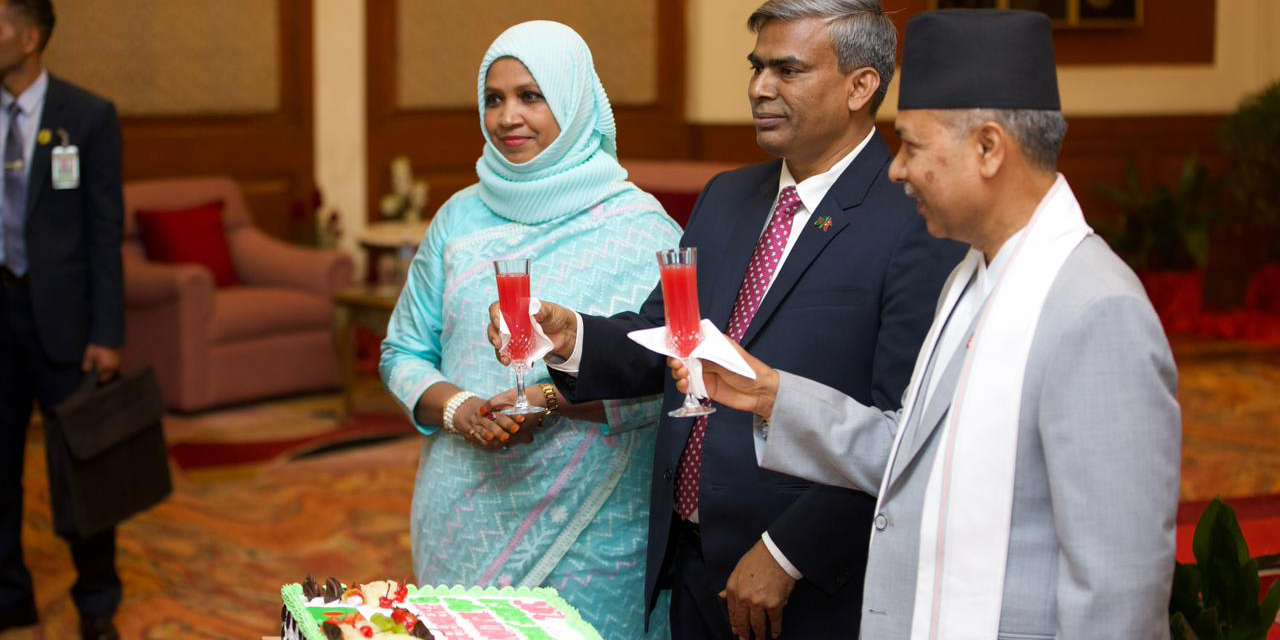
Joint Secretary Binod Kumar Bhattarai and Indian Ambassador to Nepal Navin Srivastav signed the agreement on behalf of their respective governments amid a ceremony held in Kathmandu on Tuesday.
Initial understanding to sign the agreement had been reached during a Home Secretary–level meeting in New Delhi in July last year.
Earlier, in 2005, Nepal and India had signed agreements on mutual legal assistance and extradition in criminal matters. However, negotiations on a new extradition treaty are still pending. According to the Ministry of Law, Justice, and Parliamentary Affairs, the new agreement aims at strengthening cooperation in criminal investigations, prosecutions, and judicial proceedings.
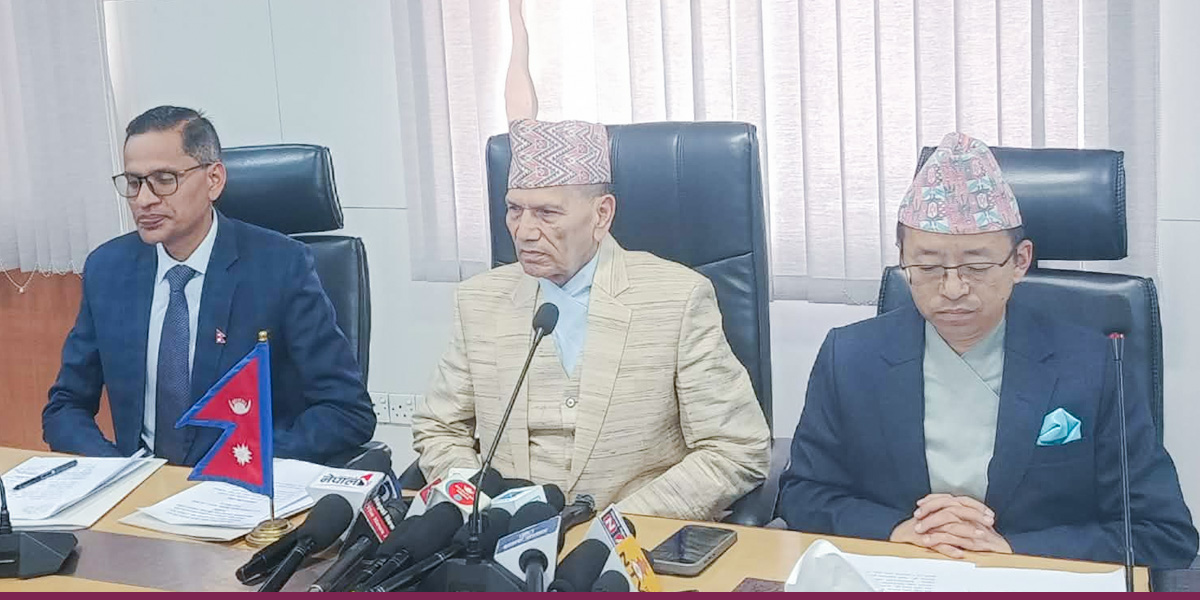
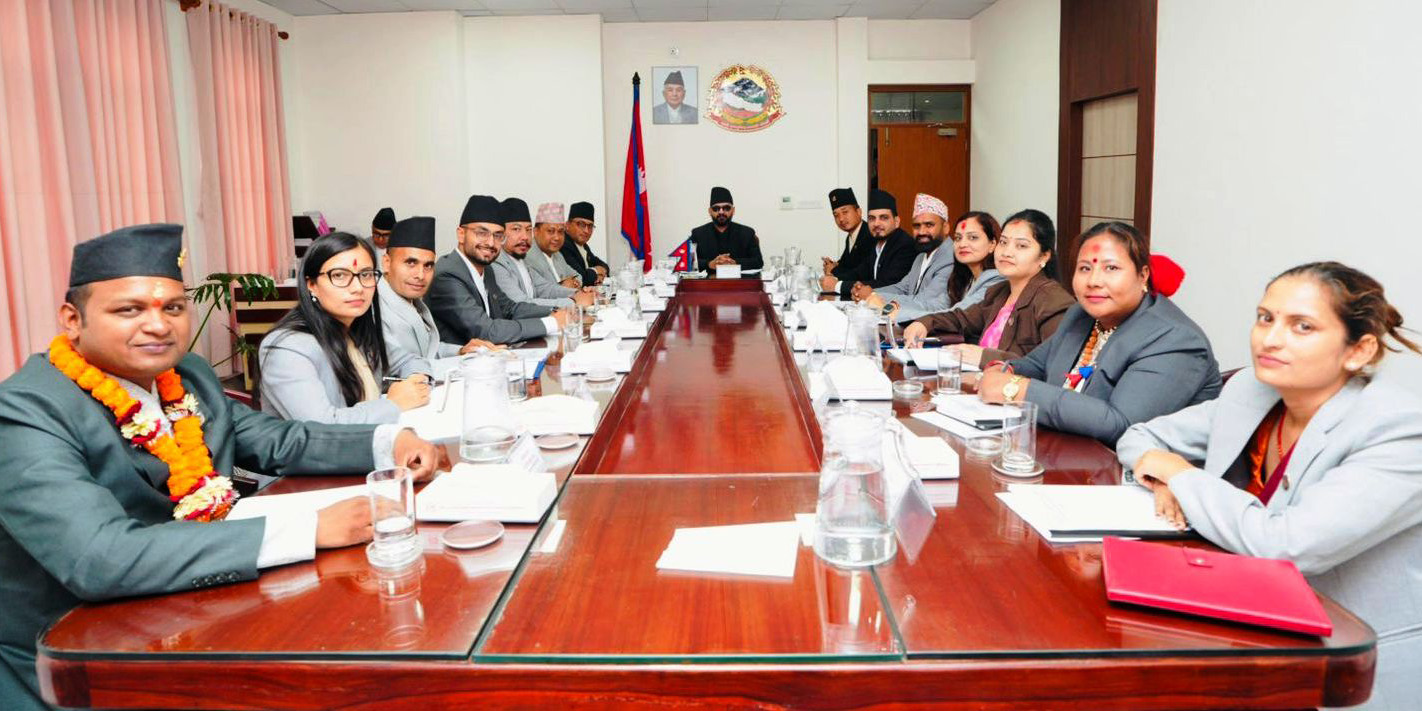
Minister for Law, Justice, and Parliamentary Affairs Anil Kumar Sinha, Secretary Parashwar Dhungana, officials from the ministry, and representatives of the Ministry of Foreign Affairs were present in the ceremony.
Law Ministry Secretary Dhungana expressed satisfaction that the long-discussed agreement with India had finally been concluded. “The agreement has been made particularly to facilitate the exchange of mutual legal assistance in criminal matters between the two countries,” he said. “It provides a formal pathway for cooperation between authorities of both nations in collecting and exchanging evidence during investigations, prosecutions, and judicial proceedings.”
The cabinet had authorized the law ministry on October 16 to move forward with the long-pending mutual legal assistance process. The groundwork had begun during the tenure of former Prime Minister KP Sharma Oli. It was under Oli’s direction that Nepal sent a draft of the agreement to India last year.
According to the ministry, the agreement will facilitate the collection of evidence, exchange of information, and coordination among relevant agencies during investigations and court proceedings.
Given the long open border between Nepal and India and the network of transnational crimes operating across it, officials of both sides believe the agreement will be crucial in controlling cross-border criminal activities. Secretary Dhungana claimed that the agreement also includes provisions for joint investigations into transnational crimes. “We have also made provisions for conducting joint investigations in cases of transnational crime,” he said. “This agreement will be significant for both Nepal and India in combating crime.”
Although the agreement has been signed, it won’t come into force until the parliament is formally notified. It will be presented in the upcoming session of the parliament, and if endorsed without objection, it will be implemented.
The agreement will take effect once both countries exchange formal diplomatic notifications of completion of procedures. A formal mechanism will be established to assist in criminal investigations, prosecutions, and judicial processes. It is expected to help in tackling human trafficking, drug smuggling, financial crimes, terrorism-related offenses, and organized crime.
Since the 1953 extradition treaty between Nepal and India became largely inactive decades ago, security agencies of both countries had relied on mutual understanding for criminal investigations and the handover of suspects. The agreement signed on Tuesday provides a clearer legal foundation for joint investigations in cross-border criminal cases and is expected to be implemented as soon as possible.
According to the ministry, the agreement will help strengthen the rule of law, enhance institutional coordination in the justice system, and make cooperation between central authorities of both countries more effective and result-oriented. It is also expected to support efforts in controlling financial crimes, strengthening investigations and prosecutions, preventing money laundering, and combating terrorist financing.
According to an official who participated in the Home Secretary–level meeting, the agreement provides a faster and structured framework for cooperation in combating terrorism, human trafficking, smuggling, cybercrime, and financial fraud. Joint Secretary Bhattarai said Nepal’s placement on the grey list of the Financial Action Task Force in February last year makes such cooperation even more important for exiting the list.
Agreement with China signed but not implemented
Nepal has also signed a similar mutual legal assistance agreement with its northern neighbor, China. The pact was signed during the October 2019 visit of Chinese President Xi Jinping to Nepal.
Although the agreement was approved by the cabinet four months after its signing and registered in Parliament, it has yet to be implemented as it was not formally presented in the parliamentary session. It was also not tabled in the new Parliament formed in 2022. The governments led by Pushpa Kamal Dahal and KP Sharma Oli showed no interest in its implementation, citing geopolitical considerations.