 Himal Press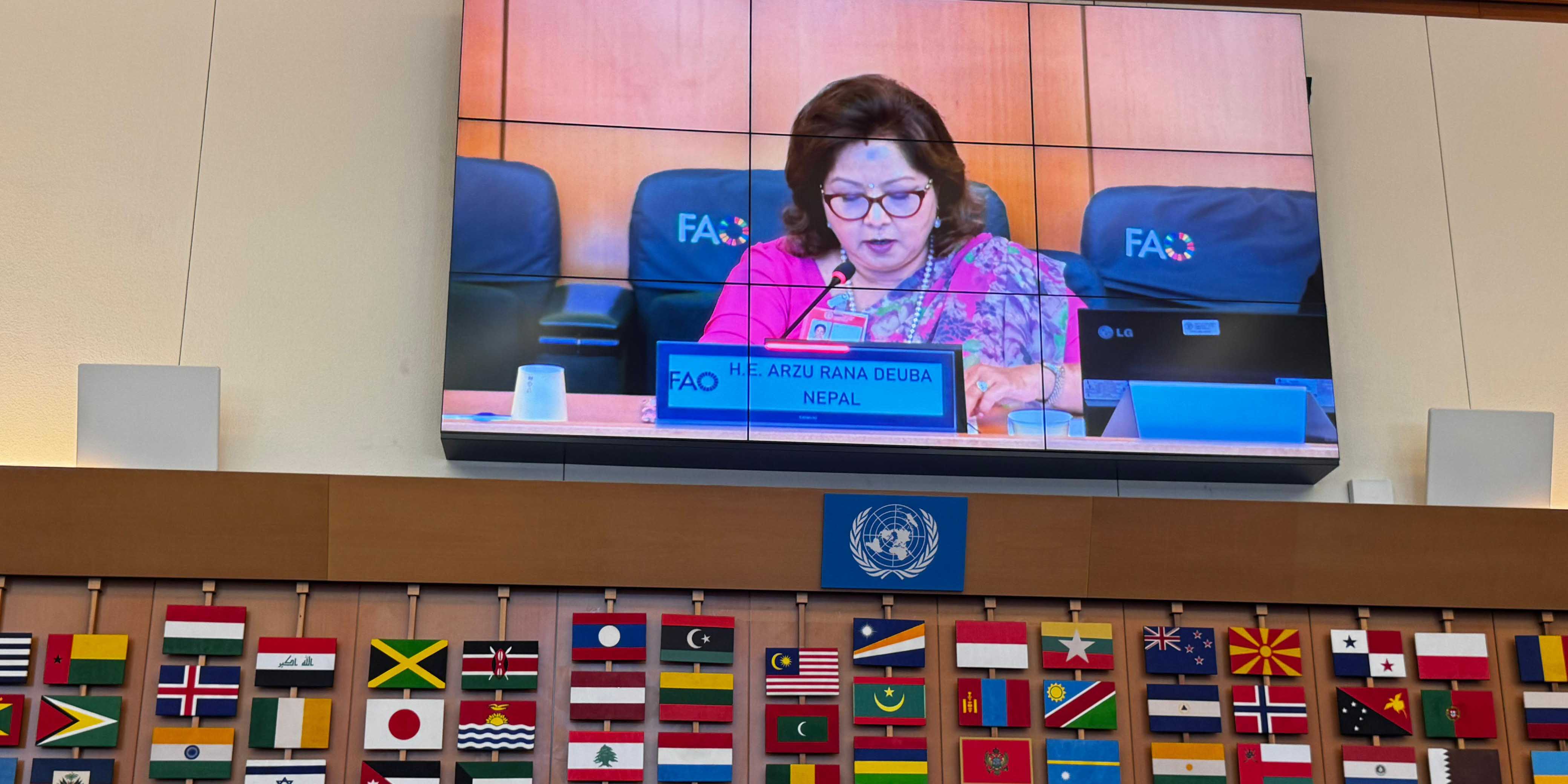
KATHMANDU: Minister for Foreign Affairs Arzu Rana Deuba has said that Nepal has constitutionally guaranteed its citizens the right to food.
Addressing a ministerial session of the United Nations Food and Agriculture Organization (FAO) in Rome, Rana said Nepal’s Constitution enshrines the right to food as a fundamental right.
Speaking at Sunday’s session focused on food rights and nutrition in Least Developed Countries (LDCs), Small Island Developing States (SIDS), and Landlocked Developing Countries (LLDCs), held as part of the FAO’s ongoing 44th special session, Rana said Nepal has recognized the right to food as a fundamental right. “This right is supported by enabling laws to ensure its implementation. The execution of the country’s food system transformation strategic plan further reinforces this right,” she added.
Minister Rana also said that Nepal ensures safe and quality food through regulatory standards, laboratory monitoring and consumer protection, under its Food Safety and Quality Control Policy. “To protect consumer rights, a dedicated consumer court has been established, which supports the recognition of safe and healthy food as a natural right of citizens,” she added.
Minister Rana also highlighted Nepal’s significant progress over the past two decades in the areas of child health and nutrition. She said stunting in children has dropped from 57% to 25%, the rate of underweight children from 42% to 24%, and child morbidity from 15% to 8%. Similarly, Nepal’s score on the Global Hunger Index has improved from 37% in 2000 to 22.4% in 2024, she added. “These achievements are not just statistics but outcomes of strong political commitment, community engagement and coordinated efforts across related sectors.”
She further added that programs like the Vitamin A Supplementation Initiative and the Golden Thousand Days campaign have reached millions of children and made a significant contribution to reducing child mortality and malnutrition.
Minister Rana also said that Nepal faces serious challenges due to its high vulnerability to climate change, citing melting glaciers, erratic rainfall, extreme weather events and climate-related disasters that are already affecting agricultural production and livelihoods. “These changes are also weakening the ecological balance of mountain farming systems,” she added.
To ensure inclusive progress in nutrition and prosperity, Minister Rana stressed the need for increased international cooperation, access to financial resources, technology transfer and knowledge promotion. “International organizations like FAO and UNICEF can play important roles in this effort,” she added.