JANAKPURDHAM: As the House of Representatives elections, scheduled for March 5, draw closer, political parties are intensifying their efforts towards unification and electoral alliances.
Following the consolidation of Kathmandu Mayor Balen Shah and Energy Minister Kulman Ghising’s Ujyalo Nepal Party into the Rastriya Swatantra Party (RSP), other parties, who view these emerging forces as anti-federalists, have begun exploring the possibility of uniting or forming alliances among pro-federalism forces.
While the Nepali Congress (NC) and the CPN-UML are working to activate their respective alliances, the CPN (Maoist Centre) has merged with several fringe communist groups to form the Nepali Communist Party (NCP). At the same time, Madhesh-based parties—long known for fragmentation driven by self-interest—have also started coming together.
Analysts say that while unity is an important element of democracy, political parties should focus on safeguarding their relevance by taking agenda-driven politics before the people rather than concentrating on weakening rivals.
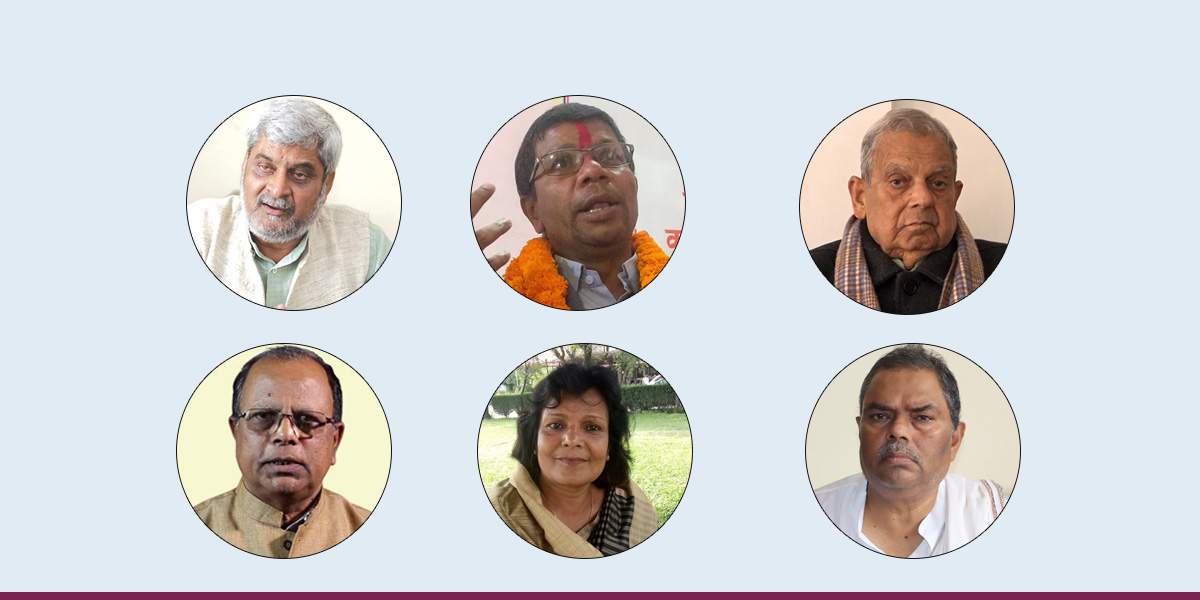
About a month ago, the Loktantrik Samajwadi Party (LSP) Nepal, led by Mahanta Thakur, the Janata Pragatisheel Party, led by Hridayesh Tripathi, and the Terai–Madhesh Loktantrik Party (TMLP), chaired by Brishesh Chandra Lal, announced plans for party unification.
Unification efforts have also gained momentum within the Upendr Yadav-led Janata Samajbadi Party (JSP) Nepal. Over the past six days, three Madhesh-based parties and groups have merged into JSP Nepal. Party leaders say these developments have increased the likelihood of Madhesh-centric forces re-emerging as a strong political force in the region after the March 5 polls.
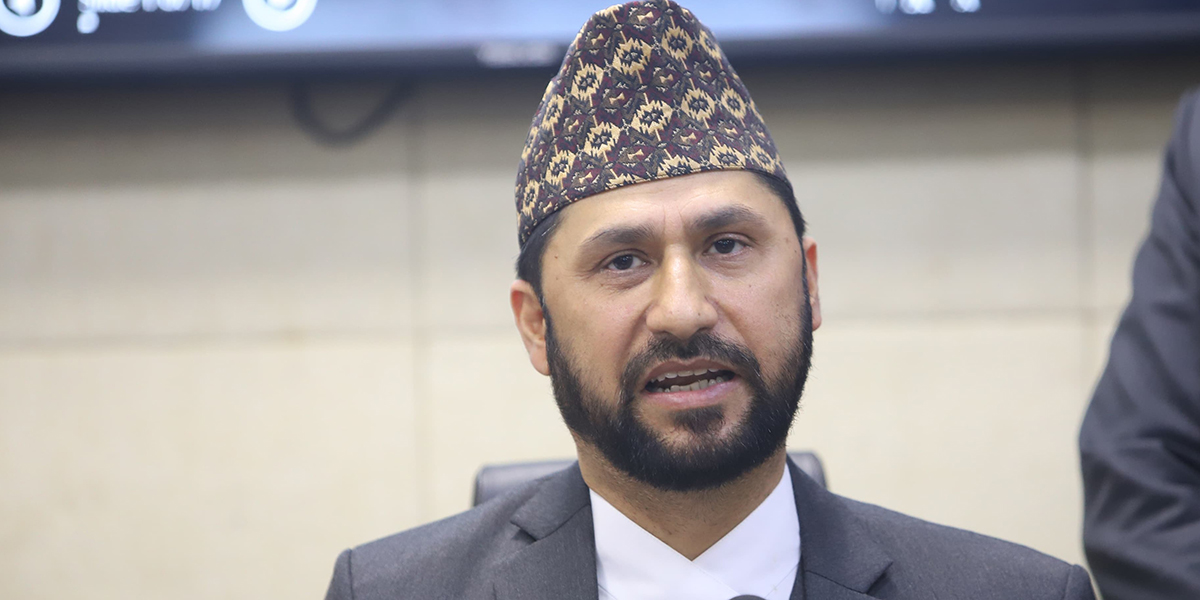
On December 24, JSP Nepal and the Swadhin Madhesh Jana Abhiyan reached an agreement for working unity. On Sunday, Yadav signed a party unification agreement with Mahanta Thakur, chair of the three-party Unified Loktantrik Samajwadi Party, Nepal. On Monday, he also brought several influential leaders from the Ashok Rai–led JSP into his party.
Ashok Rai had split from Upendra Yadav on May 6, 2024, to form a separate party. The split, coupled with his defeat in the 2022 election from the Saptari-2 constituency, significantly weakened Yadav’s influence in national politics. Analysts, however, say recent unification efforts have improved the prospects of his political comeback. Yadav has consolidated strength from six parties and groups, including LSP Nepal, the Ashok Rai–led JSP, and the Swadhin Madhesh Jana Abhiyan.
Although the impact of this unification at the federal level remains limited, the unified force has emerged as a major player in Madhesh Province. Before this party unification drive began, the CPN-UML was the largest party in the provincial assembly with 25 seats. However, the JSP Nepal–LSP Nepal alliance has now become the largest force in the provincial assembly with 28 seats. The Nepali Congress follows with 22 seats, while the NCP—the merged entity of the Maoist Centre and the Unified Socialist—holds 16 seats.
Political analysts say the unification of JSP Nepal, LSP Nepal, and other fringe parties may not significantly affect first-past-the-post races, but could influence outcomes under the proportional representation system. “The growing polarisation between pro-federalist and anti-federalist forces has prompted Madhesh-based parties to unite for electoral survival,” political analyst Dr Sushil Yadav said. “This is a positive development. If they fail to unite now, they risk losing their political existence in the next election.”
Dr Yadav added that while Madhesh-based parties are often accused of acting out of self-interest, political alliances everywhere are driven by interests. “The NC–UML alliance, the unification of communist forces, and even the Rabi–Balen–Kulman grouping are all interest-driven. It is only natural for political actors to safeguard their interests. This should be viewed positively,” he said.
Another analyst, Roshan Janakpuri, also views unity among fragmented parties ahead of the elections as a positive step. “However, lasting unity is crucial for long-term strength,” he said. “Madhesh-based parties once emerged as a powerful force on the agenda of the Madhesh movement. They have weakened over time as they drifted away from core issues.”
Janakpuri said unification could help Madhesh-based parties secure proportional votes and preserve their political existence, even if they struggle in first-past-the-post contests. “Agenda-driven politics centred on federalism can improve their prospects under proportional representation,” he added.
He further said the Rabi–Balen–Kulman alliance appears focused on securing proportional votes, as it has limited influence in Madhesh. If their unification is perceived as a threat to federalism, it could prompt the NC, UML, and the NCP to contest elections together under a unified banner, he added.
In such a scenario, Madhesh-based parties could also align with larger coalitions to safeguard their political space. However, analysts say that if Madhesh-centric parties remain united, they are likely to secure a stronger bargaining position in any future alliance.