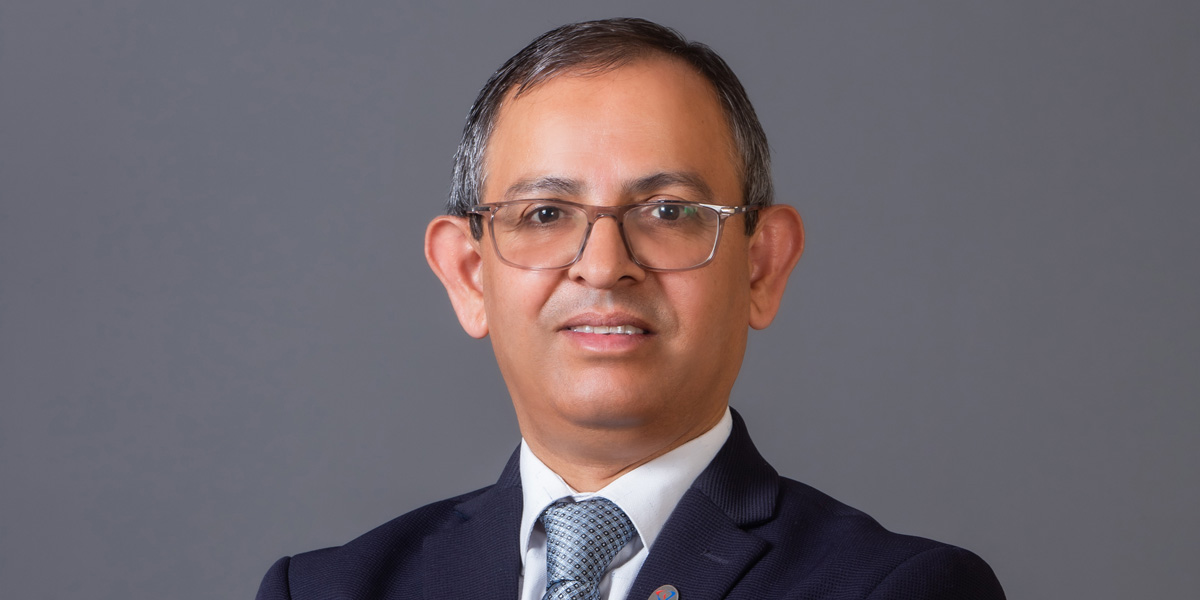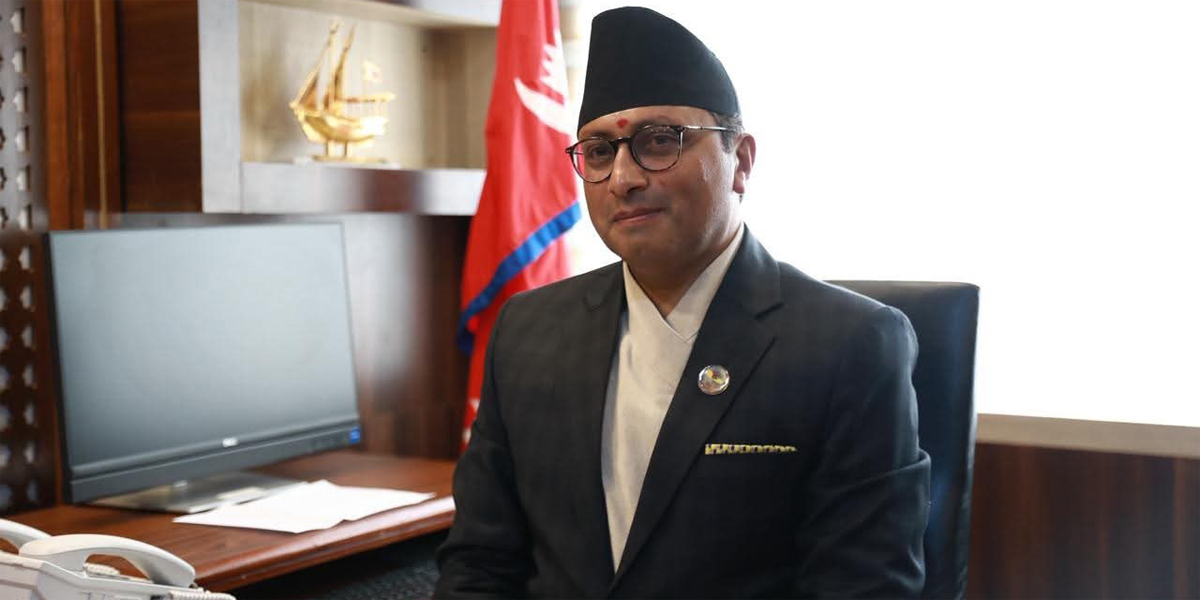

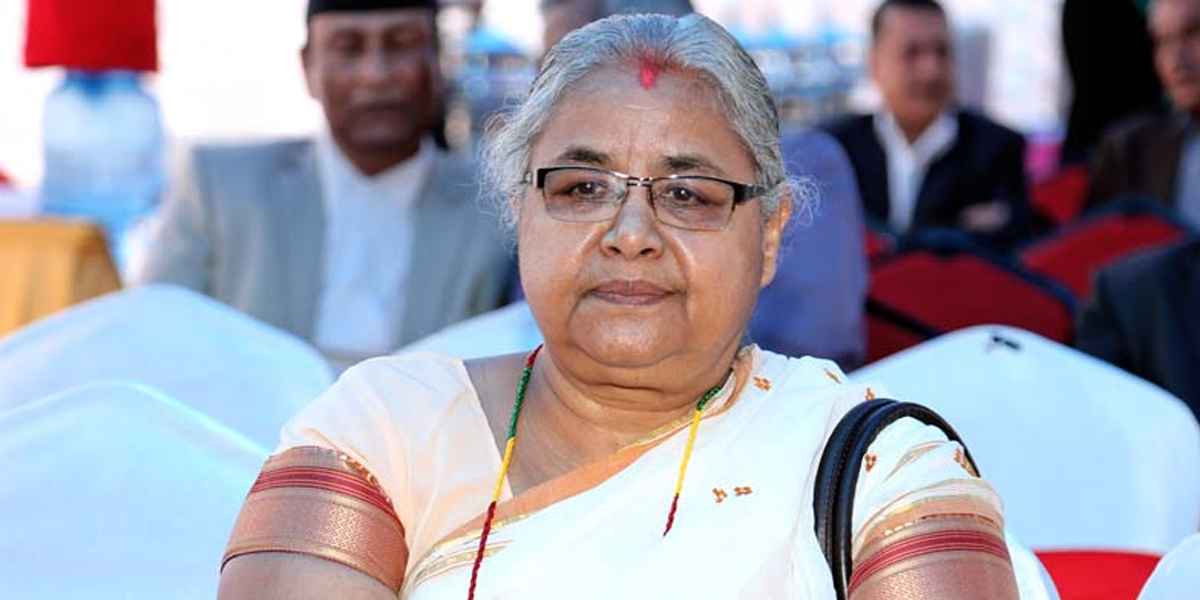
 Former Chief Justice Sushila Karki (Photo: RSS)
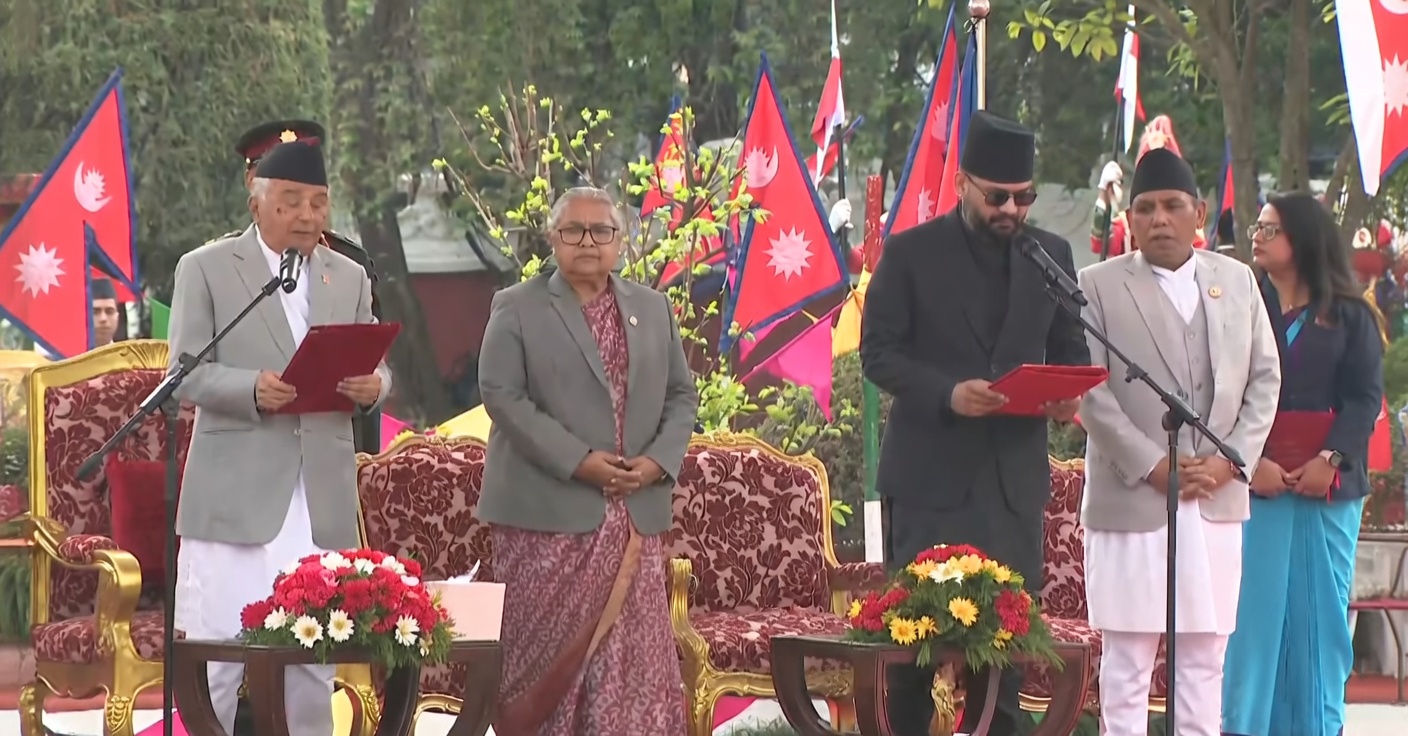
KATHMANDU: President Ram Chandra Paudel is seeking legal advice after reaching a consensus to appoint former Chief Justice Sushila Karki as the Prime Minister of the interim government.
The agreement to hand leadership of the interim government to former Chief Justice Karki, in line with demands from Gen Z protestors, was reached around midnight. Earlier, on Thursday afternoon, President Paudel informed leaders of the Nepali Congress (NC), CPN-UML and CPN (Maoist Center) about the decision to appoint Karki as the head of the interim government.
However, although consensus has been reached, legal and constitutional obstacles have prevented the process from moving forward. According to sources at the Office of the President, constitutional complications have stalled the appointment.
“Where things ended on Thursday night is still where they stand,” a source at the Office of the President told Himal Press over the phone. “The President is consulting legal experts to resolve constitutional complexities.”
The Constitution of Nepal, 2015, does not allow the appointment of a Prime Minister from outside the parliament. The demand from Gen Z protestors to appoint a non-parliamentary figure has thus created a constitutional challenge.
Accepting the resignation of Prime Minister KP Sharma Oli on Tuesday after the Gen Z protest escalated, President Paudel had stated that the existing cabinet would continue to function until a new government is formed.
While most political parties support Chief Justice Karki as the interim Prime Minister, some constitutional experts argue that any process must first resolve existing legal barriers.
“The caretaker Prime Minister can, with the consensus of all parties, recommend to the President the appointment of an interim Prime Minister from outside parliament,” said Senior Advocate Chandra Kanta Gyawali. “Article 66 provides for this. This way, the protestors’ demand can be addressed while the constitution is preserved.”
Articles 76 (1), (2), (3) and (5) of the Constitution are related to the appointment of the Prime Minister. If these provisions cannot be followed, Article 76(7) allows the President, on the recommendation of the Prime Minister, to dissolve the House of Representatives and set a date for new elections within six months.
Senior Advocate and constitutional expert Chandra Kanta Gyawali said that while parliamentary solutions are theoretically possible, they may not satisfy the mandate of the youth-led movement. He suggested that a non-parliamentary figure could be appointed to lead the interim government as per Article 66.
“The caretaker Prime Minister can, with the consensus of all parties, recommend to the President the appointment of an interim Prime Minister from outside parliament,” Gyawali told Himal Press. “Article 66 provides for this. This way, the protestors’ demand can be addressed while the constitution is preserved.”
Article 66 (2) states: “In exercising the powers or duties under clause (1), the President shall perform all other functions to be performed by him or her on recommendation and with the consent of the Council of Ministers than those functions specifically provided to be performed on recommendation of any body or official under this Constitution or Federal Law. Such recommendation and consent shall be submitted through the Prime Minister.”
Gyawali argued that a Prime Minister from outside parliament can be appointed as per the protestors’ mandate as per this provision. “Given that the youth have expressed their demand through protests, a parliamentary solution would not be acceptable to them. The constitution does not provide for this explicitly, so this appears to be the most feasible path for now,” he said.
Gyawali also suggested that the interim government could form a commission to draft constitutional amendments or a complete rewrite, which the incoming parliament could later approve.
“The interim government holds the authority to temporarily manage the functions of parliament. It can set up a commission for constitutional amendments or rewriting which the future parliament can endorse. This way we can preserve key achievements such as the constitution, federalism and the republic,” he added.