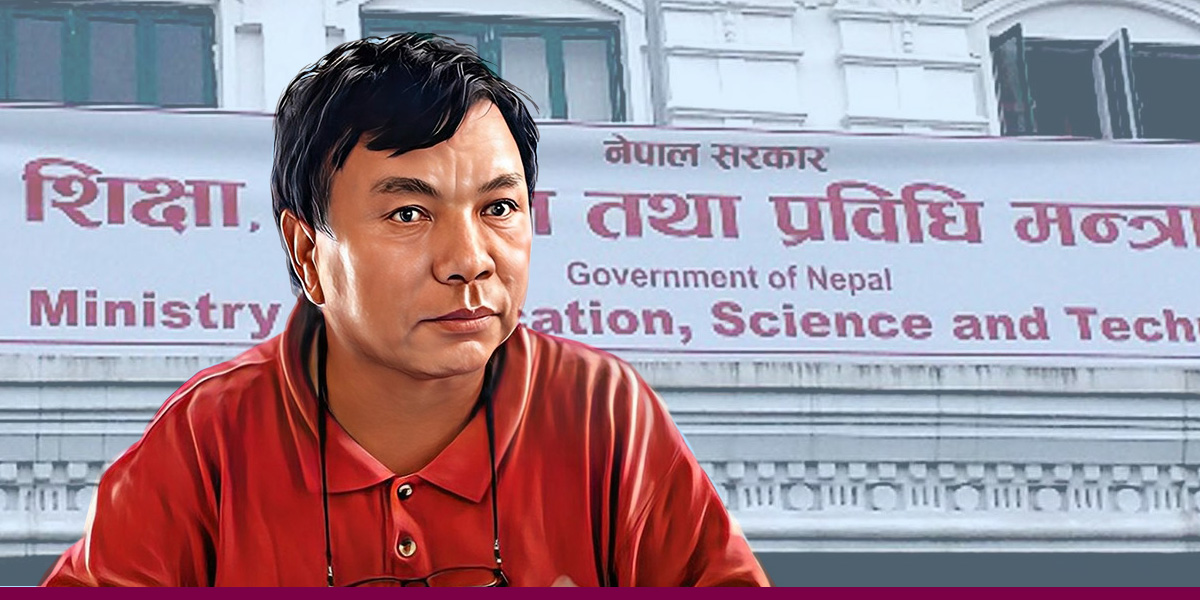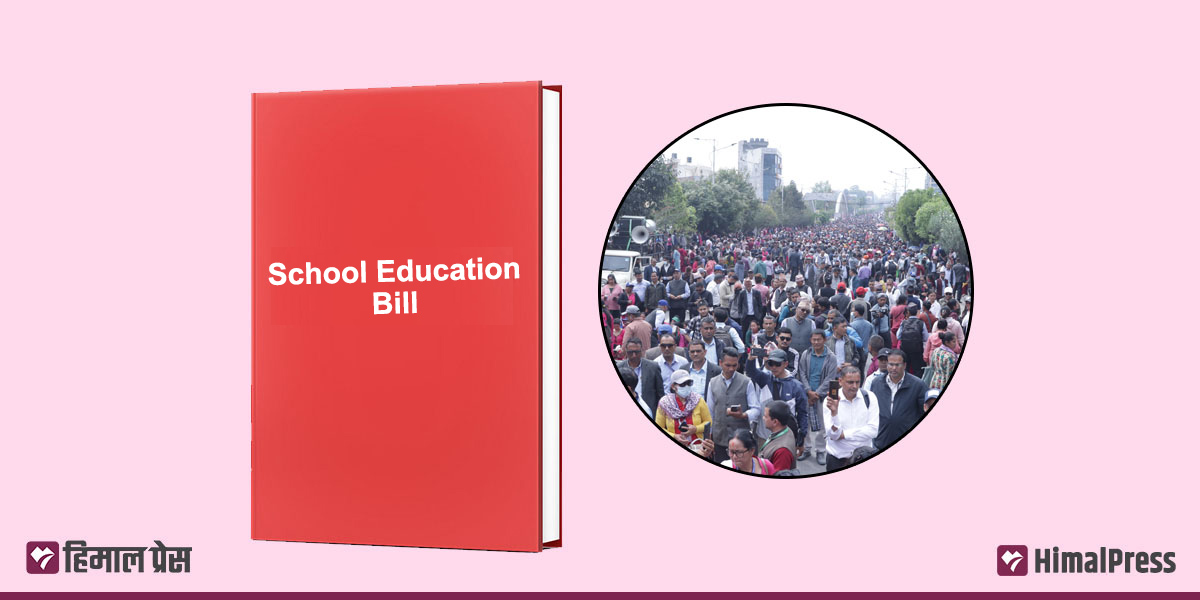

KATHMANDU: With teachers abandoning their professional demands in favor of following political parties, the voices of 42,000 teachers across the country are at risk of being left out of the School Education Act.
While the School Education Bill has already been passed by the Education, Health and Information Technology Committee of the House of Representatives, the relief-quota teachers are divided into two groups in their ongoing protests. Bishnu Khatri leads the Nepal Relief Teachers National Committee, while Nabin Singh Dhami heads the Nepal Relief Teachers Central Committee. All relief quota teachers were under the same group in the past. However, they are now split along political lines — Khatri is close to the leftist factions and Dhami aligns with the Nepali Congress.
Their demands, however, differ. Khatri claims that his committee is focused on protecting the livelihoods of relief-quota teachers and opposing schemes that would displace them under the guise of internal competition. “While the other committee is pressing to increase the percentage for internal promotion, we are focusing on ensuring that the livelihoods of relief-quota teachers are not jeopardized,” Khatri said.
He also accused the Confederation of Nepalese Teachers (CNT) of neglecting the management of temporary teachers. “Our focus is on maintaining professional continuity through contributions to the Social Security Fund. We don’t need many benefits, but we must have professional security,” he told Himal Press.
Dhami, on the other hand, argued that the provisions in the Bill will effectively send temporary teachers home empty-handed. He insisted that his committee is not demanding anything new but seeking implementation of past agreements. “We have not raised new demands. The government must include the agreements it has already signed in the Bill,” he demanded.
Because of the pressure from relief-quota teachers, the CNT had earlier demanded 100% internal competition for these temporary teachers. However, the government has decided that only 60% of new vacancies will be allocated for relief-quota teachers. Relief-quota teachers, however, will not face age limits to participate in the recruitment process. Also, those failing the recruitment exam will receive a golden handshake payout.
The government earlier reached agreements with relief-quota teachers in 2018, 2021 and 2023. In 2018, the government agreed to convert relief-quota, early childhood, higher secondary and special education teachers into approved positions based on certain criteria within a year without any age limit, allowing them to become permanent.
The 2021 agreement called for converting relief, lower-secondary and early childhood teacher quotas into approved positions and making them permanent through internal and open competition via the Teacher Service Commission
The 2023 agreement reiterated that relief-quota teachers would become permanent through exams conducted by the Teacher Service Commission. The government promised to allocate 75% of the vacancy to relief-quota teachers. The Bill has reduced it to 60%.
Relief-quota teachers have also demanded provisions for remote area allowances, medical leave with records submitted to the National Personnel Records, recognition of past service for teachers who transitioned from temporary to relief-quota positions, and inclusion of teachers with physical impairments, as well as those teaching in Gurukuls, Madrasas and monasteries in the permanent appointment process.