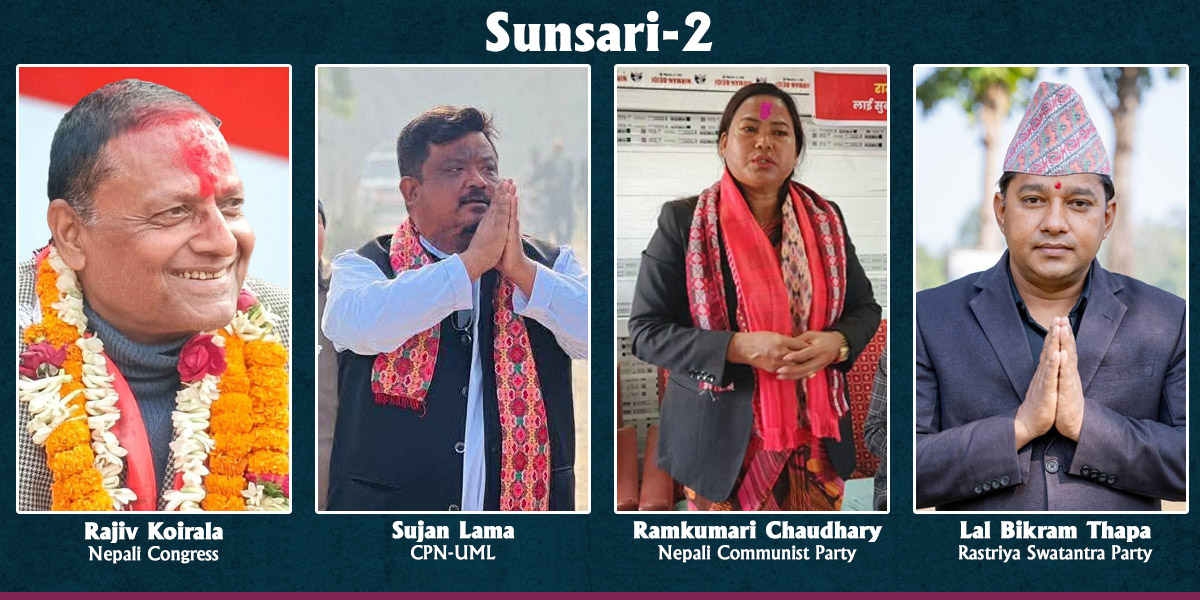
ITAHARI: In the 2022 elections, competition in Sunsari-2 was largely confined to the Nepali Congress (NC) and the CPN-UML, with the unexpectedly strong showing of the Rastriya Swatantra Party (RSP) adding a new dimension. This time, however, the constituency is widely expected to witness a four-way contest.
The active presence of the RSP has not only altered electoral calculations but has also split traditional voting patterns.
Bhim Prasad Acharya of UML was elected from Sunsari-2 in 2022, defeating Sitaram Mehta of the NC. Mehta had won the seat in 2017. The absence of electoral alliances, the entry of new faces, and the rise of new political forces have turned the constituency into an open and highly competitive battleground this time.
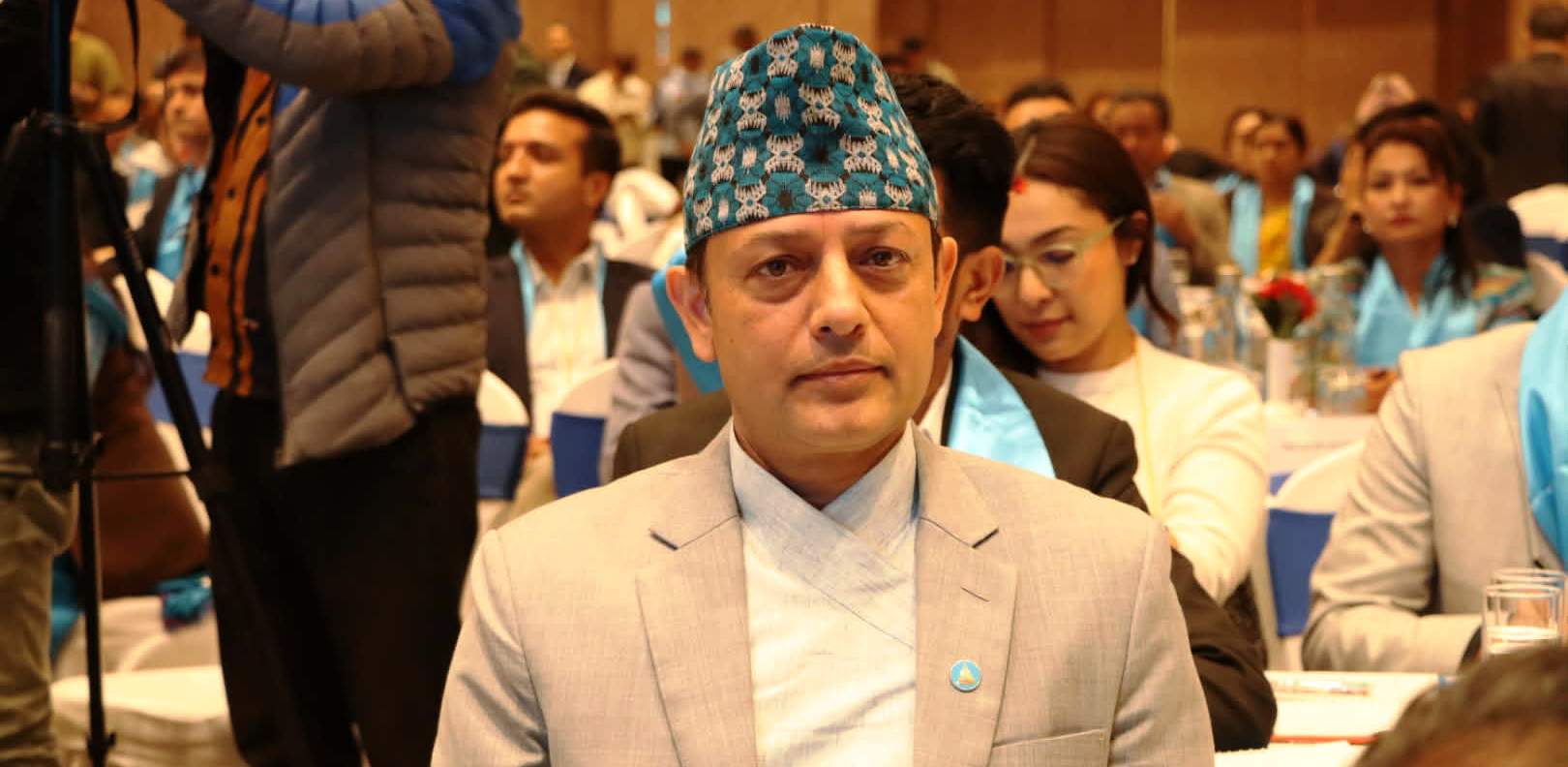
NC has fielded its former Central Working Committee member Rajiv Koirala in Sunsari-2, while UML has picked Sujan Lama, the Koshi Province Committee President of its youth wing, Youth Association Nepal. Similarly, Ram Kumari Chaudhary, a Central Committee member of the Nepal Communist Party (NCP) and a former minister of state for agriculture, and Lal Bikram Thapa, Koshi Province General Secretary of the RSP, are the other prominent candidates in Sunsari-2.
Traditionally dominated by the NC–UML rivalry, Sunsari-2 is considered a strong organisational base for both parties. However, with public trust in older parties weakening in recent years, the RSP has emerged as a key challenger. Candidate of the NCP is also seen as a serious contender.
As a Tharu-majority constituency, Chaudhary is focusing on consolidating votes from her community. At the same time, analysts say the nationwide surge of the RSP is also making its presence felt in Sunsari-2.
NC candidate Koirala, who is known for his clean and simple image, has previously served as a member of the Koshi Provincial Assembly and as leader of the parliamentary party. A two-time President of NC’s Sunsari District Committee, he is regarded as an experienced leader despite never having held a high executive post. Koirala has pledged to represent the aspirations of youth while retaining the trust of the older generation. “Voters of Sunsari-2 know me well. I have committed to taking the overall development of this constituency to a new level by reaching the federal parliament,” Koirala said. “Since public trust in the NC has remained intact, this time the victory will be ours.”
The UML, meanwhile, is banking on its organizational strength to attract young voters. Although there was speculation that the party would pick Rebati Raman Bhandari for the seat, UML ultimately picked Lama. While the late change initially caused some confusion within the party, its organizational structure remains intact, according to party leaders.
Relying on ward-level networks, a stable voter base, and the psychological advantage of past electoral victories, Lama has entered the race prioritizing education and health. “We are focusing on youth mobilisation and are busy with internal meetings and dialogue with long-time voters,” Lama said. “We are confident of winning, as young voters see me as their preferred choice.”
However, internal rifts within the UML and a perceived erosion of its support base following the Gen Z movement are expected to pose additional challenges for the party.
The RSP has once again fielded Lal Bikram Thapa. Despite personal controversies surrounding the candidate and organizational weaknesses, RSP’s political brand and its message as an alternative force appear to be attracting voters disillusioned with traditional parties. “Old parties had repeated opportunities to govern but failed to deliver change as per public expectations,” Thapa said. “We have entered the race to cleanse politics, and this time the RSP’s victory is almost certain.”
The RSP’s influence is largely concentrated among dissatisfied NC voters, youth, and first-time voters, and those who believe all traditional parties have failed.
NCP’s Chaudhary is pursuing a strategy to consolidate Tharu votes in this Tharu-majority constituency. She expressed confidence that voters would support her based on her contributions to the development of Sunsari-2. Recalling her work in agriculture, infrastructure, education, and social sectors as a state minister, Chaudhary said she has consistently stood with people in both good and difficult times. “Voters will choose me based on my experience and performance,” she said.
No party appears to have an easy path to victory in Sunsari-2 this time. Analysts say the outcome will depend less on individual candidates or campaign agendas and more on party credibility, organizational mobilization, and last-minute vote transfers.
Sunsari-2 comprises wards 1–5 and 16–20 of Itahari Sub-Metropolitan City; wards 1–3, 5, 8, and 9 of Ramdhuni Municipality; wards 1, 2, 5, 6, 9, and 10 of Inaruwa Municipality; Devanganj Rural Municipality; and Ward 3 of Harinagar Rural Municipality. The constituency has a total of 158,910 registered voters.